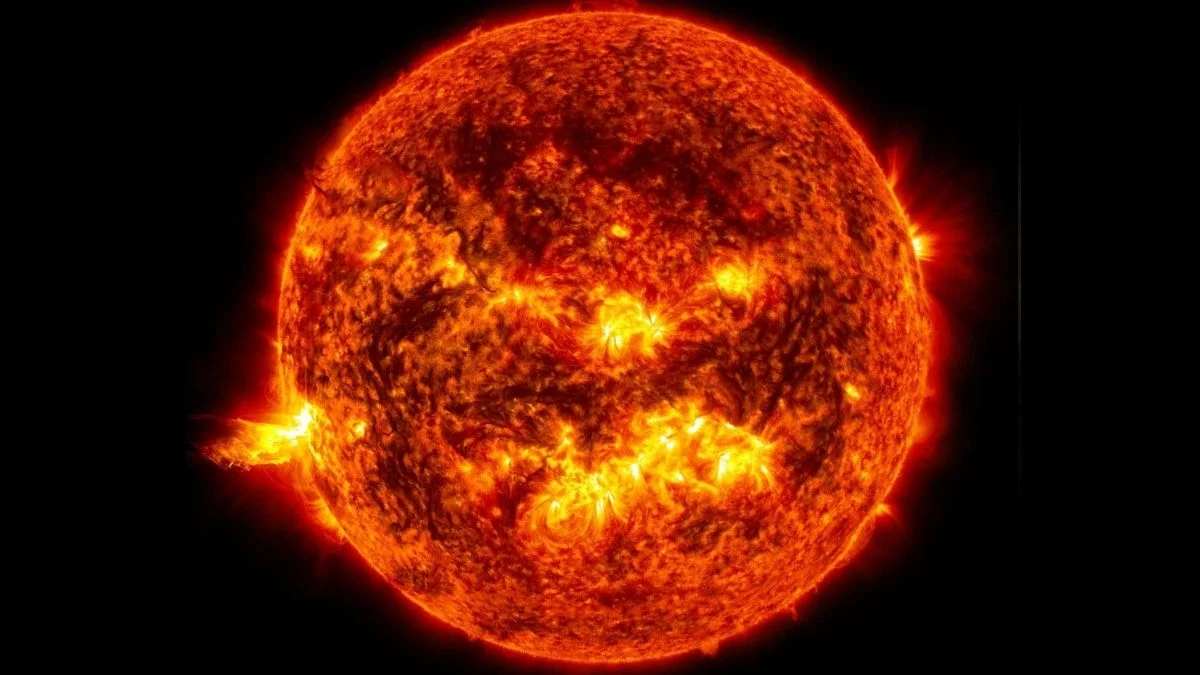
The Sun is not typically characterized by its quietude.
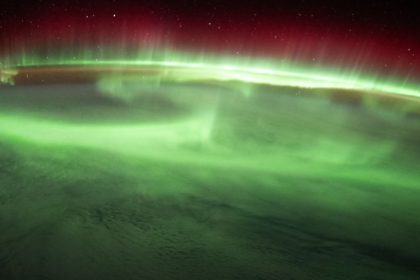
Each second, it unleashes energy equivalent to one hundred billion nuclear detonations. It routinely propels colossal masses of magnetized plasma into the cosmos and, on occasion, provides celestial displays like auroras, visible as far south as my location in Norfolk, United Kingdom.
However, even by the Sun’s own extraordinary metrics, an event that commenced on an ordinary day in August 2025 proved to be exceptionally noteworthy. A coordinated effort by a small constellation of spacecraft, strategically positioned across the inner solar system, was instrumental in reconstructing the sequence of events.
The phenomenon initiated with a Type IV radio emission.
These emissions consist of radio waves generated as electrons become ensnared within the Sun’s magnetic fields, subsequently gyrating and releasing energy in the process.
Such occurrences are relatively frequent, typically of a few hours to a couple of days in duration. While the radio waves themselves are benign, the magnetic environments from which they originate pose a potential hazard.
These very same regions possess the capacity to launch energetic particle storms that can inflict damage upon satellites and disrupt the functionality of spacecraft.
This particular emission, however, did not abate.
Days elapsed. Subsequently, additional days passed.
When the radio emission finally ceased, it had persisted for nineteen days, a duration nearly four times longer than any previously documented occurrence. The prior record holder had sustained its activity for merely five days.
To elucidate the underlying mechanisms, researchers synthesized data acquired from four distinct spacecraft: NASA’s STEREO, Parker Solar Probe, and Wind missions, in conjunction with the Solar Orbiter, a collaborative endeavor by ESA and NASA.
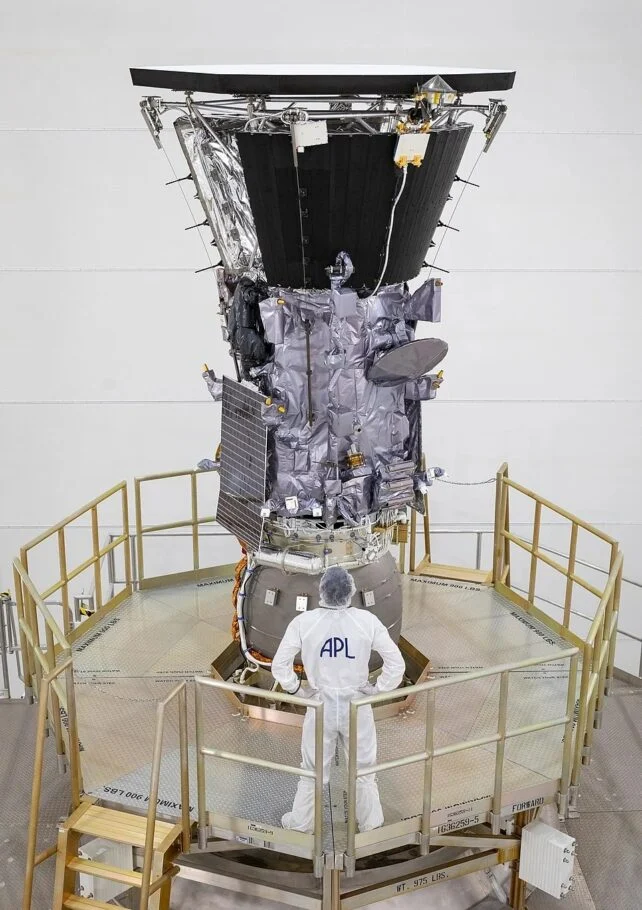
Each spacecraft captured the emission for a segment of its extended duration as the Sun’s rotation progressively brought the source region into and out of the probes’ observational fields. This process can be likened to relay runners passing a baton across the solar system.
No single spacecraft possessed the capability to observe the entirety of the event. A collective effort was necessary to construct a comprehensive understanding.
Employing an innovative analytical methodology applied to STEREO data, the research team successfully localized the source of the emission to a substantial magnetic formation within the Sun’s outer atmosphere, identified as a helmet streamer.
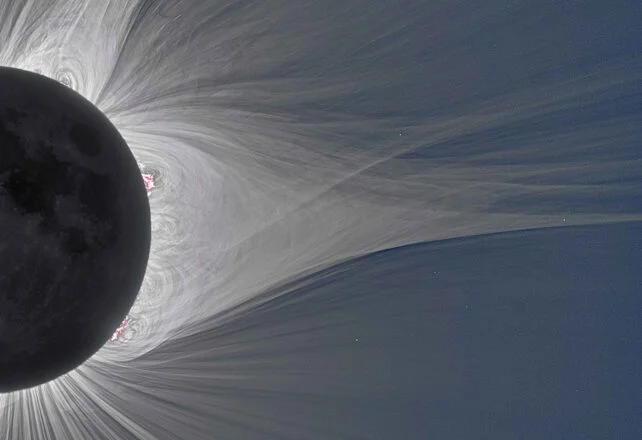
The designation, while appearing somewhat anachronistic for an entity situated 150 million kilometers distant, accurately describes a distinctive V-shaped feature discernible during solar eclipses. This feature arises as magnetic field lines arch away from the Sun’s surface and extend outwards into space.
These formations represent areas of intensified magnetic activity, and this particular streamer had been significantly energized by a rapid succession of three coronal mass ejections originating from the same region. This effectively supplied the magnetic trap, sustaining its energy levels far beyond their typical operational lifespan.
Comprehending the factors that contribute to the sustained duration of solar radio emissions over days or weeks, in contrast to those that dissipate rapidly, holds direct relevance for space weather forecasting and our capacity to anticipate imminent hazardous solar activity.
The greater the precision with which we can identify these phenomena and comprehend their behavioral patterns, the more effectively our satellites, astronauts, and terrestrial infrastructure can be safeguarded.
This content was originally disseminated by Universe Today. The original publication can be accessed here.