Earth’s vibrant biosphere owes a substantial debt to photosynthesis, the remarkable process that converts solar energy into the fuel powering the vast majority of planetary food chains.
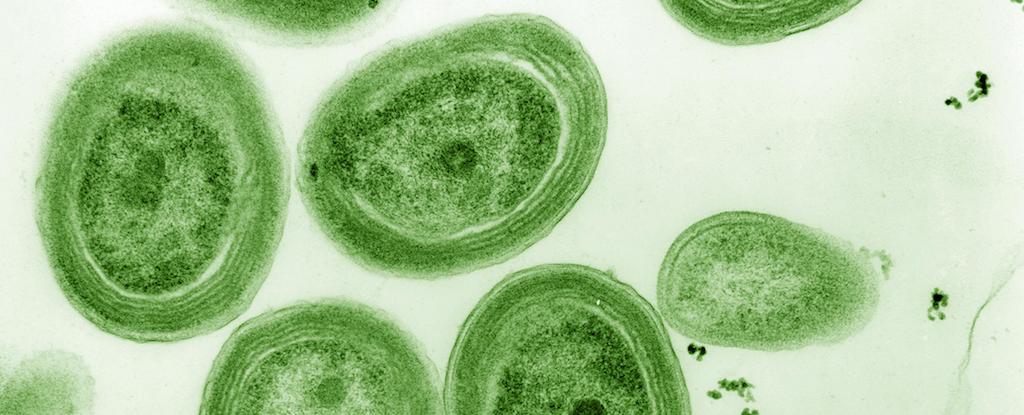
While a diverse array of flora, algae, and cyanobacteria facilitate this essential function, few organisms perform it with the sheer ubiquity of Prochlorococcus, recognized as Earth’s most prolific photosynthetic lifeform. Despite its minuscule size, even by cyanobacterial standards, this marine microorganism exerts a disproportionately significant influence within its ecosystems and on a global scale, contributing an estimated nearly one-third of the total oxygen generated on the planet and serving as a fundamental pillar of marine food webs.
However, a recent scientific investigation suggests that Prochlorococcus, along with the myriad organisms dependent upon it, might face a greater degree of vulnerability to escalating ocean temperatures than previously understood.
Prochlorococcus thrives across extensive oceanic territories, colonizing over three-quarters of the sunlit upper water column. Its highest concentrations are found in tropical and subtropical regions, where it demonstrates exceptional adaptation to environments characterized by elevated temperatures and limited nutrient availability.
“In offshore tropical waters, the ocean appears as a shimmering expanse of blue precisely because its contents are sparse, with Prochlorococcus being a primary constituent,” explains lead author François Ribalet, a distinguished oceanographer affiliated with the University of Washington.
Considering this inherent predilection for warmth, a segment of the scientific community had posited that Prochlorococcus might exhibit resilience, or even flourish, as global ocean temperatures continue their upward trajectory—a consequence of anthropogenic fossil fuel combustion and the diminishing capacity of natural carbon sinks. This perspective is supported by some experts who believe Prochlorococcus may indeed adapt favorably.
Nevertheless, the findings of this nascent study cast doubt upon such optimistic projections, indicating that an increase in temperature does not invariably translate to improved conditions for Prochlorococcus.
The optimal thermal range for these microbes, according to the researchers’ report, lies between 19 and 28 degrees Celsius (66 to 82 Fahrenheit). They further note that projections suggest many tropical and subtropical oceanic zones are anticipated to surpass this upper thermal threshold within the next 75 years.
“For an extended period, scientific consensus suggested that Prochlorococcus would likely thrive in future climate scenarios. However, our findings reveal suboptimal performance in the warmest regions, implying a potential reduction in available carbon—and consequently, food—for the broader marine ecosystem,” observes Ribalet.
Previous understanding of these microorganisms was predominantly derived from laboratory-cultivated specimens. Consequently, Ribalet and his colleagues embarked on a mission to gather novel empirical data directly from wild Prochlorococcus populations in their natural marine environments.
“My fundamental inquiries revolved around simple, yet crucial, questions,” Ribalet states. “Do these organisms experience favorable conditions as temperatures rise, or conversely, do they suffer adverse effects?”
To address these inquiries, the research team meticulously analyzed an astounding 800 billion cells of Prochlorococcus size encountered during 90 meticulously planned research expeditions conducted over a 13-year span.
The analytical methodology employed involved a sophisticated flow cytometer, an instrument for which Ribalet was a co-developer. This device is specifically engineered for the precise detection and quantification of minute phytoplankton, such as Prochlorococcus.
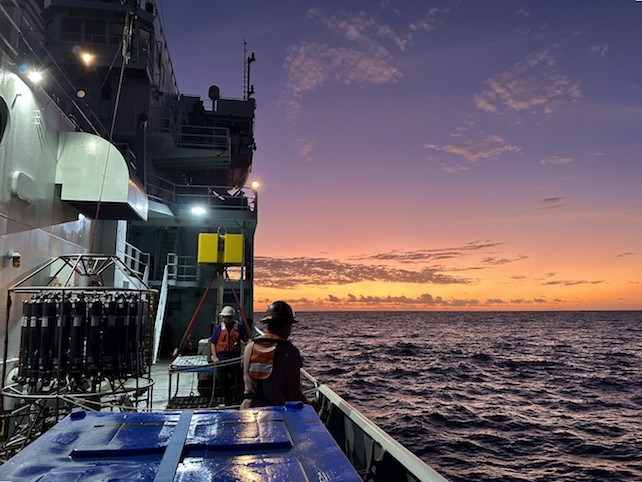
Within the shipboard apparatus, microbial parameters were assessed using laser technology. Subsequently, a statistical model, predicated on established methodologies for estimating Prochlorococcus proliferation rates, was applied to the collected data, all while ensuring minimal perturbation of the study subjects.
Observed variations in cell division rates were found to correlate with geographical latitude, a phenomenon the authors attributed to fluctuating water temperatures rather than changes in solar irradiance or nutrient availability.
The microbes demonstrated optimal performance in relatively temperate waters, falling within the 19 to 28 °C range. However, a notable decline in vitality was observed in temperatures marginally above this optimum.
Cellular replication rates decelerated significantly in waters exceeding approximately 30 °C, dropping to as little as one-third of the rates recorded in waters at the lower end of their thermal tolerance spectrum.
“The temperature at which their physiological processes begin to break down is considerably lower than our initial estimations,” remarks Ribalet.
It is well-established that tropical seas are characterized by low nutrient concentrations, largely a consequence of their elevated temperatures which impede the upward transport of essential nutrients from deeper oceanic strata. Prochlorococcus and other cyanobacteria have evolved several adaptive strategies to cope with these oligotrophic conditions, including their diminutive size and a highly streamlined genome, optimized for essential functions.
While the evolutionary advantage of shedding non-essential genetic material is clear, this process may have led to the loss of ancient genes associated with stress response mechanisms. This potential deficit could now compromise their capacity to withstand the escalating temperatures associated with ongoing climate change.
This situation may create an opening for Synechococcus, another group of cyanobacteria that, alongside Prochlorococcus, dominates the tropical and subtropical marine environments.
Synechococcus exhibits a greater tolerance for warmer water temperatures but requires a more abundant supply of nutrients. Should Synechococcus experience an expansion in its population due to a decline in Prochlorococcus, the downstream effects on marine food webs remain largely unknown.
“If Synechococcus becomes the dominant species in these ecosystems, it is not guaranteed that other marine organisms will be able to engage with it in the same intricate ways that have characterized their interactions with Prochlorococcus for millennia,” wonders Ribalet.
The study projects that by the close of the current century, tropical Prochlorococcus productivity could diminish by 17 percent under a moderate warming scenario, and by as much as 51 percent with more severe warming trajectories. On a global scale, the reduction could be 10 percent with moderate warming and 37 percent with extreme warming.
“Their geographical distribution is projected to shift towards higher latitudes, both northward and southward,” states Ribalet. “While they are unlikely to vanish entirely, their preferred habitats will undoubtedly undergo a spatial redistribution.”
The authors acknowledge certain limitations inherent in their research. These include a methodology that might not fully capture the presence of rare, heat-resistant strains. Furthermore, although the dataset encompassed diverse oceanic regions, many crucial tropical areas were not exhaustively sampled.
“This represents the most parsimonious explanation supported by our current empirical evidence,” asserts Ribalet. “Should new findings emerge indicating the existence of thermotolerant strains, such a discovery would be warmly welcomed and would indeed offer a glimmer of hope for these indispensable organisms.”