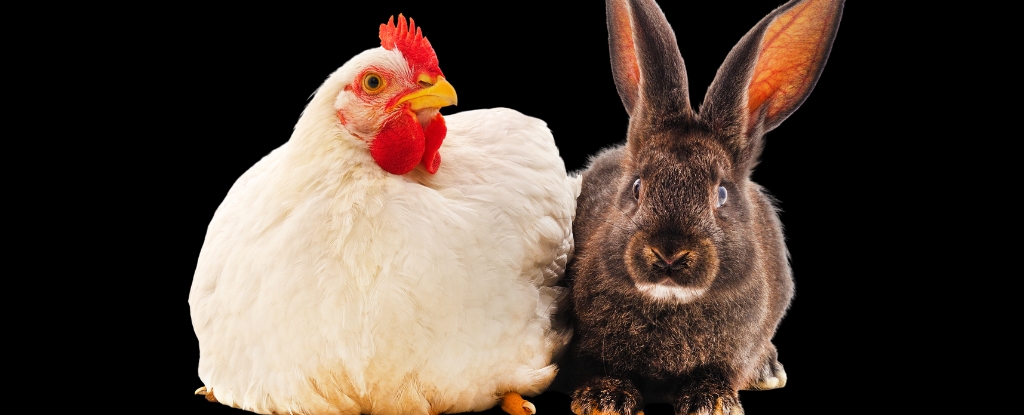
Over the past millennium, domestic animal lineages have exhibited a trend towards increased size, contrasting with a discernible reduction in the body mass of wild fauna. A recent investigation centered in Mediterranean France has pinpointed a singular, overarching factor responsible for these divergent evolutionary trajectories: humanity itself.
Humanity stands as a paramount evolutionary influence on our planet, and this comprehensive new inquiry, spearheaded by Cyprien Mureau, an archaeologist affiliated with the University of Montpellier, presents a compelling illustration of this phenomenon.
Utilizing an extensive dataset comprising more than 81,000 physical measurements derived from specimens unearthed at 311 archaeological locales, Mureau and his associates observed a consistent augmentation in the stature of domesticated species, such as poultry and cattle, throughout the preceding thousand years. Concurrently, wild creatures, including foxes and deer, experienced a diminution in their physical dimensions.
Further analysis by Mureau’s cohort involved the modeling of environmental variables spanning an 8,000-year period, encompassing climatic conditions, vegetative cover, and patterns of human land utilization. Their findings revealed that these opposing trends underwent a marked acceleration within the last 1,000 years, a period characterized by significant advancements in agricultural practices and urban development.
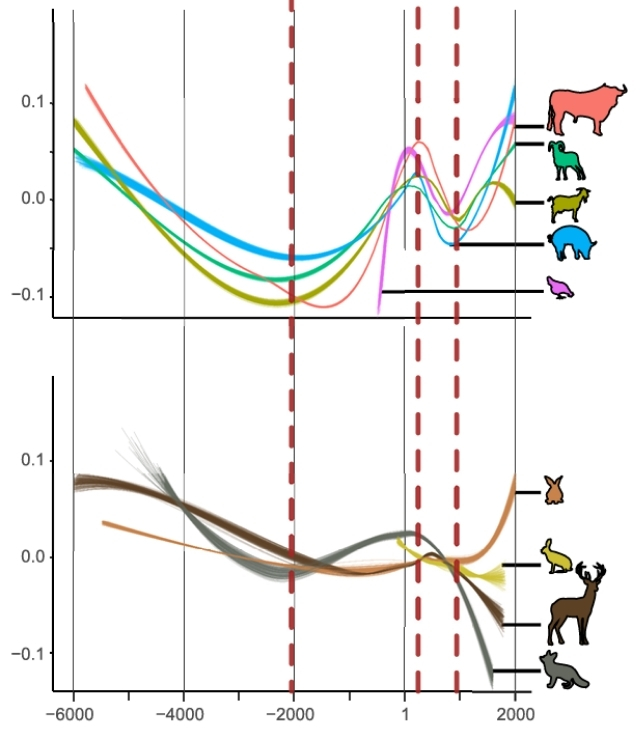
The researchers posit that as human populations expanded, leading to the fragmentation and reduction of natural habitats, the availability of resources for wild species became increasingly constrained. Coupled with intensified hunting pressures, both herbivorous and carnivorous wild mammals and birds were subjected to pronounced selective forces, resulting in a decrease in both their body size and overall population numbers.
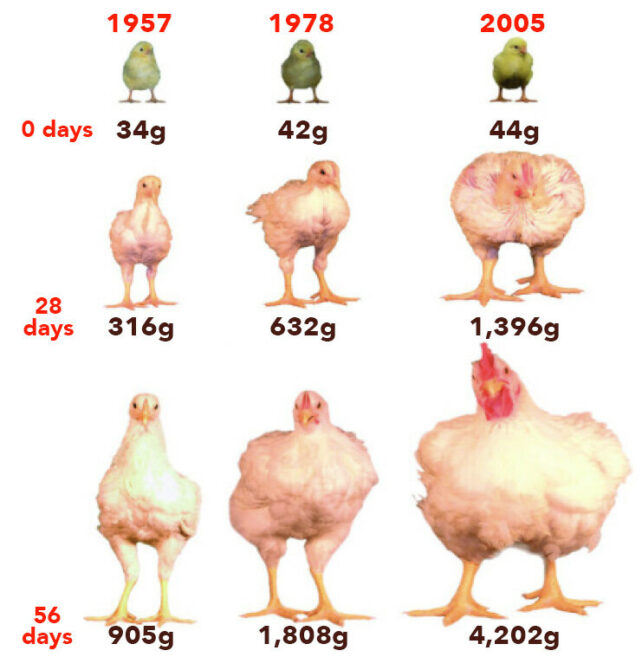
In parallel, human intervention fostered the selective breeding of larger domestic animals, chosen for the enhanced yields of the products they furnish. For instance, larger ovine breeds yield greater quantities of wool, while more robust bovine specimens offer increased meat volumes, and plump poultry contribute more eggs, and so forth. It is noteworthy that domesticated chickens today collectively represent more than triple the total biomass of all wild avian species.
“These discoveries… [underscore]… the escalating influence of human endeavors over the past millennium,” Mureau and his team state in their published work.
A growing body of recent research corroborates the unintended ecological consequences of human activities, as evidenced by alterations in the physical characteristics of other wild animal populations. Instances include the observed miniaturization in puffins and the reduction in wingspan among cliff swallows. Furthermore, many fish species have experienced a decrease in average body size by 20 percent, attributable to overfishing, with their lifecycles also shortening by approximately a quarter.
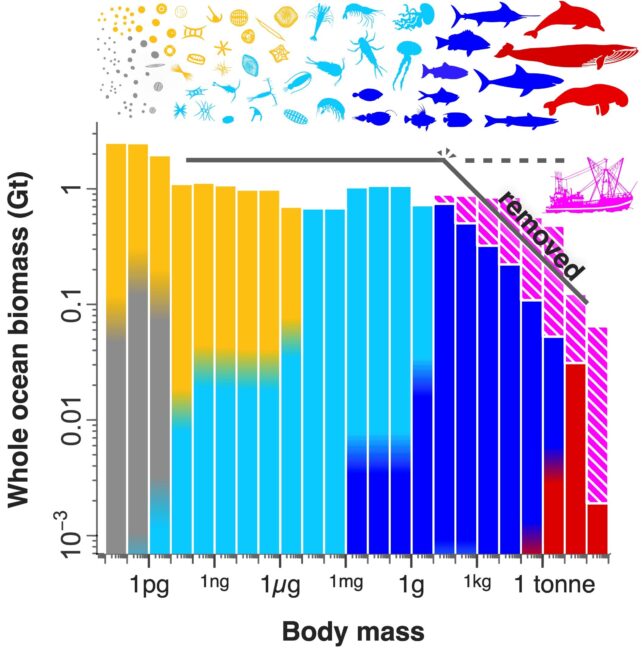
These observed phenomena are a direct outcome of humanity’s pattern of exploiting natural resources without adequate consideration for the long-term repercussions on environmental equilibrium.
A comprehensive study from 2021 highlighted that species not providing direct human utility are frequently those most critical for sustaining ecosystem stability. This very stability is a prerequisite for the continued existence of the species upon which humanity directly depends. Even organisms considered parasites can play a disproportionately significant role in maintaining ecological balance.
However, this crucial balance can only be maintained if these species are permitted to persist.