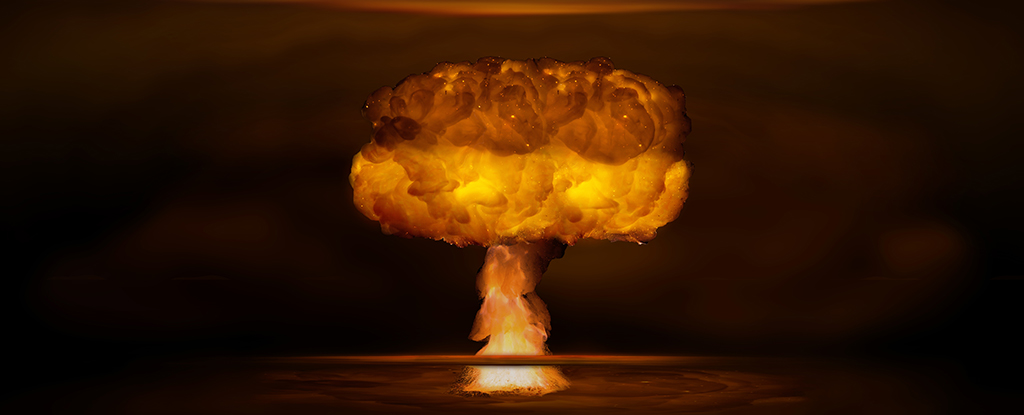
It is a common misconception that the catastrophic consequences of nuclear warfare are confined to proximity to the point of detonation, specifically to those within visual range of an imposing mushroom cloud. However, the reality is far more pervasive, with the ensuing devastation potentially propagating across the entire globe.
Recent scholarly research has meticulously investigated the profound impact that various nuclear winter scenarios could inflict upon global food production capabilities.
The phenomenon of nuclear winter describes a dire climatic upheaval theorized to manifest subsequent to widespread nuclear conflict. This event entails the forceful expulsion of substantial quantities of soot and particulate matter into the upper atmosphere, propelled by nuclear weapon detonations and the subsequent firestorms. The resulting atmospheric obstruction would significantly diminish solar radiation reaching the Earth’s surface for prolonged periods, potentially spanning years. This scarcity of light would precipitate the demise of numerous plant and animal species, including those vital to human sustenance.
A groundbreaking investigation, spearheaded by researchers affiliated with Pennsylvania State University in the United States, has undertaken the simulation of nuclear winter’s ramifications on worldwide agricultural output. Employing corn (Zea mays), the most extensively cultivated grain globally, as a representative ‘sentinel’ crop, the research team aimed to extrapolate the general agricultural consequences.
“We meticulously modelled corn cultivation across 38,572 distinct locations, examining six distinct nuclear war scenarios of escalating intensity, with atmospheric soot injections ranging from 5 million to 165 million metric tons,” elaborates Yuning Shi, a plant scientist and meteorologist at Penn State.
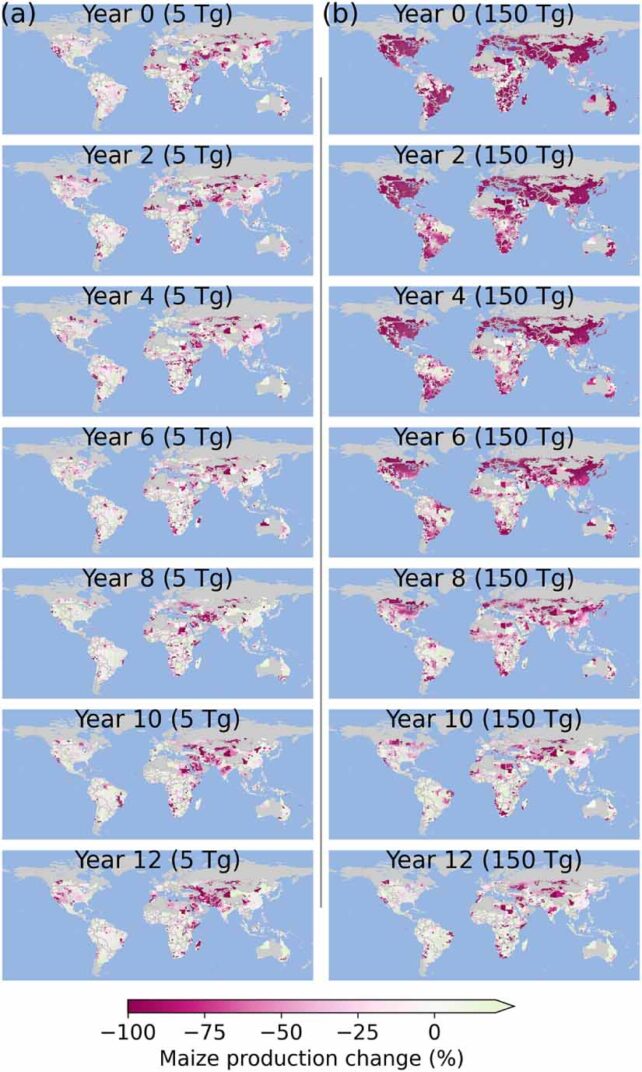
Predictably, the findings were decidedly grim. The research revealed that even a geographically limited nuclear exchange, resulting in the injection of a comparatively modest 5.5 million metric tons of soot into the atmosphere, would still precipitate a 7 percent reduction in global corn yields. Nevertheless, a conflict of global proportions, unleashing an astonishing 165 million metric tons of soot, could devastate crop production by as much as 80 percent.
This most catastrophic projection further incorporates a compounding damage factor: the degradation of the planet’s protective stratospheric ozone layer.
“The intense energy release and incandescent plumes from atomic detonations generate nitrogen oxides within the stratosphere,” explains Shi. “The concurrent presence of these nitrogen oxides and the heat absorption by soot particles could precipitate a rapid depletion of ozone, thereby escalating the intensity of UV-B radiation reaching the Earth’s surface. This amplified UV-B exposure would inflict considerable damage on plant tissues, further exacerbating the decline in global food production.”
The researchers estimate that UV-B radiation levels would reach their apex approximately six to eight years following a nuclear conflict, leading to an additional 7 percent decrease in corn production. This cumulative impact would result in an alarming total reduction of crop output by 87 percent, signaling an imminent and profound global food crisis.
The simulated models indicate that the complete recovery of global corn production from the aftermath of a nuclear winter could necessitate a period ranging from 7 to 12 years, contingent upon the magnitude of the conflict. As a general trend, the Southern Hemisphere is projected to experience a more rapid recovery compared to the Northern Hemisphere, and regions situated closer to the equator are anticipated to recuperate more swiftly than those nearer to the polar regions.
However, mitigating strategies do exist that could potentially accelerate the recovery process. The adoption of corn varieties specifically engineered to thrive under cooler climatic conditions and within abbreviated growing seasons could attenuate the loss of crop productivity by as much as 10 percent. While these measures could offer some relief, it remains unequivocally more advantageous to prevent the occurrence of a nuclear winter altogether.
Should humanity find itself in such dire circumstances, a scenario rendered more plausible by the current state of international relations than at any point since the Cold War, the research team advocates for the proactive preparation of “agricultural resilience kits.” These kits would comprise carefully selected crop seeds, chosen for their optimal suitability to projected climatic conditions within specific geographical locales. The study outlines this preparedness strategy in detail.
“These kits would serve to maintain food production throughout the volatile post-nuclear war years, offering a critical buffer while supply chains and essential infrastructure are painstakingly rebuilt,” comments Armen Kemanian, the principal architect of the simulations. “The concept of agricultural resilience kits can be broadly applied to other catastrophic events; when disasters of such immense scale unfold, fostering resilience becomes the paramount concern.”
And to address a prevailing concern: nuclear winter would not, contrary to some speculation, provide a solution to or negate the effects of global warming. The study elaborates on this point.
The comprehensive findings of this research have been formally documented and published in the esteemed scientific journal, Environmental Research Letters.