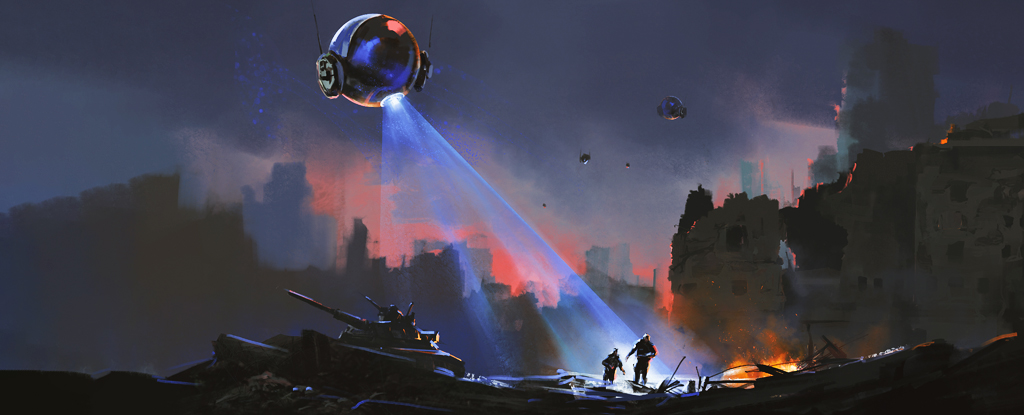
From formidable combat automatons to advanced computational engines and autonomous lethal systems, speculative fiction offers a rich tapestry of narratives concerning armed conflict. It may come as a surprise, yet certain national administrations—including those of the United Kingdom and French Republic—are presently drawing inspiration from these imaginative works to contemplate potential future scenarios and preemptively address emergent threats.
For a considerable duration, authors of science fiction have foreseen and articulated concepts of advanced technologies that have subsequently materialized into reality. In 1964, Arthur C. Clarke achieved significant acclaim for his prescient vision of the internet. Subsequently, in 1983, Isaac Asimov posited that contemporary existence would be untenable without the ubiquitous integration of computers.
These prescient observations have prompted governmental entities to pay close heed. Speculative fiction not only facilitates the conceptualization of futures shaped by emerging technologies but also provides invaluable insights for deriving lessons concerning prospective dangers.
Numerous thematic elements explored within science fiction are undoubtedly influencing defense research related to the conduct of warfare and strategies for risk mitigation. While a complete and absolute prediction of future events remains elusive, it is our fervent hope that our leaders and policymakers will internalize the cautionary narratives embedded within science fiction, thereby enabling us to avert the dystopian outcomes that some of these narratives portend.
Presented below are four thematic areas originating from science fiction that governments might be actively considering.
1. Augumented Combatants
The archetype of the “super soldier” is a pervasive motif in speculative fiction, manifesting in diverse conceptualizations. Frequently, their enhanced capabilities stem from technological integration, as exemplified in Robert A. Heinlein’s *Starship Troopers* (1959) and Joe Haldeman’s *Forever War* (1974). Moreover, contemporary narratives delve into the further augmentation of these combatants through physiological enhancements, such as amplified musculature and even the implantation of supplementary organs.
These augmented warriors exhibit superior strength, velocity, and combat efficacy, inevitably giving rise to a multitude of moral and ethical quandaries concerning their operational roles. In *Forever War*, for instance, the integrated combat computer possesses the authority to de-activate any combatant who deviates from prescribed directives.
Concurrently, within the widely popular narrative universe of *Warhammer 40,000*, monastic warriors undergo radical physiological modifications, including the implantation of a secondary cardiac organ and an additional pulmonary system, alongside a comprehensive array of ancillary implants designed to enhance their survivability on the battlefield. These individuals, known as Space Marines, are so profoundly transformed that they effectively sever their connection to their original human identity.
2. Unmanned Aerial Vehicles and Autonomous Systems
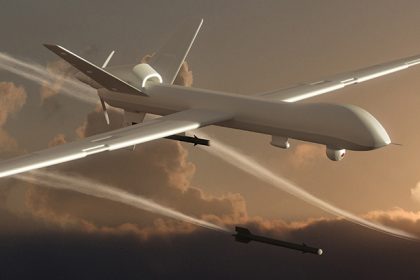
Drone deployment is assuming an increasingly critical role in modern military engagements, with nations like the United States and its allies leveraging platforms such as Predator and Reaper drones for aerial surveillance and precision strikes against suspected adversaries from remote distances. More recently, instances of maritime autonomous systems being employed in the conflict in Ukraine have been observed.
However, it is important to acknowledge that science fiction has long foreshadowed these forms of warfare, which can be viewed as a natural progression stemming from the pervasive computerization of everyday life.
In Orson Scott Card’s seminal novel *Ender’s Game* (1985), the young protagonist, Ender Wiggin, is inducted into Battle School, where he participates in a series of intricate military simulations employing advanced computer systems to replicate conflict against a remote extraterrestrial adversary. It is only after orchestrating the destruction of the alien homeworld that Ender apprehends the reality: he was not engaged in a mere game but was, in fact, directing actual military forces engaged in interstellar combat.
In a recent academic publication, a case is made that *Ender’s Game* exhibits both prescience and a deep engagement with many of the pivotal debates currently occupying this domain. These discussions encompass the methodologies for target selection and the complex ethical and moral considerations surrounding remote-force applications. As autonomous systems become more integrated into civilian life, these issues are poised to gain even greater urgency.
3. Biological Augmentation and Engineered Organisms
Beyond drones and sophisticated computational technologies, an examination of the biological sciences and the utilization of non-human agents in support of humanitarian endeavors during wartime warrants consideration.
Adrian Tchaikovsky’s novel *Dogs of War* (2017) features a protagonist who is a bio-engineered canine—effectively a mercenary “dog of war”—who executes orders without overt dissent until an epiphany reveals that his employers are not the benevolent figures they initially presented themselves to be.
In alignment with many of the most profound works of speculative fiction, *Dogs of War* probes a multitude of ethical and moral questions pertaining to the human condition, including the pervasive human tendency towards exploitation and the ethical standing of animals within our moral frameworks.
Consider, for instance, the real-world account of Kuno, a canine hero whose actions in Afghanistan are credited with saving soldiers’ lives, leading to his recognition with an award equivalent to the Victoria Cross for animals. If sentient beings are to be deployed into hazardous environments to support military personnel or to undertake search and rescue operations in disaster zones, it stands to reason that these animals might also benefit from augmentation to minimize inherent risks and enhance their operational effectiveness.
4. Psychotropic Manipulation and Behavioral Engineering
Science fiction frequently explores the realm of pharmaceuticals and the capacity of chemical agents to alter perceptions of reality and modify human conduct. Philip K. Dick stands as perhaps the most prominent author in this thematic area, with his oeuvre including novels such as *The Three Stigmata of Palmer Eldritch* (1964), *Ubik* (1969), and *Flow My Tears, the Policeman Said* (1974), all of which engage with variations on this central theme.
Furthermore, the motion picture *Serenity* (2005), alongside its much-lamented preceding television series, *Firefly*, depicted Captain Malcolm Reynolds and his crew investigating the grim repercussions of drug-induced societal control and enforced compliance on the planet Miranda.
While these fictional portrayals may appear disquieting, they pale in comparison to clandestine experiments undertaken by the Central Intelligence Agency in reality.
Toward the conclusion of the Vietnam War, revelations surfaced concerning the CIA’s clandestine and illicit human experimentation initiatives, aimed at developing agents for psychological manipulation and coercive interrogation. This clandestine operation, designated MK-ULTRA, was brought to public attention during a Senate hearing in 1977.
Although it is reasonable to assume that such egregious and abhorrent experimentation is confined to historical precedent, the underlying principle of behavioral modification continues to be a significant area of focus within defense research, albeit potentially not to the extreme degree observed during the mid-20th century.
Indeed, many observers contend that contemporary social media platforms have evolved into a global arena for influence operations, with information warfare representing a tangible security threat. Nations such as Russia and China have faced accusations of conducting cyber campaigns directed at Western adversaries.