The advent of the Vikings played a pivotal role in the settlement of the North Atlantic, leading one to anticipate a considerable genetic homogeneity among populations established during that era. However, contemporary investigations indicate a marked divergence in the ancestral origins of the Icelandic and Faroese peoples. These findings lend support to the proposition that the male demographic of the Faroe Islands originated from a more varied assemblage of individuals hailing from disparate Scandinavian regions compared to their Icelandic counterparts. Moreover, the research definitively negates any indication of genetic intermingling between the Faroese and Icelandic gene pools subsequent to their initial establishment.
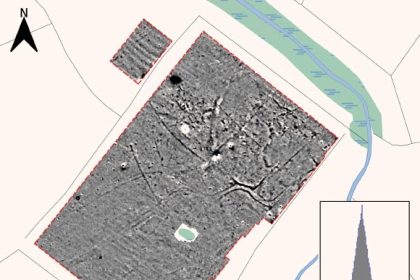
The Faroe Islands comprise an archipelago of eighteen diminutive landmasses situated in the North Atlantic, positioned between Southern Norway, Iceland, and Scotland. Owing to their demographic trajectory and a degree of geographical seclusion, the Faroe Islands, akin to other island communities in the North Atlantic, exhibit a significant degree of genetic uniformity when juxtaposed with continental populations. While historical records and archaeological evidence suggest settlement by Vikings, predominantly from Western Norway, around 800 CE, an increasing volume of data posits earlier habitation. This earlier presence is attributed to entities such as Celtic monks or individuals originating from the British Isles. Radiocarbon dating of peat and barley samples corroborates two distinct phases of pre-Viking settlement, occurring between approximately 300-500 CE and 500-700 CE. More recently, the detection of ovine DNA in archaeological sediments dating back to 500 CE, coupled with contemporary whole-genome analyses, has led to an estimation of the initial establishment of the Faroe Islands occurring between 50 and 300 CE – potentially two to three centuries prior to hypotheses based solely on archaeological findings. Image credit: Oscar C.R.
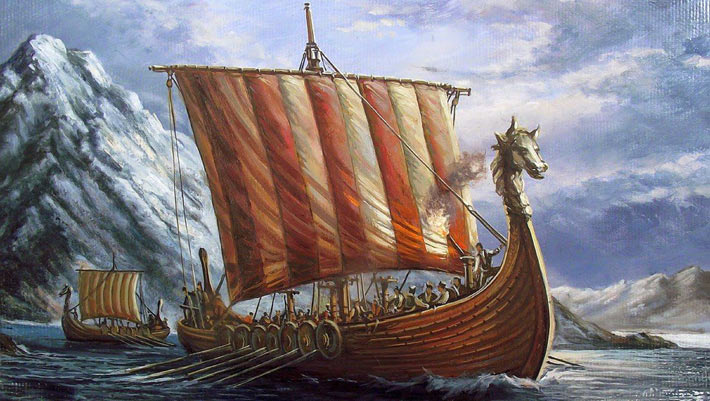
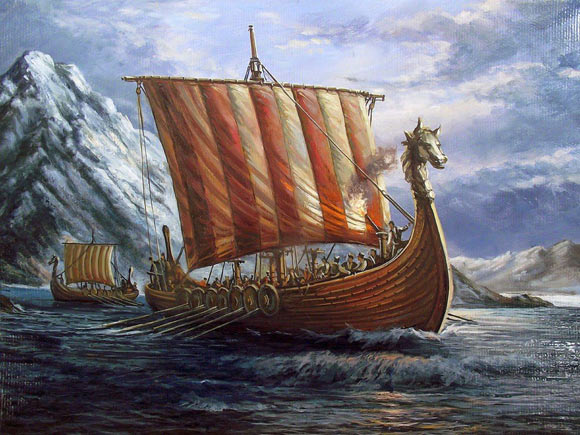
Between the 8th century and roughly 1050 CE, Norse seafarers navigated the Atlantic in their distinctive longships, reaching as far as Newfoundland and Labrador, and venturing into Greenland, while simultaneously exploring the Mediterranean Sea and the Eurasian mainland.
Among the locales where their presence is historically documented are the Faroe Islands, an expanse of eighteen islands located in the North Atlantic.
It is highly probable that they were not the inaugural inhabitants; archaeological investigations have yielded evidence indicating that these islands have been occupied since approximately 300 CE, possibly by Celtic monastic orders or other individuals with origins in the British Isles.
However, according to the Færeyinga Saga, a narrative composed around the turn of the 13th century, a Viking chieftain named Grímur Kamban is recorded as having established himself in the Faroe Islands between approximately 872 and 930 CE. This raises the pertinent question: from which Scandinavian region did Grímur and his retinue originate?
“Our current research furnishes compelling evidence that the Faroe Islands were colonized by a notably diverse cohort of male settlers originating from multiple Scandinavian populations,” stated Dr. Christopher Tillquist, a researcher affiliated with the University of Louisville.
Within the purview of this investigation, Dr. Tillquist and his associates meticulously determined the genotype at twelve ‘short tandem repeat’ (STR) loci on the Y-chromosome of 139 males from the Faroese islands of Borðoy, Streymoy, and Suðuroy.
Each participant was subsequently classified into the most probable haplogroup, considering the known geographical distribution patterns of these haplogroups across contemporary Europe.
These genotypic distributions were then juxtaposed with data obtained from 412 males originating from Norway, Sweden, Denmark, Iceland, and Ireland.
This comparative approach facilitated the reconstruction of the ancestral population from which the founding members of the Viking settlements were drawn.
Sophisticated analytical techniques revealed that the spectrum of Faroese genetic samples bore a closer resemblance to the genotype range observed in broader Scandinavian populations, whereas the Icelandic genotypes presented as distinct.
The research team also pioneered an innovative genetic methodology, termed ‘Mutational Distance from Modal Haplotype,’ designed to scrutinize variations in single-nucleotide polymorphisms (SNPs) within the STR regions.
This novel approach enabled the identification of a ‘founder effect’ – the residual traces of random genetic diversity reduction that occurs during historical colonization by a limited number of individuals – which persists within the genetic makeup of present-day Faroese and Icelandic male populations.
“For a considerable period, the scientific community has operated under the assumption that both the Faroe Islands and Iceland were settled by ethnically similar Norse peoples,” remarked Dr. Tillquist.
“Nevertheless, our novel analytical findings have elucidated that these islands were established by males deriving from distinct gene pools within Scandinavia.”
“One group, characterized by its diverse Scandinavian origins, established itself in the Faroe Islands, while another, more genetically divergent band of Vikings, embarked on the colonization of Iceland. These distinct groups exhibit separate genetic signatures that remain discernible to this day.”
“Despite their geographical propinquity, there appears to have been no subsequent interbreeding between these two distinct populations.”
“Our findings compellingly suggest that the expansion of Viking influence into the North Atlantic was a more intricate phenomenon than previously apprehended.”
“Each longship that embarked on voyages to these remote archipelagos carried not merely Norse adventurers, but also distinct genetic heritages.”
“We are now equipped to trace these divergent journeys of exploration and settlement, thereby illuminating a more nuanced narrative of Viking endeavors than that traditionally conveyed by historical accounts.”
The results of this study have been published in the esteemed journal Frontiers in Genetics.
_____
Allison E. Mann et al. 2024. Genetic evidence points to distinct paternal settlers of the Faroe Islands and Iceland. Front. Genet 15; doi: 10.3389/fgene.2024.1462736