DNA methylation stands as a pivotal epigenetic regulatory mechanism, fundamentally controlling gene activity within eukaryotic life forms.
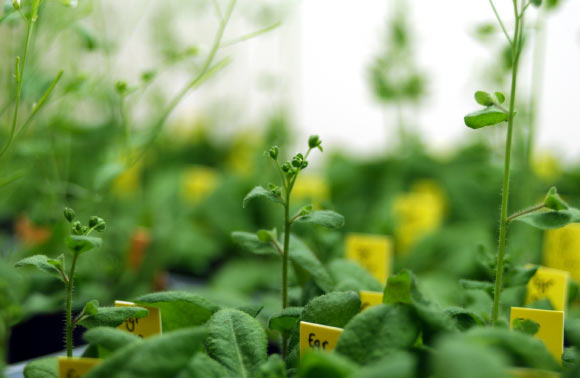
Arabidopsis thaliana. Image credit: Carl Davies, CSIRO / CC BY 3.0.
This biological phenomenon involves the incorporation of small chemical moieties, known as methyl groups, onto the DNA strand within living cells.
The precise placement of these methyl groups dictates gene expression, effectively determining which genetic sequences are activated or deactivated, thereby influencing an organism’s phenotypic characteristics and its capacity to adapt to environmental stimuli.
A significant aspect of this process involves the transcriptional silencing of specific DNA elements that possess the ability to relocate throughout an organism’s genome.
These mobile genetic units, commonly referred to as transposons or “jumping genes,” pose a potential threat of genomic instability if left unchecked.
The enzymatic machinery responsible for catalyzing DNA methylation varies between different kingdoms of life, with mammals and plants having independently evolved distinct enzymatic repertoires for methyl group addition.
“While mammals possess a limited set of two primary enzymes responsible for methylation in a single DNA context, plants are equipped with multiple enzymes that facilitate this modification across three distinct DNA contexts,” explained Professor Xuehua Zhong, a distinguished researcher affiliated with Washington University in St. Louis.
“Our investigation centers on this disparity, prompting the query: what necessitates the heightened enzymatic diversity for methylation in the plant kingdom?”
“Specific genes or complex gene interactions are instrumental in shaping particular features or traits.”
“By elucidating the precise regulatory mechanisms, we can pave the way for technological innovations aimed at enhancing crop characteristics.”
Professor Zhong and her research team concentrated their efforts on two plant-specific enzymes: CMT3 and CMT2.
Both enzymes are integral to appending methyl groups to DNA, with CMT3 exhibiting a specialization in methylating CHG sequence motifs, while CMT2 focuses on different nucleotide arrangements, specifically CHH sequences.
Notwithstanding their divergent functional specificities, both enzymes belong to the chromomethylase (CMT) protein family, which underwent diversification through gene duplication events, thereby conferring upon plants augmented genetic information reserves.
Employing the widely studied model plant species, the thale cress (Arabidopsis thaliana), the study’s authors embarked on an inquiry into the evolutionary trajectory of these duplicated enzymes and their subsequent functional divergence over time.
Their findings indicate that at some juncture in evolutionary history, CMT2 relinquished its capacity to methylate CHG sequences. This functional loss is attributed to the absence of a critical amino acid, arginine.
“Arginine holds particular significance due to its inherent charge,” stated Jia Gwee, a postgraduate student at Washington University in St. Louis.
“Within the cellular environment, its positive charge enables the formation of electrostatic interactions, such as hydrogen bonds, with negatively charged macromolecules like DNA.”
“Conversely, CMT2 features a different amino acid, valine. Valine, being uncharged, lacks the ability to recognize the CHG context, a capability possessed by CMT3. This biochemical distinction is believed to account for the functional disparities observed between these two enzymes.”
To corroborate this evolutionary hypothesis, the researchers engineered a genetic mutation to reintroduce arginine into the CMT2 enzyme.
As hypothesized, the modified CMT2 enzyme demonstrated proficiency in both CHG and CHH methylation. This outcome strongly suggests that CMT2 originated as a duplication of CMT3, serving as a supplementary mechanism to manage the increasing complexity of genomic methylation.
“However, rather than merely replicating the ancestral function, it evolved a novel role,” Professor Zhong commented.
Furthermore, this research has provided valuable insights into the distinctive structural attributes of CMT2.
The enzyme possesses an extended, flexible N-terminal domain that plays a role in regulating its own protein stability.
“This represents one of the adaptive strategies evolved by plants to ensure genomic integrity and resilience against environmental stressors,” Professor Zhong elaborated.
“This characteristic may offer an explanation for the evolutionary success of CMT2 in plants thriving across diverse global environments.”
The findings are now published in the esteemed journal Science Advances.
_____
Gwee et al. 2024. Science Advances, in press; doi: 10.1126/sciadv.adr2222