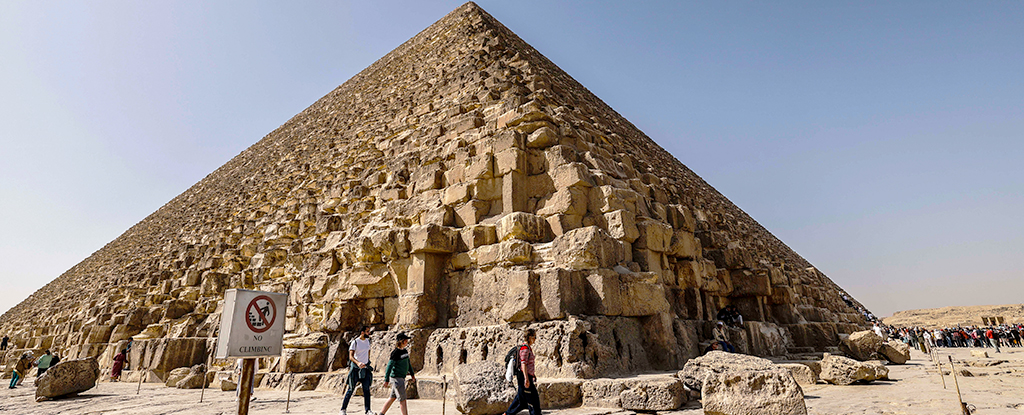
A clandestine corridor within Egypt’s renowned Great Pyramid has been brought to light, as authorities confirmed on Thursday the culmination of an extensive seven-year international research initiative.
The newly identified void measures an impressive 9 meters (30 feet) in span and exceeds 2 meters in breadth, according to a declaration from the antiquities ministry.
Speaking to the press at the iconic Giza necropolis, also referred to as the Khufu or Cheops pyramid, Egypt’s Minister of Tourism and Antiquities, Ahmed Issa, described the “gabled corridor,” characterized by its triangular apex, as situated on the northern facade of the Great Pyramid of King Khufu.
This significant revelation emerged from the ScanPyramids undertaking, which commenced in 2015. It represents a collaborative effort involving prominent academic institutions from France, Germany, Canada, and Japan, alongside a collective of Egyptian specialists.
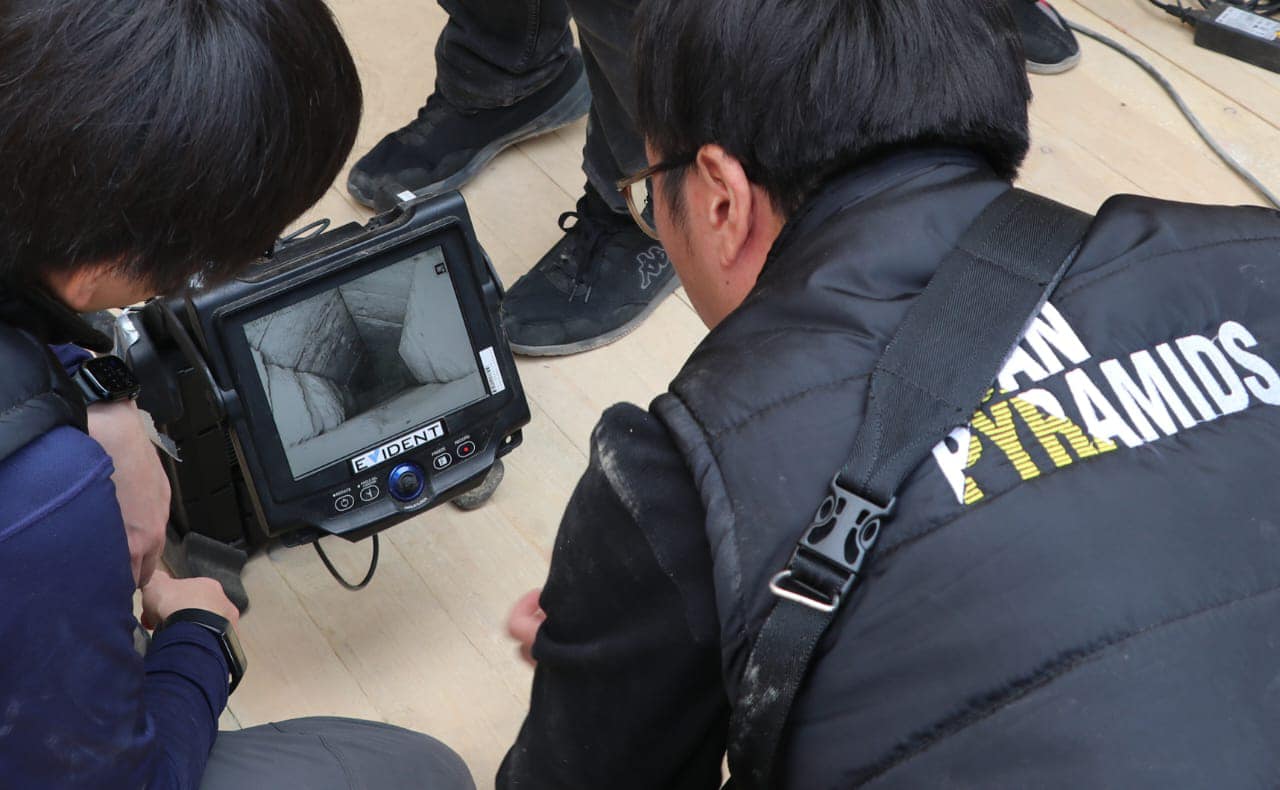
The project, overseen by a committee headed by Zahi Hawass, a distinguished archaeologist and former antiquities minister of Egypt, employs sophisticated technologies to generate visualizations of the pyramid’s concealed internal structures without necessitating any excavation.
The array of advanced technologies utilized comprises infrared thermography, muon radiography imaging, and 3D reconstruction methodologies. The investigators assert that these are all non-intrusive and non-damaging diagnostic techniques.
Dominating the Giza plateau, the Great Pyramid stands at an imposing 146 meters in height, holding the distinction of being the sole surviving testament to the ancient world’s seven marvels.
Erected approximately 4,500 years ago, this monumental structure contains three documented chambers and, much like its Egyptian counterparts, was conceived as a final resting place for a pharaoh.
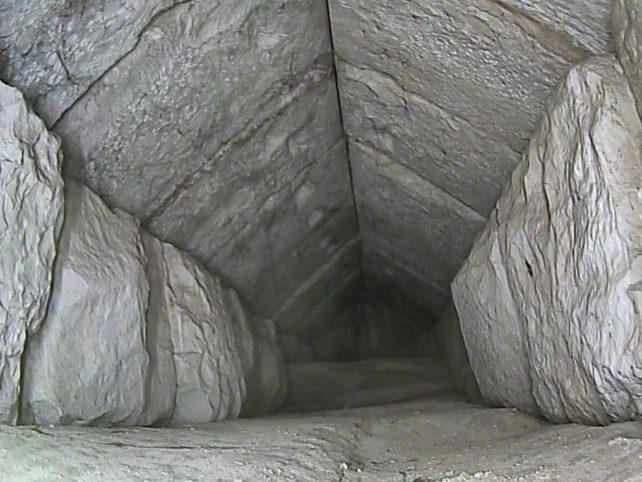
During a press briefing at the pyramid on Thursday, Hawass posited with considerable conviction that “there is a significant probability… the passage serves to safeguard something. In my assessment, it is protecting the actual burial chamber of King Khufu.”
In 2017, the ScanPyramids initiative disclosed the identification of a void comparable in size to a passenger jet, marking the first substantial internal feature discovered within the Great Pyramid since the 19th century.