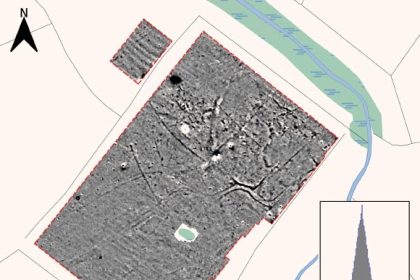
Jay-yi Nah, an archaeological locale situated underwater, dates back to the Early Classic Mayan epoch (250-600 CE) and was primarily dedicated to the production of salt for regional consumption or possibly for subsequent distribution through trade routes.
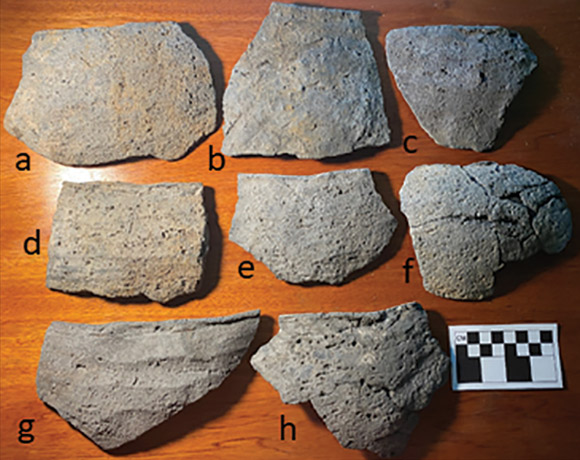
Bowls with inward curving walls unearthed during the sea-floor survey at Jay-yi Nah, Belize. Image attributed to H. McKillop.
The dietary staples of the Mayan civilization predominantly comprised maize, beans, squash, and other plant-based foods that were relatively low in sodium. Consequently, the dietary intake of individuals was augmented by the consumption of industrially produced salt.
Investigations conducted at the Paynes Creek Salt Works in southern Belize suggest that Mayan households residing along the coast generated surplus salt during the Classic period (250-900 CE), establishing specialized facilities for salt processing alongside separate residential structures.
“The majority of the salt-producing sites along the Belizean coast originate from the Late Classic period (650-800 CE), a timeframe that coincides with a surge in population within the southern Maya lowlands,” noted Professor Heather McKillop from Louisiana State University and Dr. Elizabeth Sills from the University of Texas.
“These include salt production centers at Northern River Lagoon, Wits Cah Ak’al, Marco Gonzalez, and other locations on Ambergris Cay, Moho Cay, Colson Point, Placencia Lagoon, and the Paynes Creek Salt Works.”
“Extensive salt manufacturing appears to have ceased by the Terminal Classic period (800-900 CE), and potentially earlier at Marco Gonzalez, coinciding with the depopulation of a significant portion of the southern Maya lowlands and a notable escalation in trade networks encircling the peninsula, evidenced by the presence of exotic goods such as Fine Orange, Plumbate, Yucatan slate, and other ceramic types, particularly discernible at Marco Gonzalez and Wild Cane Cay.”
In 2023, archaeologists uncovered a previously unknown salt production site, designated Jay-yi Nah. This site presented a curious scarcity of the broken pottery fragments commonly found at other salt works, although a limited number of ceramic shards were recovered.
“These shards bore resemblance to those from the adjacent island settlement of Wild Cane Cay, which I had previously investigated archaeologically,” stated Professor McKillop.
“Consequently, I proposed to Dr. Sills that we conduct a further survey of Jay-yi Nah, specifically searching for posts and submerged artifacts.”
The material culture unearthed by the research team differed markedly from that of other submerged locales in the vicinity, which typically contained imported pottery, obsidian, and high-grade chert.
“Initially, this discrepancy was puzzling. However, a radiocarbon dating of a post discovered at Jay-yi Nah yielded an Early Classic date, ranging from 250-600 CE, thereby resolving the enigma,” Professor McKillop explained.
It was determined that Jay-yi Nah predated the other submerged sites by a considerable margin.
Through their discoveries, the scientists ascertained that Jay-yi Nah functioned as a localized enterprise, lacking the external trade connections that emerged later during the Late Classic period, when the inland Maya population reached its zenith, creating a substantial demand for salt—a fundamental biological requirement that was in scarce supply in the interior urban centers.
Jay-yi Nah commenced its operation as a modest salt-manufacturing locality, maintaining connections with the neighboring community on Wild Cane Cay, which was also engaged in salt production throughout the Early Classic period.
The abundance of fish skeletal remains preserved within the anaerobic sediments at Wild Cane Cay suggests that a portion of the salt produced there was utilized for preserving fish intended for future consumption or trade.
“Distinctive, large ceramic vessels featuring incurved walls, along with necked jars possessing grooved rims, were found in association with an Early Classic pole-and-thatch salt processing facility. However, the characteristic vessel supports and trade items seen at later salt production sites were notably absent,” the researchers reported.
“These variations in the recovered artifacts permit an examination of technological advancements in coastal salt production and the expansion of trade networks as the demand for salt from inland regions intensified during the Late Classic period.”
“Notwithstanding the inherent difficulties of conducting archaeological research at shallow underwater sites, the investigation at Jay-yi Nah highlights the significant value of excavating within mangrove peat deposits situated beneath the seabed, where preserved wooden structures provide precise chronological data and contextual information regarding ancient practices of commodity production—in this instance, salt.”
The results of this research have been published in the journal Antiquity.
_____
Heather McKillop & E. Cory Sills. Earliest Ancient Maya salt production in southern Belize: excavations at Jay-yi Nah. Antiquity, published November 6, 2024; doi: 10.15184/aqy.2024.186