A rich collection of ancient botanical specimens unearthed in Kenya is illuminating the historical trajectory of plant cultivation in equatorial East Africa. This region, long recognized for its potential significance in the genesis of early agriculture, has yielded limited direct material evidence of cultivated flora until now. In a new investigation published on July 10, 2024, within the pages of the Proceedings of the Royal Society B, a collaborative team of archaeologists hailing from Washington University in St. Louis, the University of Pittsburgh, and their associates has presented the most extensive and meticulously dated archaeobotanical record yet discovered in interior East Africa.

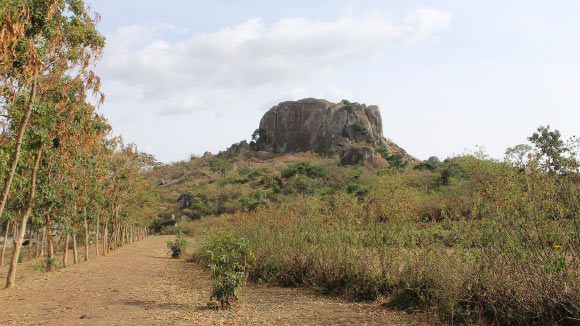
Located in the foothills of Mount Elgon near the Kenya-Uganda border, Kakapel Rockshelter is the site where Dr. Mueller and her collaborators have uncovered the earliest evidence for plant farming in east Africa. Image credit: Steven Goldstein.
Prior to this discovery, scientific endeavors to retrieve ancient plant remnants from East Africa had met with scant success, leaving researchers with only a vague understanding of the origins and methodologies of early farming practices across the vast and ecologically diverse expanse encompassing Kenya, Tanzania, and Uganda.
Dr. Natalie Mueller, an archaeologist affiliated with Washington University in St. Louis, commented, “While numerous hypotheses regarding the inception of agriculture in East Africa exist, tangible proof in the form of actual ancient plant materials has been notably scarce.”
The research was meticulously conducted at the Kakapel Rockshelter, an archaeological site located within Kenya’s Lake Victoria region.
Dr. Mueller further elaborated, “We unearthed a substantial quantity of plant remains, including a significant volume of cultivated crop evidence. The findings paint a picture of a rich historical tapestry of varied and adaptable agricultural systems in this area, which stands in contrast to contemporary generalizations about African farming.”
The latest findings from this research illuminate a progressive assimilation of distinct crop types, each with origins in different geographical sectors of Africa.
Specifically, the discovery of cowpea remnants at the Kakapel Rockshelter, subjected to direct dating and found to be 2,300 years old, represents the earliest confirmed instance of a domesticated crop’s introduction—and by extension, the adoption of agricultural lifestyles—into East Africa.
It is postulated that cowpea originated in West Africa and reached the Lake Victoria basin concurrently with the eastward migration of Bantu-speaking populations from Central Africa, according to the study’s authors.
Emmanuel Ndiema of the National Museums of Kenya, a key collaborator on the project, stated, “Our discoveries at Kakapel provide the most ancient evidence of domesticated crops in East Africa, underscoring the dynamic interplay between indigenous pastoralists and the incoming Bantu-speaking cultivators.”
“This research underscores the National Museums of Kenya’s dedication to unraveling the profound historical roots of Kenya’s agricultural legacy and fostering an understanding of how past human adaptations can offer valuable insights into future food security and environmental stewardship.”
A Constantly Evolving Agricultural Landscape
Kakapel, situated north of Lake Victoria in the foothills of Mount Elgon and proximate to the Kenyan-Ugandan border, is a noted site for rock art and harbors archaeological artifacts that attest to over 9,000 years of continuous human presence. The site has held the status of a Kenyan national monument since 2004.
Dr. Steven T. Goldstein, an anthropological archaeologist at the University of Pittsburgh and a co-lead author on the study, remarked, “The Kakapel Rockshelter is exceptionally significant as one of the few locations in this region offering such an extended chronological sequence of habitation by a multitude of diverse communities.”
“Through the application of our novel excavation methodologies, we have been uniquely positioned to identify the arrival of domesticated flora and fauna into Kenya and to scrutinize the ramifications of these introductions on local ecosystems, human technological advancements, and socio-cultural structures.”
Dr. Mueller employed a flotation technique to meticulously separate fragments of wild and domesticated plant species from the ash and other detritus recovered from a hearth excavated at Kakapel. While this method has been a staple in her global research endeavors, its application can be challenging in arid environments, and consequently, it has seen limited use in East Africa.
The researchers utilized direct radiocarbon dating on carbonized seeds to establish the arrival of cowpea—also recognized globally as the black-eyed pea and currently a significant legume—approximately 2,300 years ago. This period coincided with the emergence of domesticated cattle utilization in the region.
Evidence indicated that sorghum was introduced from the northeast at least 1,000 years ago.
Furthermore, hundreds of finger millet seeds were recovered, with dates extending back at least a millennium.
This particular crop holds indigenous status in Eastern Africa and remains a vital heritage crop for contemporary communities residing in the vicinity of Kakapel.
An intriguing botanical find by Dr. Mueller was that of field pea (Pisum), which, though charred, remained remarkably preserved. The presence of peas had not previously been considered a component of early agricultural practices in this geographical area.
“To the best of our knowledge, this constitutes the sole evidence of peas from Iron Age Eastern Africa,” Dr. Mueller stated.
This remarkable pea specimen, depicted in the research paper, presents its own intriguing enigma.
Dr. Mueller explained, “The common peas consumed in North America were domesticated in the Near East. They were cultivated in Egypt and likely made their way to East Africa via the Nile River through Sudan, a route also likely used for sorghum’s arrival in the region. However, there exists another type of pea, the Abyssinian pea, which was independently domesticated in Ethiopia, and our sample could potentially be from either species!”
A significant portion of the botanical remnants identified by Dr. Mueller and her team at Kakapel could not be definitively classified, primarily due to the current lack of comprehensive reference collections of East African plant samples, even for contemporary scientists working in Kenya, Tanzania, and Uganda.
“Our findings demonstrate that African agriculture was in a state of continuous evolution, driven by population movements, the adoption of novel crops, and the discontinuation of others at a localized level,” Dr. Mueller observed.
“Prior to European colonization, the capacity for community-level adaptability and autonomous decision-making played a crucial role in ensuring food security—a principle that continues to hold true in many regions today.”
_____
Mueller et al. 2024. Proceedings of the Royal Society B, in press; doi: 10.1098/rspb.2023.2747
This article is a revised version of a press release originally issued by Washington University in St. Louis.