A recent genetic and proteomic investigation of fossilized feline remnants, previously classified as Panthera tigris (tigers), has revealed that the Japanese Archipelago was an inhabitant of Panthera spelaea (cave lions) during the Late Pleistocene epoch, specifically between 73,000 and 20,000 years ago.
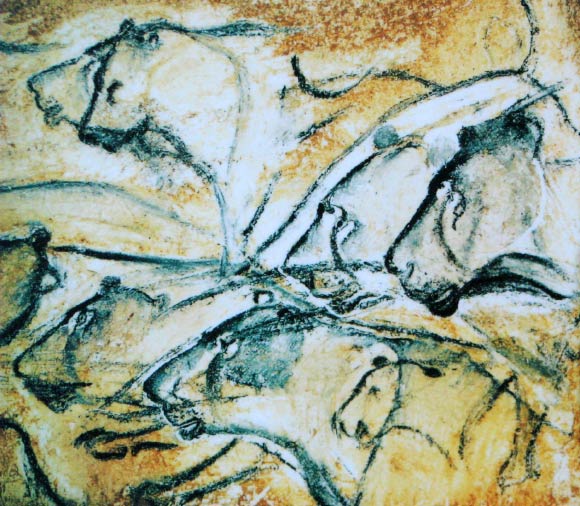
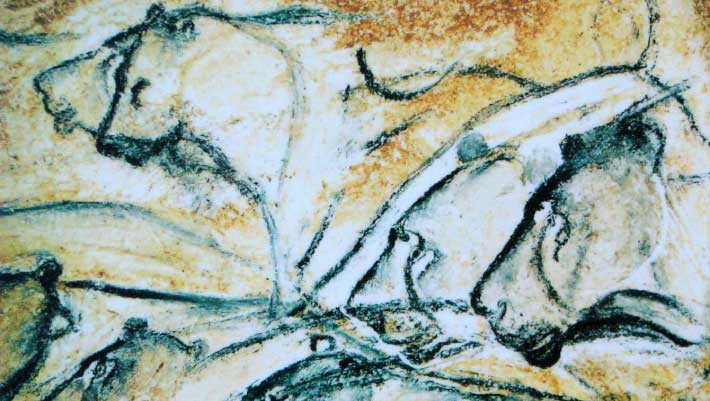
Cave lions painted in the Chauvet Cave, France.
During the latter part of the Pleistocene, both lions and tigers occupied prominent positions as apex predators, playing a crucial role in the East Asian megafauna ecosystem.
Cave lions were predominantly found in northern Eurasia, while tigers had a more southerly distribution.
“These dominant apex predators, lions and tigers, likely influenced the evolutionary trajectories of other co-occurring carnivores through direct confrontation and indirect resource competition, and also impacted herbivore populations via predation, emerging approximately two million years ago,” stated Shu-Jin Luo, a researcher from Peking University, along with his colleagues.
“Subsequently, lions and tigers may have become significant rivals, particularly after lions migrated out of Africa around a million years ago and expanded their territories across Eurasia.”
“However, their contemporary geographic footprints are no longer contiguous, a result of substantial range reductions across southwestern Eurasia by the early 20th century, driven by human activities. The nearest extant populations are now situated over 300 kilometers apart in India.”
“Conversely, during the Late Pleistocene, interactions and range overlaps between lions and tigers were likely more frequent within a transitional zone, referred to as the lion-tiger transition belt, extending across Eurasia from the Middle East, through Central Asia, and into the Far East,” they elaborated.
“At the far eastern extent of this zone, the Japanese Archipelago has long been recognized as a Late Pleistocene tiger refuge. This assumption was supported by large feline subfossil remains conventionally attributed to tigers, although their precise taxonomic classification remained undetermined.”
To ascertain the origin and evolutionary history of Japan’s Pleistocene felids, the research team meticulously re-examined 26 subfossil specimens unearthed from various locations within the Japanese Archipelago.
“Employing methods such as mitochondrial and nuclear genome hybridization capture and sequencing, paleoproteomics, Bayesian molecular dating, and radiocarbon dating, we discovered that all ancient Japanese ‘tiger’ specimens yielding molecular data were, unexpectedly, identified as cave lions,” they reported.
Despite the exceptionally low concentration of endogenous DNA in most of the samples, the scientists successfully retrieved five nearly complete mitochondrial genomes and one partial nuclear genome.
Their phylogenetic assessment indicated that the Japanese specimens constituted a robustly supported monophyletic group, situated within the Late Pleistocene cave lion lineage known as spelaea-1.
An analysis of the nuclear genome from the most exceptionally preserved specimen corroborated these findings, distinguishing lion lineages from those of tigers.
Furthermore, a paleoproteomic examination identified a characteristic amino acid variant in alpha-2-HS-glycoprotein that was consistent with lions, rather than tigers.
The research team posits that cave lions migrated to the Japanese Archipelago between approximately 72,700 and 37,500 years ago, facilitated by a land bridge that connected northern Japan to the mainland during the Last Glacial period.
These animals managed to reach even the southwestern areas of the archipelago, despite the presence of habitats that were previously believed to be more conducive to tigers.
They coexisted with various contemporary species, including wolves, brown bears, Asian black bears, and early human inhabitants, thereby forming an integral component of the archipelago’s Late Pleistocene ecological landscape.
The study’s authors propose that the spelaea-1 cave lions may have persisted in the Japanese Archipelago for at least 20,000 years longer than their extinction across Eurasia, and potentially more than 10,000 years beyond their final disappearance from eastern Beringia.
“Future comprehensive re-evaluations of lion and tiger subfossil remains across mid-latitude Eurasia will be crucial for elucidating species range dynamics and resolving the migratory patterns of the lion-tiger belt,” they concluded.
The research findings were published on January 26, 2026, in the journal Proceedings of the National Academy of Sciences.
_____
Xin Sun et al. 2026. The Japanese Archipelago sheltered cave lions, not tigers, during the Late Pleistocene. PNAS 123 (6): e2523901123; doi: 10.1073/pnas.2523901123