As humanity’s ventures into the cosmos extend beyond Earth’s immediate vicinity, the imperative for self-sustaining methodologies to procure resources locally is escalating, given the growing impracticality of frequent resupply expeditions. Asteroids, notably those abundant in precious metals such as platinum-group elements, have surfaced as particularly compelling objectives. In a novel investigation conducted aboard the International Space Station (ISS), researchers evaluated the efficacy of employing bacteria and fungi for the extraction of 44 distinct elements from asteroidal regolith under conditions of microgravity.
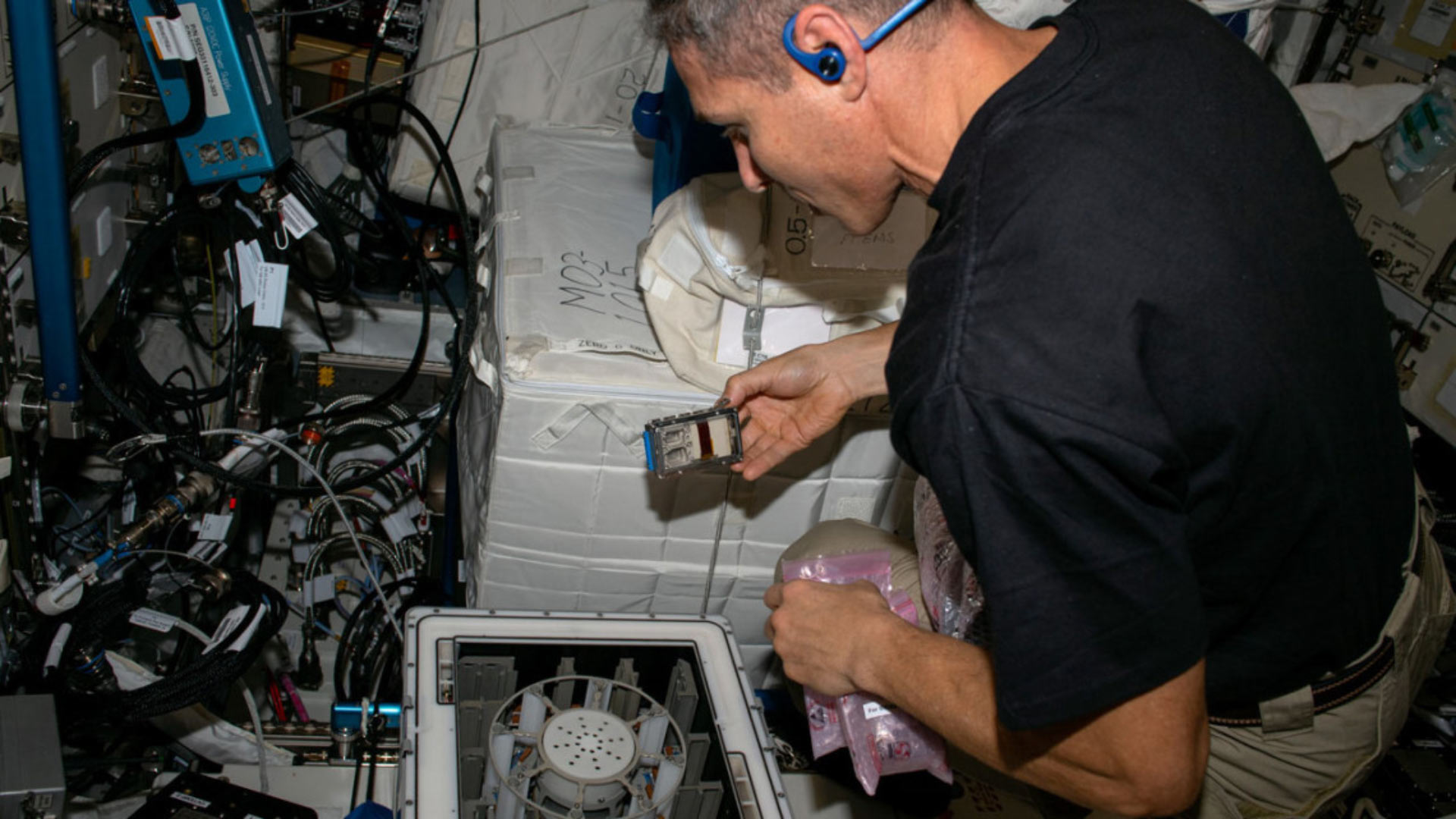
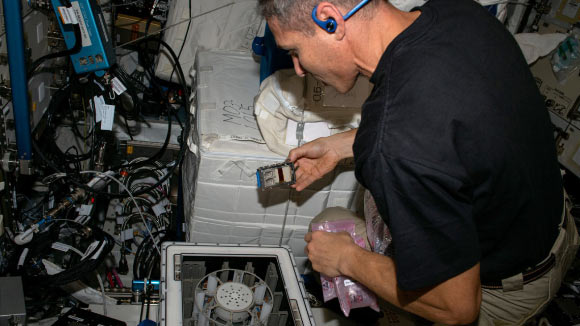
NASA astronaut Michael Scott Hopkins performs a microgravity experiment on the International Space Station. Image credit: NASA.
Within the framework of the BioAsteroid project, Professor Charles Cockell of the University of Edinburgh, alongside his research associates, utilized the bacterial species Sphingomonas desiccabilis and the fungal species Penicillium simplicissimum to ascertain the spectrum of elements extractable from L-chondrite asteroidal matter.
Crucially, understanding the intricate ways in which these microorganisms interact with extraterrestrial rock formations in a microgravity environment was also a primary objective.
“This represents, arguably, the inaugural experiment of its kind conducted on the International Space Station involving meteorite material,” stated Dr. Rosa Santomartino, a researcher affiliated with Cornell University and the University of Edinburgh.
“Our intention was to maintain a focused approach while simultaneously ensuring broad applicability to maximize its impact.”
“These are two organisms with fundamentally different characteristics, and consequently, they will facilitate the extraction of distinct substances.”
“Therefore, our aim was to elucidate the processes and outcomes, while ensuring the findings held relevance for a wider context, as knowledge regarding the mechanisms governing microbial behavior in space remains nascent.”
These microorganisms possess significant potential as instruments for resource acquisition due to their capacity to generate carboxylic acids, organic compounds that can adhere to mineral surfaces through complexation, thereby promoting their dissolution.
However, many uncertainties persist regarding the precise operational mechanics of this process. To address this, the authors also undertook a metabolomic analysis. This involved collecting samples of the liquid culture post-experiment and subsequently examining the contained biomolecules, with a particular emphasis on secondary metabolites.
NASA astronaut Michael Scott Hopkins executed the experiment aboard the ISS to assess microgravity’s influence, while the researchers simultaneously conducted a parallel control experiment under terrestrial gravity conditions in their laboratory to facilitate comparative analysis with the space-based results.
Following this, the scientific team meticulously analyzed the extensive dataset generated, which encompassed 44 distinct elements, of which 18 were successfully extracted via biological means.
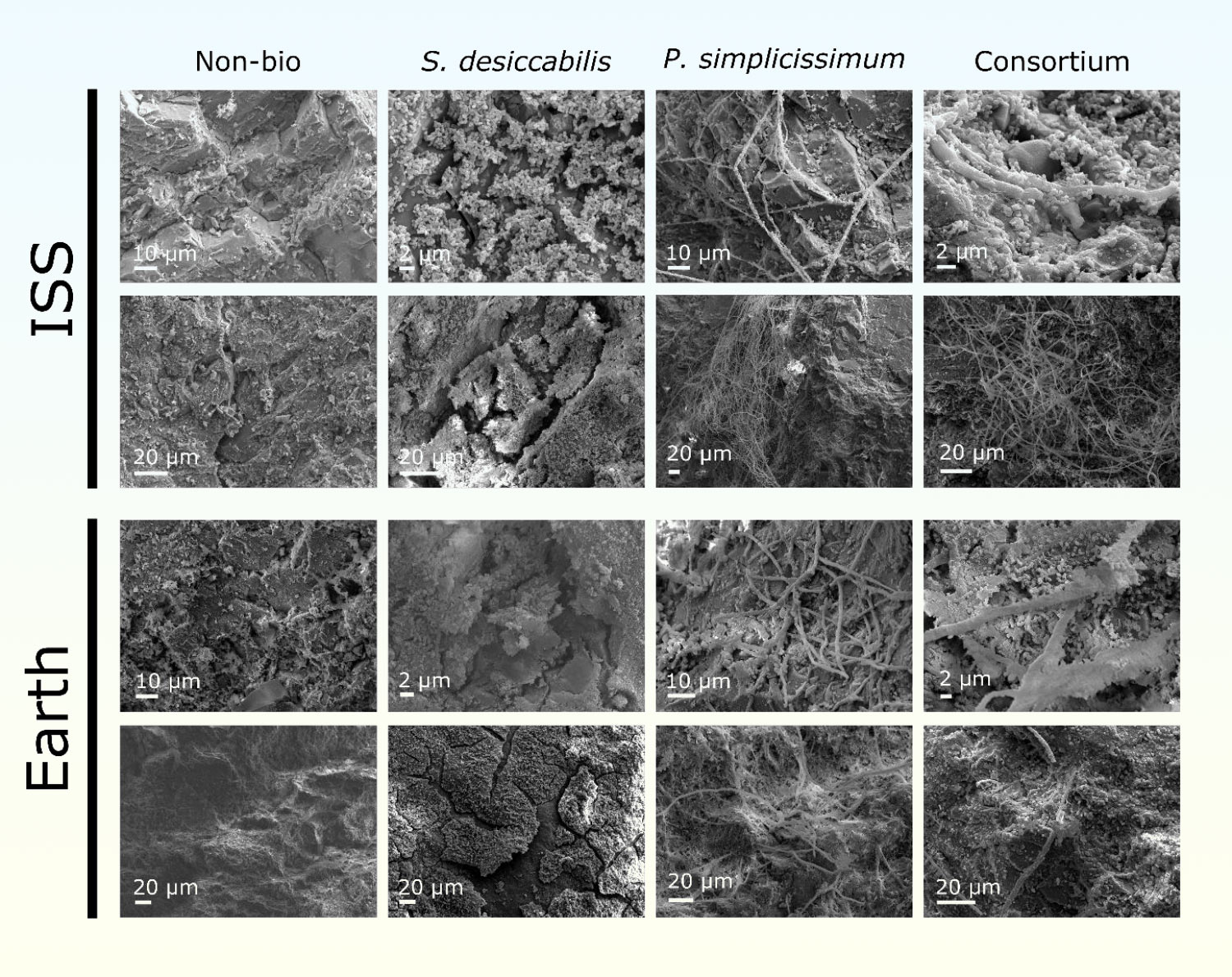
Scanning electron microscopy (SEM) images of the L-chondrite fragments in the two gravity conditions. Image credit: Santomartino et al., doi: 10.1038/s41526-026-00567-3.
“We segmented the analysis by individual element, and then we began to explore how extraction performance differed in space compared to Earth,” remarked Dr. Alessandro Stirpe, also associated with Cornell University and the University of Edinburgh.
“Did we observe enhanced extraction of these elements when utilizing a bacterium, a fungus, or a combination of both?”
“Is this merely random variation, or can we discern patterns that suggest underlying principles at play? While not dramatic, the observed differences are quite compelling.”
The comprehensive analysis illuminated notable alterations in microbial metabolic activity in the space environment, particularly within the fungus. This organism exhibited an augmented synthesis of numerous compounds, including carboxylic acids, and facilitated a heightened release of palladium, alongside platinum and other metallic elements.
For a considerable number of elements, non-biological dissolution proved less efficient in microgravity when contrasted with terrestrial conditions. Conversely, the microorganisms demonstrated consistent outcomes across both gravitational environments.
“In these specific instances, the microbe does not inherently improve the extraction process; rather, it serves to maintain a stable extraction rate, irrespective of the gravitational condition,” explained Dr. Santomartino.
“This phenomenon is not exclusive to palladium but extends to various metal types, although it is not universally applicable.”
“Indeed, another intricate yet highly significant finding, in my estimation, is the considerable variability in extraction rates contingent upon the specific metal under consideration, the particular microbe employed, and the prevailing gravitational environment.”
The findings of this research have been formally documented and disseminated in the esteemed journal npj Microgravity.
_____
R. Santomartino et al. Microbial biomining from asteroidal material onboard the international space station. npj Microgravity, published online January 30, 2026; doi: 10.1038/s41526-026-00567-3