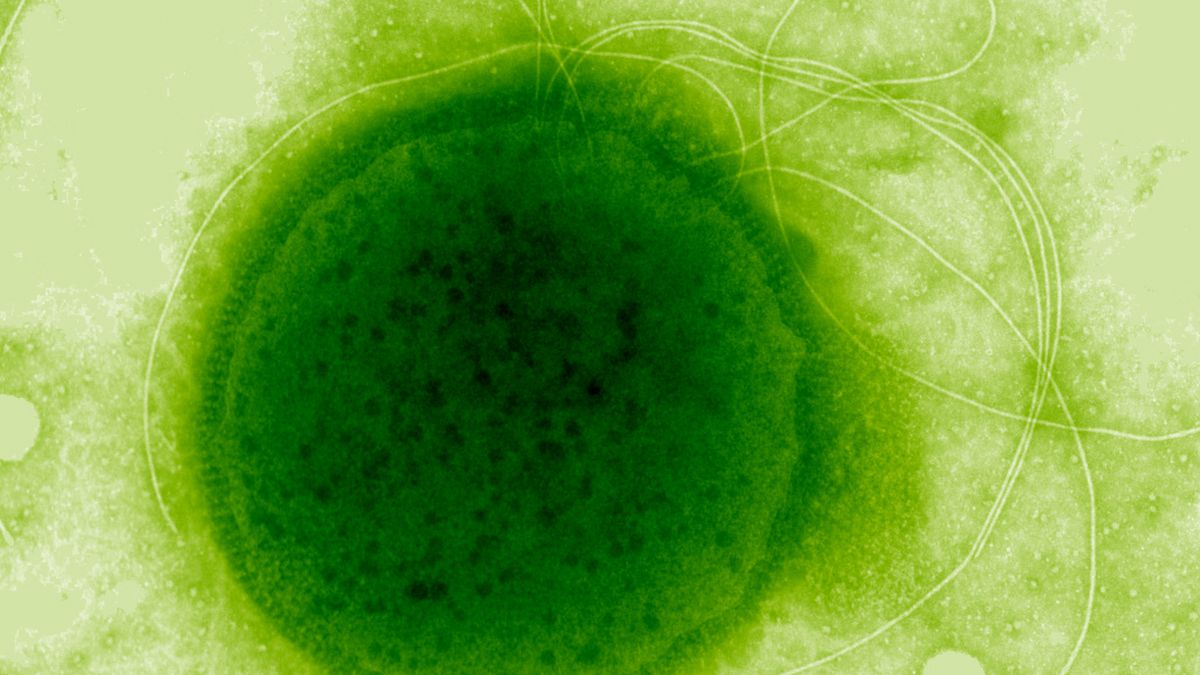
In zones such as Chernobyl and Fukushima, where atomic incidents have permeated the environment with hazardous radioactive particles, it stands to reason that life might develop mechanisms for resilience.
However, one of the most radiation-resilient life forms identified to date originates from an entirely non-radioactive locale. An archaeon designated as Thermococcus gammatolerans possesses the capacity to endure an exceptional radiation exposure of 30,000 grays—a magnitude 6,000 times greater than the lethal whole-body dose for a human over several weeks.
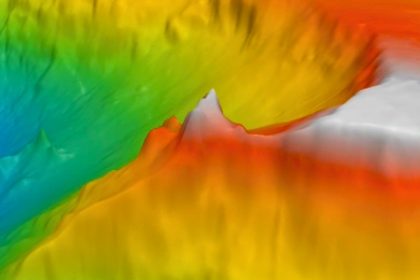
The Guaymas Basin, situated in the Gulf of California, approximately 2,600 meters (8,530 feet) below the ocean’s surface, hosts hydrothermal vents. These geological features expel superheated, mineral-laden fluids into the surrounding abyss. It is within this environment, far removed from any human constructions, let alone nuclear facilities, that T. gammatolerans thrives.
The Guaymas hydrothermal field represents an area where fissures in the ocean floor permit volcanic heat and chemical compounds to ascend into the water column.
Between the immense hydrostatic pressure found at the lightless bathypelagic depths and the extreme thermal conditions, these settings are profoundly inhospitable to human existence. Consequently, there is a natural curiosity regarding the biological strategies that enable life not merely to subsist but to flourish in such demanding circumstances.
T. gammatolerans was initially identified some decades ago, following a scientific expedition that utilized a submersible craft to procure microbial samples from a hydrothermal vent ecosystem.
Upon returning to the laboratory, a research collective, spearheaded by microbiologist Edmond Jolivet of the French National Center for Scientific Research, subjected enrichment cultures to 30,000 grays of gamma radiation emitted from a cesium-137 source. Notably, one specific archaeal species exhibited continued growth even after enduring this staggering irradiation level of 30,000 grays.
This particular species was subsequently characterized as a previously undocumented archaeon, bestowed with the name T. gammatolerans. This organism had evidently been flourishing unchallenged on the Guaymas vents, possessing an inherent resistance to a hazard to which it would have been minimally exposed.
This is not to imply that the organism is incapable of confronting adversity. T. gammatolerans subsists optimally at temperatures approaching 88 degrees Celsius (190 degrees Fahrenheit) and derives sustenance from sulfur compounds. However, radiation resistance did not appear to be a critical adaptive necessity within the microbe’s natural habitat. Prior to the introduction of the cesium-137 source by Jolivet’s team, exposure to radiation was not a factor in its environmental pressures.
The enigma intensified with a publication in 2009 that delved into the genetic makeup of T. gammatolerans. A research group, led by microbiologist Fabrice Confalonieri from the University of Paris-Saclay, France, had anticipated discovering an unusually high proportion of the genome dedicated to protective and reparative mechanisms. Contrary to expectations, no discernible surplus of DNA repair machinery was identified; the genetic toolkit of T. gammatolerans appeared remarkably standard.
Given that the explanation was not found within the microbe’s genetic code, researchers then explored the nature of the damage itself. In a 2016 study, a team under the direction of chemical biologist Jean Breton of Grenoble Alpes University investigated the precise effects of ionizing radiation on T. gammatolerans and the organism’s subsequent responses.
The investigations involved exposing populations of the archaeon to gamma radiation from a cesium source at doses up to 5,000 grays, with detailed observation of the outcomes. Their experimental findings indicated that gamma rays do indeed inflict damage upon the DNA of T. gammatolerans—this organism is not entirely impervious—yet the oxidative stress induced by the free radicals liberated by radiation was substantially lower than anticipated.
Furthermore, a significant portion of this inflicted damage was successfully rectified within a one-hour timeframe, with repair enzymes readily available for prompt intervention.
Although the precise reasons for T. gammatolerans‘ exceptional efficacy in mitigating and repairing radiation-induced harm remain elusive, scientific consensus suggests that its native environment plays a contributing role. Life at hydrothermal vents entails perpetual exposure to extreme temperatures, chemical stressors, and reactive molecular species—conditions that are also capable of compromising DNA integrity.
The physiological systems that enable this microbe to withstand the scalding, oxygen-deprived darkness may concurrently provide defense against ionizing radiation. It is plausible that the evolutionary selective pressures that sculpted T. gammatolerans for existence in hydrothermal vent ecosystems may have, as a secondary consequence, conferred its remarkable capacity to tolerate radiation levels that would prove fatal to significantly larger organisms.
T. gammatolerans cannot be classified as a radiation specialist; there would be no evolutionary imperative for such a designation. It is highly improbable that, over millions of years of deep-sea existence, it encountered the kind of sustained, high-intensity radiation exposure that would have driven the specific evolution of its biological defenses against it.
Within the realm of evolutionary biology, a pertinent concept is that of “survival of the good enough.” The biological mechanisms that permit T. gammatolerans to endure the searing volcanic chemistry at the ocean’s floor were evidently adequate for survival in a hydrothermal vent setting.
That these same mechanisms also render it astonishingly resistant to radiation represents a rare instance where a “good enough” solution proves to be extraordinary.