Scientists have identified a quiescent phase in Earth’s magnetic field during its polarity reversals, occurring approximately 40 million years ago. This discovery prompts significant inquiry into the temporal extent of such geomagnetic reversals and their potential implications for humanity’s future.
Geomagnetic pole shifts are generally considered to occur with a degree of regularity within geological epochs. Historical records indicate around 540 such inversions over the past 170 million years, and evidence suggests a history of these events spanning billions of years.
However, a divergence from this pattern was observed around 40 million years ago. An international research consortium has determined that one reversal event during this epoch lasted 18,000 years, while another extended for a minimum of 70,000 years. These durations significantly exceed the conventionally estimated typical period of approximately 10,000 years for such phenomena.
“This revelation has illuminated an exceptionally protracted reversal process, challenging established scientific paradigms and eliciting considerable surprise,” observes lead author and paleomagnetist Yuhji Yamamoto of Kochi University, Japan.
“The observed variations in reversal duration underscore the intrinsic dynamic behaviors of Earth’s geodynamo. Furthermore, this empirical data substantiates the possibility that geomagnetic reversals can persist considerably longer than the commonly accepted 10,000-year benchmark.”
The research team meticulously examined a sediment core retrieved from a site off the coast of Newfoundland in the North Atlantic. The embedded magnetic signatures within microscopic crystalline structures in these cores serve as a historical record of Earth’s magnetic field orientation across extensive temporal spans.

Specifically, the investigators focused on an 8-meter (over 26 feet) section of the core, representing a segment of the Eocene epoch. A distinct polarity shift was detected, but it manifested across an unexpectedly substantial portion of the sedimentary record.
The analysis identified two distinct magnetic field reversals. One was estimated to span approximately 18,000 years, while the second was calculated to have lasted for 70,000 years. Computer simulations suggest that such occurrences could potentially extend up to 130,000 years in certain scenarios, although this extended duration has not previously been documented in the geological strata.
These magnetic field inversions are instigated by fluctuations within Earth’s molten outer core, a layer composed primarily of iron and nickel and measuring approximately 2,200 kilometers (1,367 miles) in thickness. While this outer core is in constant motion, periodic instabilities can lead to the repositioning of the magnetic poles.
This geophysical process does not result in planetary axial tilt. Instead, magnetic north effectively becomes magnetic south, and vice versa. Consequently, a compass would eventually indicate the opposite direction, following a prolonged period of extreme navigational confusion lasting tens of thousands of years.
Beyond their protracted durations, these newly identified reversals exhibited greater complexity and variability than anticipated by the research team. The magnetic field displayed recurrent ‘rebound’ phases, indicating indecision regarding its directional orientation. This phenomenon aligns with observations from Earth’s most recent polarity reversal, the Brunhes-Matuyama event.
“The occurrence of multiple rebounds is not an isolated incident; similar behavior has been reported for the Brunhes-Matuyama reversal,” the researchers note in their published findings. “We postulate that this may be a more prevalent characteristic, suggesting that polarity reversals are inherently intricate, potentially even chaotic, events.”
The Brunhes-Matuyama reversal, which transpired approximately 775,000 years ago, lends support to these recent discoveries. A 2019 study indicated that this reversal took 22,000 years to fully conclude, suggesting that prolonged reversals might be the norm rather than the exception.
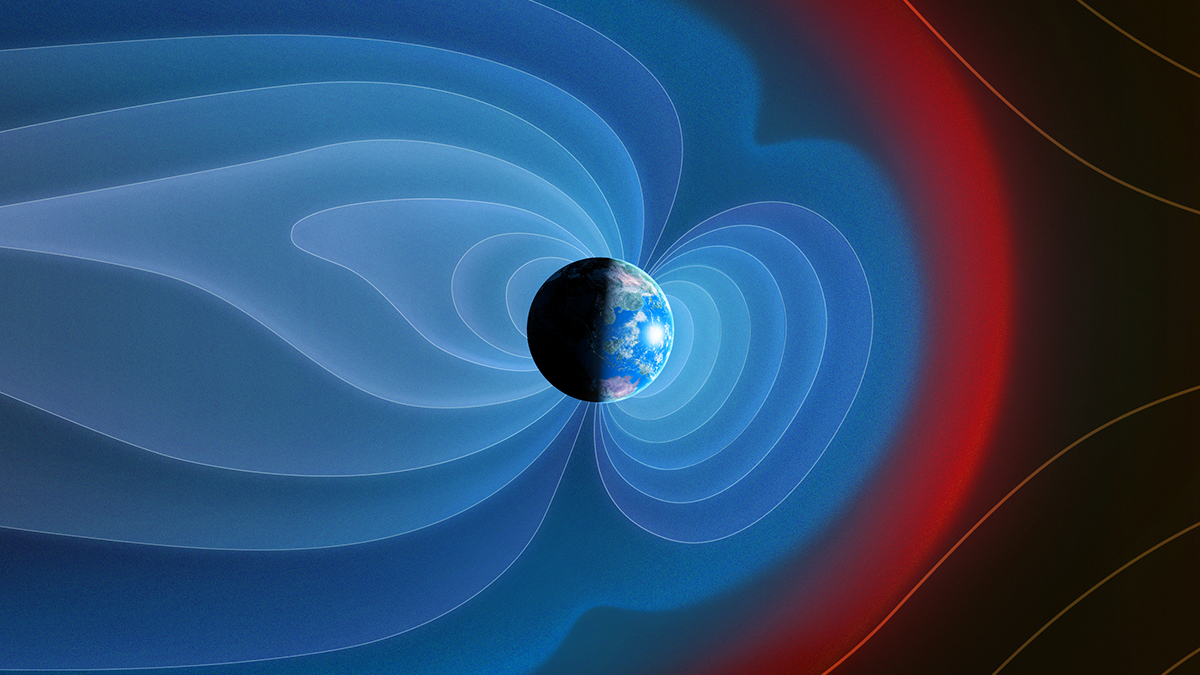
Preparedness for the next magnetic pole shift is essential. A significant consequence of such a reversal is the diminished shielding of our planet from cosmic radiation and geomagnetic forces emanating from space.
If this increased exposure is forecasted to persist for tens of thousands of years longer than previously understood, it necessitates thorough comprehension. The potential ramifications are far-reaching, capable of impacting everything from ecological systems to climatic patterns, though further investigation is required to delineate the precise effects.
“This essentially signifies that higher latitudes, in particular, but also the entire planet, are subjected to elevated rates and prolonged durations of this cosmic radiation,” explains paleomagnetist Peter Lippert of the University of Utah. “Consequently, it is reasonable to anticipate an increased incidence of genetic mutations and potential atmospheric erosion.”