

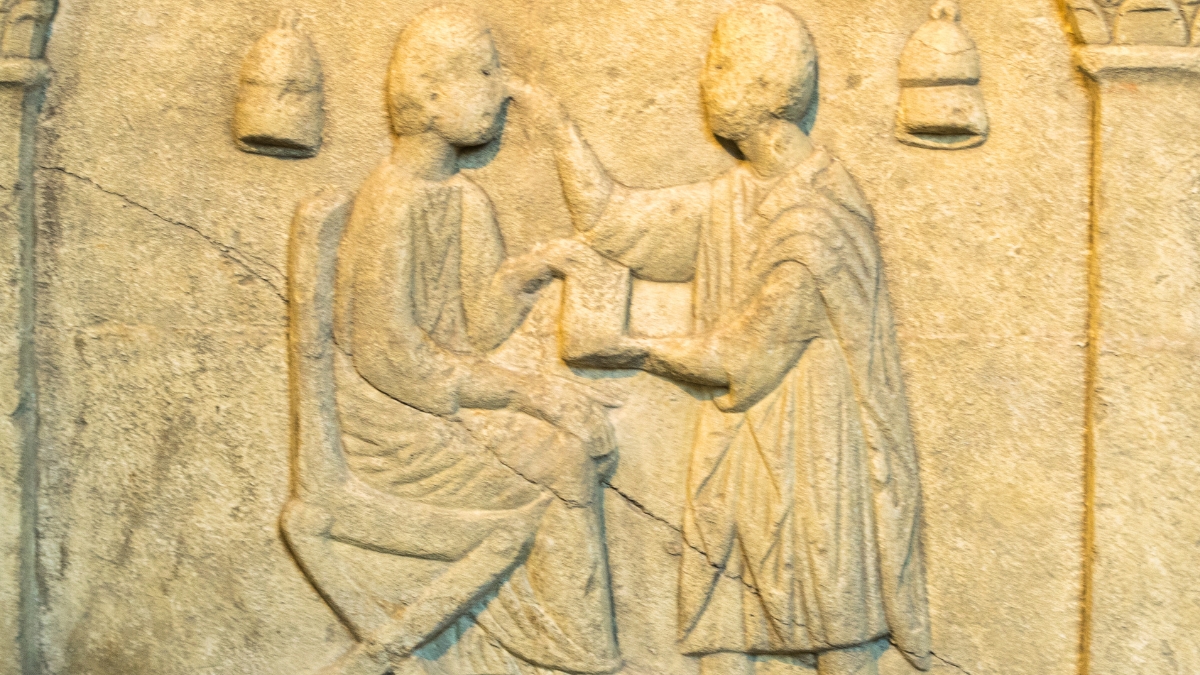
Contemporary aspirations mirror those of ancient populations, who also sought pathways to prolonged vitality and robust health.
Accounts circulated among the Greeks and Romans spoke of distant societies whose inhabitants routinely surpassed a century of life.
The Greek satirist Lucian, active around the 2nd century CE, observed:
“Indeed, entire populations are credited with exceptional longevity, such as the Seres [ancient Chinese], reportedly living for three centuries. Various explanations are proposed for their extended lifespans: some cite environmental factors, others soil composition, and still others their dietary habits, noting that this entire populace abstains from anything but water.
“Similarly, the inhabitants of Athos are said to reach 130 years of age, and the Chaldaeans are reported to live beyond 100, with their consumption of barley bread credited with preserving their visual acuity.”
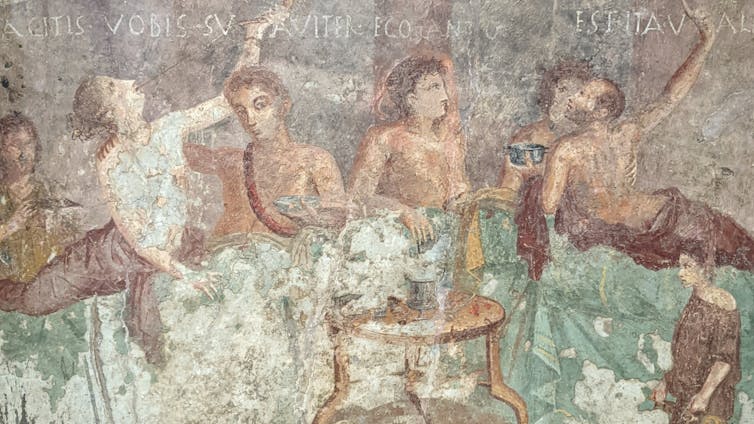
(Tyler Bell/Museo Archeologico Nazionale di Napoli/Wikimedia, CC BY-SA)
Regardless of the veracity of these narratives, a significant number of ancient Greeks and Romans harbored a desire for extended well-being and longevity.
This section explores their understanding of how such an outcome could be achieved.
A Physician’s Historical Perspective
Medical practitioners in antiquity were keen to investigate the daily practices of exceedingly long-lived individuals and to ascertain their potential impact on health.
The renowned Greek physician Galen (129–216 CE), for instance, documented two personal acquaintances in Rome who attained advanced age.
The first individual was a grammarian, a scholar specializing in the study and instruction of grammar, identified as Telephus, who neared his hundredth year.
According to Galen’s account, Telephus adhered to a regimen of consuming sustenance only three times daily. His dietary intake was notably simple: “Gruel prepared in water, enriched with the finest raw honey, sufficed for him at his inaugural meal.”
“His midday meal was taken around the seventh hour, or slightly earlier, commencing with vegetables and followed by a portion of fish or fowl. In the evening, his consumption was limited to bread, softened with diluted wine.”

Galen further detailed Telephus’s bathing rituals, which may strike modern observers as unconventional. Telephus favored daily oleaginous massages over frequent ablutions, bathing only sporadically throughout the month:
“He indulged in bathing twice monthly during the winter season and four times per month in the summer. During the transitional periods between these extremes, his bathing frequency was three times monthly. On days when he abstained from bathing, he underwent an anointment with olive oil, accompanied by a brief massage, typically around the third hour.”
The second individual mentioned was an elderly physician named Antiochus, who attained the age of eighty-something.
According to Galen’s records, Antiochus also maintained a minimalist approach to his diet.
His morning repast typically consisted of toasted bread accompanied by honey. For his midday meal, he would partake in fish, predominantly those “sourced from rocky coastal areas and the deep ocean.” His evening meal comprised “either a porridge with oxymel [a concoction of vinegar and honey] or a fowl prepared with a simple sauce.”
In addition to this unadorned diet, Antiochus engaged in a morning perambulation each day. He also enjoyed vehicular travel via chariot, or was transported around the city by his attendants in a sedan chair.
Galen also noted that Antiochus incorporated “physically beneficial exercises appropriate for an elderly gentleman”:
“A recommended morning activity for senior individuals involves massage with oil, followed by gentle ambulation and passive exercises, carefully calibrated to avoid inducing fatigue and respecting the individual’s physical tolerances.”
Galen surmised that Antiochus’s routine was likely instrumental in his sustained vitality well into his advanced years:
“By diligently managing his health in old age in this manner, Antiochus maintained his faculties and physical integrity until his final moments.”
Galen highlighted several conspicuous commonalities between Telephus and Antiochus. Both individuals consumed meals infrequently; their sustenance consisted of unadorned fare such as wild game, whole grains, bread, and honey; and they remained physically active daily.

Actionable Insights
It is widely acknowledged, even by the ancient Greeks and Romans, that not everyone is destined to reach the age of a hundred or more.
Nevertheless, Lucian offers a measure of solace in his discourse, “On Octogenarians”:
“Irrespective of geographical location or climatic conditions, individuals who adhere to appropriate physical regimens and adopt a diet conducive to optimal health have consistently demonstrated longevity.”
Lucian’s counsel suggests that emulating the lifestyles of those who have enjoyed extended healthy lives is a prudent strategy for achieving similar outcomes.
Therefore, for inhabitants of Rome during the second century CE, figures such as Telephus and Antiochus, characterized by their simple dietary habits and lifelong commitment to physical activity, would indeed serve as exemplary role models.




.jpg)

