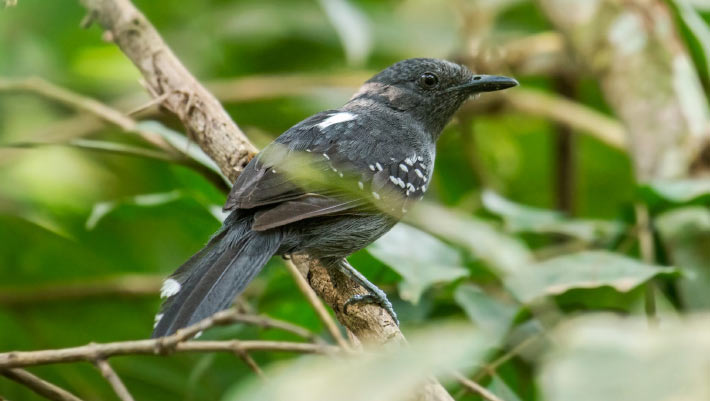
A species of antbird, long believed to be a singular, widely distributed entity across the Amazonian rainforest, has been reclassified and is now understood to comprise several distinct avian lineages. Among these newly recognized entities are two previously undescribed species—Cercomacra mura and Cercomacra raucisona—each occupying separate geographical territories within southern Amazonia. This significant revelation stems from an exhaustive evaluation of avian specimens housed in museum archives, coupled with an extensive analysis of acoustic recordings from birds belonging to the Cercomacra cinerascens, commonly referred to as the gray antbird complex.
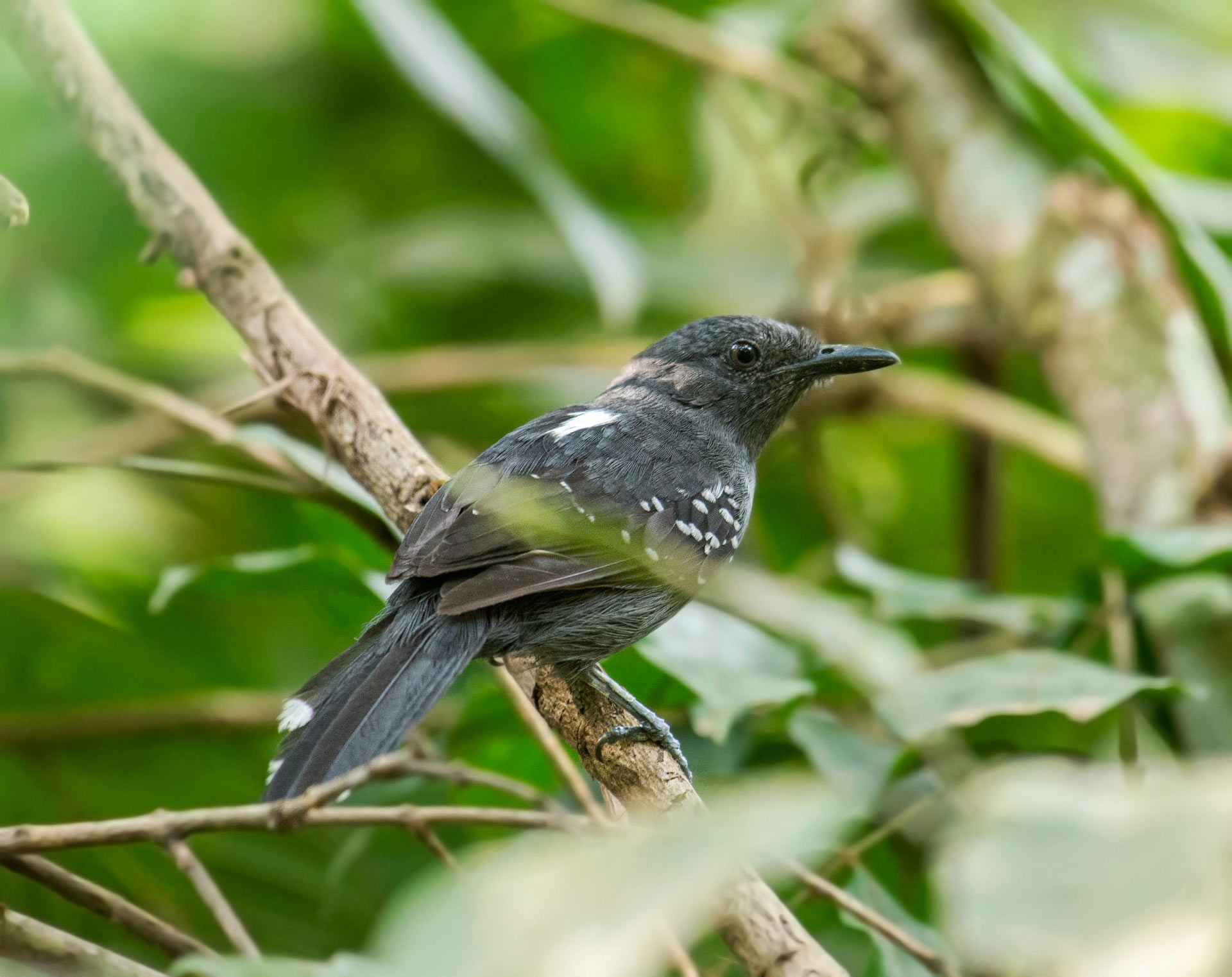
Cercomacra raucisona. Image credit: Fernando Zurdo.
Gray antbirds are characterized as small, unobtrusive avian inhabitants of forest environments, belonging to the family Thamnophilidae.
These birds exhibit a preference for densely vegetated understory environments and their distribution spans across Brazil, Bolivia, Colombia, Ecuador, French Guiana, Guyana, Peru, Suriname, and Venezuela.
Males typically display a predominantly gray plumage, while females are usually brownish. The subtle nuances in their feather coloration previously posed a considerable challenge for ornithologists attempting to differentiate bird populations across the extensive geographical expanse of the region.
In an effort to re-evaluate the species demarcations within the Cercomacra cinerascens complex, Vagner Cavarzere, a researcher affiliated with the Universidade Estadual Paulista, along with his team of collaborators, undertook a comparative study. This investigation involved meticulous examination of plumage hues and somatic measurements, as well as an in-depth analysis of the birds’ vocal repertoires.
A total of 682 avian specimens, sourced from various museum repositories, were scrutinized, and 347 recordings of their vocalizations were systematically analyzed.
Furthermore, the structural characteristics of their songs were elucidated through the application of BirdNET, an advanced deep-learning system adept at avian sound classification.
The research team articulated that avian species rely substantially on vocal communication, which plays a pivotal role in species recognition.
They further elaborated that their songs serve as unique acoustic identifiers, thereby providing a potent mechanism for uncovering concealed biodiversity.
The findings of this rigorous investigation unequivocally indicated distinct divergences among avian populations that are geographically separated by major Amazonian river systems.
Avian groups situated to the north of the Pastaza, Marañón, Solimões, and Amazon rivers exhibited consistent disparities in their coloration and song patterns when contrasted with populations residing to the south.
The species Cercomacra mura has been identified as inhabiting the forested domain situated between the Ucayali and Madeira rivers, whereas Cercomacra raucisona is found in the territories located between the Madeira and Tapajós rivers.
The researchers highlighted the role of these intervening rivers as enduring natural barriers.
They posited that these isolated populations have undergone independent evolutionary divergence over extensive periods, giving rise to the distinct species documented in the present study, with their genetic integrity maintained by these significant fluvial boundaries.
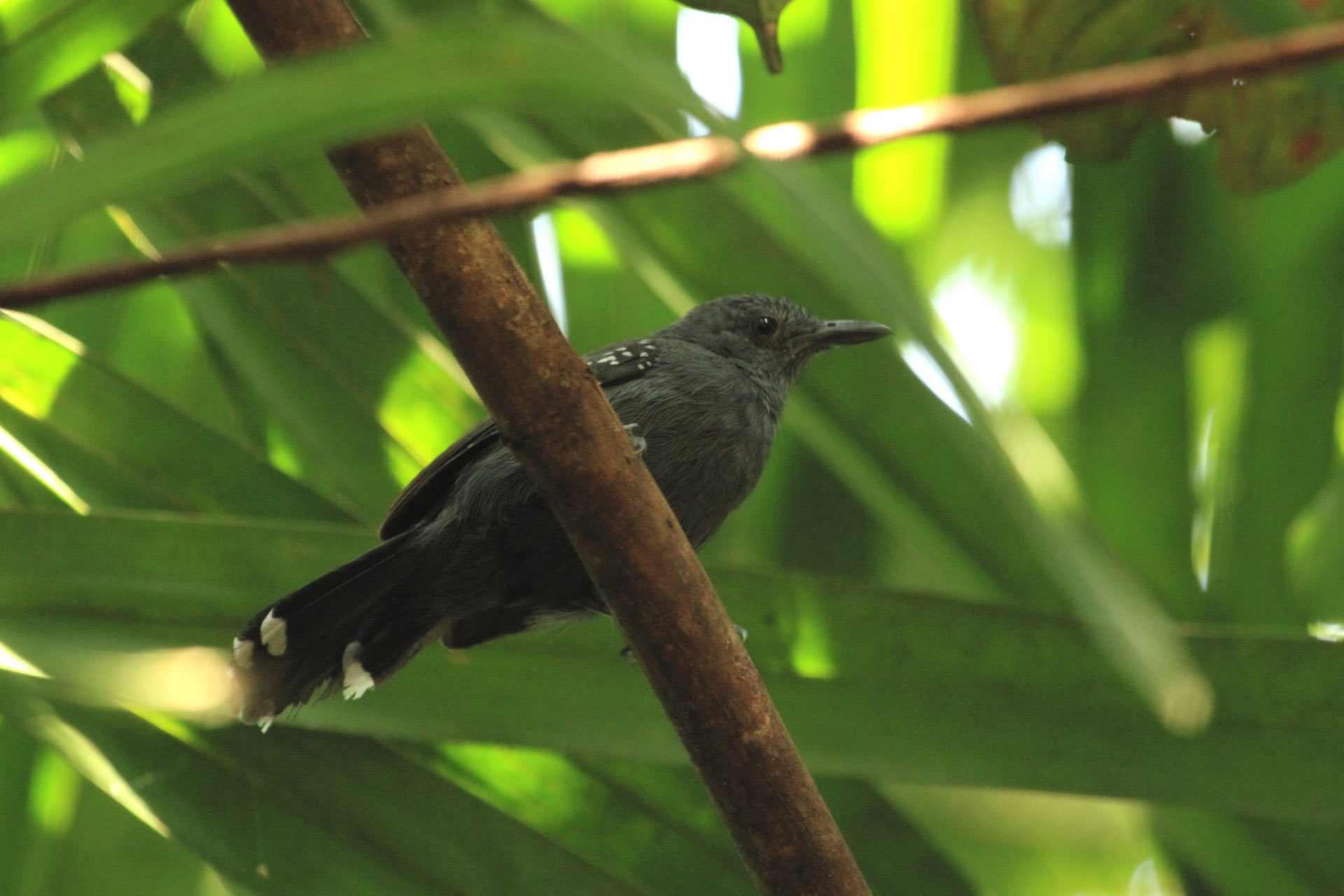
Cercomacra mura. Image credit: Tomaz Melo.
The scientific cadre also reclassified several species previously considered subspecies as full-fledged species, thereby increasing the total count of recognized species within the complex to five.
Their conclusions indicated that each species possesses unique vocal attributes and distinct geographical distribution, with minimal evidence of interbreeding or population overlap.
This groundbreaking discovery serves to underscore the substantial extent of Amazonian biodiversity that remains to be fully elucidated, even among avian groups that scientists previously believed were thoroughly understood.
The authors emphasized that by integrating artificial intelligence with the fundamental principles of bioacoustics and the invaluable resources of museum collections, it is possible to unveil biodiversity that would otherwise remain imperceptible.
They further stated that the formal recognition of these distinct species constitutes the primordial and most crucial phase in the endeavor to ensure their conservation amidst an era of rapid environmental transformation.
This significant finding is detailed in a recently published document within the journal Vertebrate Zoology.
_____
V. Cavarzere et al. 2026. Integrative taxonomy of the Cercomacra cinerascens species complex with description of two new species (Aves: Thamnophilidae). Vertebrate Zoology 76: 73-91; doi: 10.3897/vz.76.e171834