While Jupiter reigns supreme within our Solar System, the vastness of the galaxy harbors star systems where celestial bodies of even greater magnitude orbit their suns at distances spanning billions of miles—regions where established planetary formation theories encounter significant explanatory challenges.
A recent investigation delves into the atmospheric chemistry of three colossal gas giants, situated approximately 130 light-years distant, to elucidate the mechanisms behind the genesis of such immense planets.
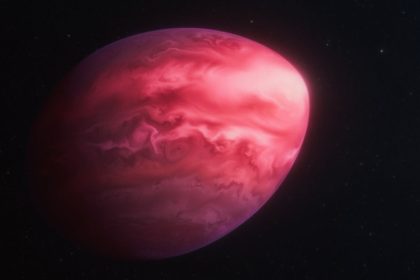
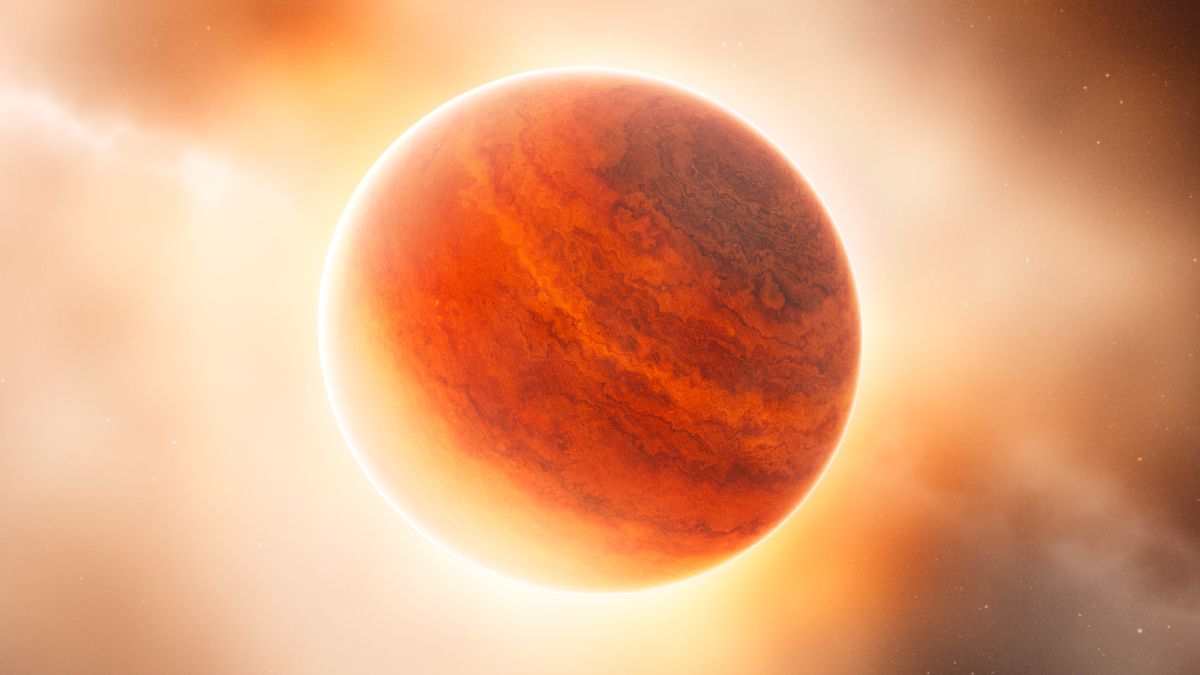
The star HR 8799, a celestial entity of spectral type F located in the constellation Pegasus, is known to host four gas giants. Each of these planets is of exceptional size, possessing a mass ranging from five to ten times that of Jupiter.
Leveraging mid-resolution spectroscopic data acquired by JWST’s NIRSpec instrument, the research team meticulously dissected the atmospheric constituents of the system’s three innermost planets across wavelengths spanning 3 to 5 microns.

Gas giants can attain mass ranges that approach those of brown dwarfs—objects capable of brief deuterium fusion—yet astronomers posit that these two types of celestial bodies originate through fundamentally distinct processes.
Brown dwarfs are understood to form akin to stars, through gravitational collapse from the top down, but they lack the requisite mass to sustain hydrogen fusion.
The prevailing hypothesis for planet formation is core accretion, a bottom-up methodology wherein planetary cores gradually develop as solid particles coalesce within a protoplanetary disk. In some instances, substantial cores may also gather residual gases from their nascent nebulae, ultimately manifesting as gas giants.
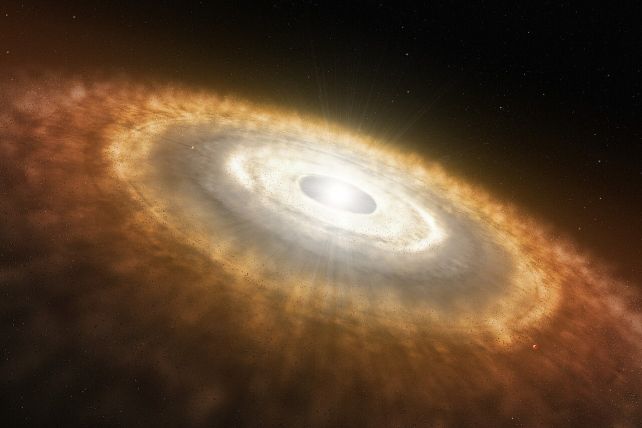
This narrative represents the prevailing understanding of Jupiter and Saturn’s origins; however, its applicability to systems like HR 8799, characterized by more massive behemoths orbiting at greater distances, remains a subject of inquiry.
These orbital distances range from 15 to 70 astronomical units (equivalent to 2 billion to 10 billion kilometers), signifying that these planets are situated approximately 15 to 70 times farther from their star than Earth is from our Sun.
At such vast scales, certain experts express skepticism regarding the feasibility of massive, distant planets forming via core accretion. This process is anticipated to be considerably slower at greater distances from the star, potentially leaving insufficient time for planets to accumulate adequate mass before the protoplanetary disk disperses. An alternative explanation posits that such worlds might emerge through gravitational collapse, a mechanism akin to that of brown dwarfs.
To rigorously test this proposition, researchers analyzed JWST data from the HR 8799 planets, searching for the presence of sulfur. Sulfur is a refractory element that tends to remain largely incorporated within solid particles in protoplanetary disks. Consequently, the detection of sulfur in a planet’s atmosphere would strongly indicate the accretion of solid material during its formation.
“Leveraging its unparalleled sensitivity, JWST is facilitating the most in-depth examination of these planets’ atmospheres, thereby providing crucial insights into their formation trajectories,” stated co-first author Jean-Baptiste Ruffio, an astronomer at the University of California, San Diego (UC San Diego), in a recent commentary.
The research group identified compelling evidence of hydrogen sulfide within the atmospheres of HR 8799 c and d, with their sophisticated atmospheric models suggesting a comparable enrichment of sulfur across all three inner planets.
“The detection of sulfur allows us to infer that the planets of HR 8799 likely underwent formation processes similar to those of Jupiter, despite being five to ten times more massive, a finding that was unanticipated,” Ruffio remarked.
Despite the planets being thousands of times less luminous than their host star, JWST’s exceptional sensitivity enabled the researchers to successfully distinguish their faint signals from the overwhelming stellar glare.
The researchers achieved this feat by developing intricate atmospheric models for the planets, which they subsequently refined and compared against the observational data.
“Ultimately, we identified numerous molecular species within these planets—some for the very first time, including hydrogen sulfide,” shared astronomer and co-first author of the study, Jerry Xuan, affiliated with the University of California, Los Angeles.
The planets exhibit a uniform enrichment in heavier elements, such as carbon, oxygen, and sulfur, relative to their host star, a characteristic that points to the assimilation of substantial quantities of solid material during their developmental stages.
The researchers determined that the degree of heavy-element enrichment presents a significant challenge for reconciliation with certain established formation models.
“The efficiency of planetary formation in this scenario should not be this high,” commented Michael Meyer, an astronomer at the University of Michigan.
Further investigations into planetary systems beyond HR 8799 will be necessary. However, as the situation currently stands, the remarkable efficiency with which its three massive planets accreted is a source of considerable perplexity.
“It presents a genuine conundrum. We are truly left with an unresolved mystery,” Meyer concluded.