The emergence of the COVID-19 pandemic propelled messenger RNA (mRNA) vaccines into the global health spotlight. Following their rigorous stages of clinical evaluation, the inaugural COVID-19 mRNA vaccine was administered on December 8, 2020. Mathematical projections indicate that mRNA vaccines were instrumental in averting a minimum of 14.4 million COVID-19 fatalities within their initial year of deployment. The remarkable efficacy demonstrated in mitigating the impact of the disease has spurred ongoing efforts to develop mRNA vaccines against an array of other infectious agents. Clinical investigations are currently underway for influenza virus, Respiratory Syncytial Virus (RSV), HIV, Zika, Epstein-Barr virus, and tuberculosis bacteria. Crucially, however, research pertaining to COVID-19 has illuminated inherent limitations of mRNA vaccines, underscoring the imperative for alternative strategies.
The immunological reactions elicited by COVID-19 mRNA vaccines can exhibit significant variability among individuals, and their protective duration is often constrained. This challenge is compounded by the continuous evolution of the SARS-CoV-2 virus, which generates novel variants capable of circumventing the immune system, thereby necessitating frequent updates to COVID-19 mRNA vaccines. Furthermore, these vaccines present other drawbacks, including complex and expensive production processes, difficulties in precisely controlling the quantity of mRNA molecules encapsulated within delivering lipid nanoparticles, the requirement for cold-chain storage, and the potential for unintended off-target immunological effects. Addressing these obstacles would pave the way for fundamentally new approaches to disease response, prevention, and preparedness across a spectrum of infectious diseases.
A multidisciplinary consortium of researchers from the Wyss Institute at Harvard University, the Dana-Farber Cancer Institute (DFCI), and affiliated institutions has ingeniously harnessed a recently developed, highly adaptable DNA origami nanotechnology. This innovation, christened DoriVac, functions as both a vaccine and an adjuvant, offering a promising alternative to existing vaccine platforms. DoriVac vaccines, engineered to target a peptide region (HR2) conserved across the spike proteins of numerous infectious viruses, including SARS-CoV-2, HIV, and Ebola, have successfully elicited desirable immunological responses. Specifically, the SARS-CoV-2 HR2 DoriVac vaccine induced potent antigen-specific antibody-mediated (humoral) and T cell-mediated (cellular) immunity in murine models. In a forward-thinking preclinical in vitro assessment utilizing a human lymph node model meticulously crafted with the Wyss Institute’s microfluidic Human Organ Chip technology, the SARS-CoV-2 HR2 vaccine likewise generated robust antigen-specific human immune responses. In a comparative head-to-head evaluation against SARS-CoV-2 mRNA vaccines encapsulated in lipid nanoparticles, the DoriVac vaccine, bearing identical spike protein variant constructs, demonstrated comparable levels of vigorous human immune activation while exhibiting superior stability and simplified storage and manufacturing protocols. These groundbreaking findings have been formally published in the esteemed journal Nature Biomedical Engineering.
“The DoriVac platform represents an exceptionally adaptable framework, endowed with a suite of critical advantages, notably unparalleled precision in vaccine composition and the capacity to orchestrate immune recognition within precisely targeted immune cells at the molecular level, thereby achieving enhanced responses,” commented co-corresponding author William Shih, Ph.D., a Core Faculty member at the Wyss Institute whose laboratory spearheaded this novel vaccine concept. “Our investigation underscores DoriVac’s versatility and its considerable potential by conducting an in-depth examination of the immunological transformations requisite for combating viral infections.” Dr. Shih also holds professorial appointments at Harvard Medical School and DFCI.
Integrating Viral Antigens into the System
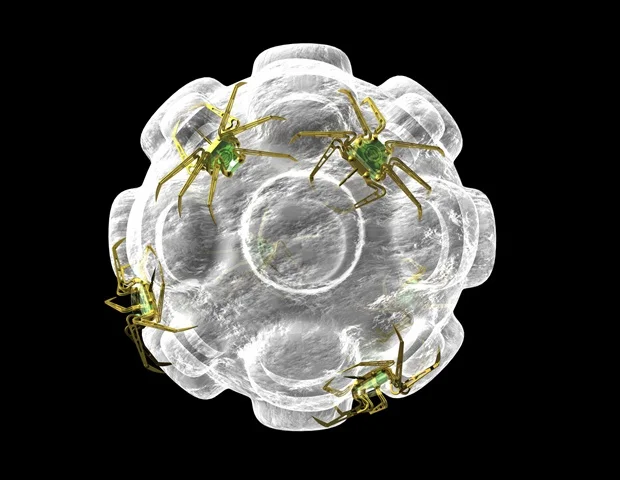
In 2024, Dr. Shih’s research group at the Wyss Institute and Dana-Farber introduced DoriVac, a DNA nanotechnology-based vaccine platform designed for broad applicability. Yang (Claire) Zeng, M.D., Ph.D., who led this significant project in conjunction with collaborating researchers, additionally demonstrated that DoriVac vaccines, by presenting immunological adjuvant molecules to cells with nanoscale accuracy, could stimulate highly beneficial immune responses in tumor-bearing mice that surpassed those observed with their origami-free counterparts. DoriVac DNA origami vaccines are composed of diminutive, self-assembling square block-shaped nanostructures. These structures present adjuvant molecules on one surface, spaced at optimal nanometer intervals, and on the opposing surface, they display selected antigens of interest, such as peptides and proteins derived from tumors or pathogens.
“While we were initially developing the platform for oncological applications, the COVID-19 pandemic was still raging. Consequently, the question rapidly emerged as to whether DoriVac’s superior adjuvant capabilities could be effectively repurposed for infectious disease contexts,” stated Dr. Zeng, who served as the first and co-corresponding author of the new study and is now a co-founder and CEO/CTO of DoriNano, driving the translation of this technology towards clinical implementation. To explore this possibility, Dr. Zeng, alongside co-first author Olivia Young, Ph.D., a former graduate student under Dr. Shih’s mentorship, collaborated with Donald Ingber’s research group at the Wyss Institute. Dr. Ingber’s team has a well-established interest in pioneering antiviral therapies, employing AI- and multiomics-driven methodologies in conjunction with microfluidic Human Organ Chip technology. In collaboration with co-first author Longlong Si, Ph.D., a former postdoctoral researcher within Dr. Ingber’s laboratory, the researchers meticulously designed DoriVac vaccines specifically tailored for SARS-CoV-2, HIV, and Ebola. These vaccines presented conserved HR2 peptides, which function as highly conserved antigens within the spike proteins of various viruses.
Our analysis of the induced immune responses elicited by these initial DoriVac vaccines in mice yielded several highly encouraging findings. These included a significantly more comprehensive and widespread activation of both humoral and cellular immunity across a spectrum of relevant immune cell populations compared to the responses generated by origami-free antigens and adjuvants. We observed an augmentation in the populations of antibody-producing B cells, activated antigen-presenting dendritic cells (DCs), and antigen-specific memory and cytotoxic T cell types, all of which are critical for enduring protection, particularly in the context of SARS-CoV-2 HR2.“
Yang (Claire) Zeng, M.D., Ph.D., cofounder and CEO/CTO of DoriNano
Transitioning from Murine Models to Human Applications
The immunological responses to infectious agents observed in murine models can diverge considerably from those in humans, a disparity that has led to the failure of numerous treatments in human clinical trials despite promising preclinical results in mouse studies. To advance the DoriVac vaccine platform closer to human application, the research team subsequently evaluated the effects of DoriVac vaccines within an engineered human immune system, specifically a human lymph node-on-a-chip model (human LN Chip). This advanced system enables rapid preclinical prediction of human immune responses. Spearheaded by co-first author Min Wen Ku and co-corresponding author Girija Goyal, Ph.D., Director of Bioinspired Therapeutics at the Wyss Institute and a member of Dr. Ingber’s group, the team demonstrated that the SARS-CoV-2-HR2 DoriVac vaccine significantly boosted human DC activation and amplified their production of inflammatory cytokine molecules to levels substantially exceeding those induced by the origami-free vaccine components. Furthermore, the numbers of CD4+ and CD8+ T cells possessing multifaceted protective functions were augmented within the human LN Chips. These findings provide further compelling validation of DoriVac vaccines’ potential for human therapeutic use.
“The prognostic capabilities afforded by human LN Chips provided an optimal testing environment for DoriVac vaccines, and the resultant antigen-specific immune cell profiles and activities are highly likely to mirror those that would manifest in human vaccine recipients. This synergistic combination of technologies has enabled us to substantially elevate the prospects for success for a novel class of vaccines and establish a new paradigm for future vaccine development initiatives,” stated co-corresponding author Donald Ingber, M.D., Ph.D., who also holds the Judah Folkman Professorship of Vascular Biology at Harvard Medical School and Boston Children’s Hospital, and the Hansjörg Wyss Professorship of Biologically Inspired Engineering at the Harvard John A. Paulson School of Engineering and Applied Sciences.
In parallel, the research team investigated a DoriVac vaccine presenting the complete SARS-CoV-2 spike protein. This study, led by Dr. Zeng and co-author Qiancheng Xiong, was conducted as a direct comparison with current Moderna and Pfizer/BioNTech mRNA lipid nanoparticle (LNP) SARS-CoV-2 vaccines encoding an identical spike protein in mice, employing a standardized booster protocol. The observed anti-viral T cell and antibody-producing B cell responses were found to be comparable across the vaccine types. “This outcome emphasizes DoriVac’s considerable potential as a self-adjuvanted vaccine platform powered by DNA nanotechnology. However, DoriVac vaccines offer several additional advantages: they do not necessitate the same stringent cold-chain infrastructure as mRNA-LNP vaccines, thereby facilitating far more efficient distribution, particularly in resource-limited settings; and they can circumvent some of the substantial manufacturing complexities associated with LNP-formulated vaccines, to highlight two principal benefits,” elaborated Dr. Shih. Recent investigations conducted at DoriNano have also indicated that DoriVac exhibits a promising safety profile.
Additional contributors to this study include Sylvie Bernier, Hawa Dembele, Giorgia Isinelli, Tal Gilboa, Zoe Swank, Su Hyun Seok, Anjali Rajwar, Amanda Jiang, Yunhao Zhai, LaTonya Williams, Caleb Hellman, Chris Wintersinger, Amanda Graveline, Andyna Vernet, Melinda Sanchez, Sarai Bardales, Georgia Tomaras, Ju Hee Ryu, and Ick Chan Kwon. The research received funding from the Director’s Fund and Validation Project program of the Wyss Institute; the Claudia Adams Barr Program at DFCI; the National Institutes of Health (U54 grant CA244726-01); the US-Japan CRDF global fund (grant R-202105-67765); the National Research Foundation of Korea (grants MSIT, RS-2024-00463774, RS-2023-00275456); the Intramural Research Program of the Korea Institute of Science and Technology (KIST); and the Bill and Melinda Gates Foundation (INV-002274).
Zeng, Y. C., et al. (2026). DNA origami vaccine nanoparticles improve humoral and cellular immune responses to infectious diseases. Nature Biomedical Engineering. DOI: 10.1038/s41551-026-01614-w. https://www.nature.com/articles/s41551-026-01614-w