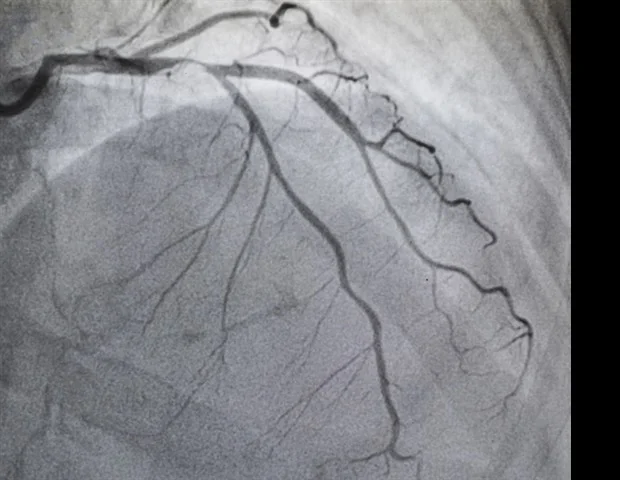
Digital subtraction angiography is recognized as the benchmark for identifying cerebrovascular pathologies, such as intracranial aneurysms, arteriovenous malformations, and arterial stenosis. Nevertheless, this diagnostic modality necessitates operators functioning under fluoroscopic supervision, leading to extended exposure to ionizing radiation. To mitigate this concern, vascular interventional robotic systems have been engineered, enabling practitioners to conduct procedures remotely from areas of radiation.
A study, disseminated in Volume 12 on January 30, 2026, within the Chinese Neurosurgical Journal, saw Dr. Yuanli Zhao and his cohort from Peking Union Medical College Hospital in Beijing, China, undertake an assessment of the clinical safety and effectiveness of a domestically developed robot-assisted platform (YDHB-NS01) for cerebral angiography. This research also encompassed a comprehensive review of the contemporary landscape, advantages, and inherent complexities associated with robot-assisted methodologies in cerebrovascular interventions.
“The initial clinical deployment indicates that the YDHB-NS01 robot-assisted system is a viable option for diagnostic cerebral angiography and exhibits preliminary signs of safety and procedural outcomes comparable to those achieved through conventional manual techniques,” Dr. Zhao stated.
Between May and August 2025, the research team prospectively recruited twenty-five consecutive patients who underwent robot-assisted cerebral angiography and an equal number of patients who received manual cerebral angiography at the same medical facility. A single neurosurgeon was responsible for executing all procedures. The primary metrics of success were the technical success rate and the clinical success rate. Ancillary objectives included procedure duration, fluoroscopy exposure time, patient radiation dosage, volume of contrast agent administered, overall time spent within the angiography suite, an evaluation of device performance, and the incidence of complications.
All fifty procedures concluded successfully, yielding a 100% technical and clinical success rate across both the robot-assisted and manual intervention groups. The visualization of all targeted vessels was clear and met the requisite diagnostic standards.
A statistically significant reduction in median procedure time was observed in the robot-assisted cohort when contrasted with the manual group: 27 minutes versus 38 minutes (p = 0.005). No statistically meaningful disparities were found between the two groups regarding fluoroscopy duration, patient radiation exposure, the quantity of contrast agent used, or the total angiography room occupancy (all p > 0.05).
“No divergences were noted between the two groups concerning fluoroscopy duration, patient radiation dosimetry, contrast agent administration, or the aggregate time within the angiography suite,” Dr. Zhao conveyed.
The robotic platform maintained stable operation throughout each procedure, with no mechanical or systemic malfunctions reported. Operator feedback highlighted seamless catheter and guidewire manipulation, robust manipulator stability, responsive control interfaces, and effective force feedback transmission.
No untoward events were experienced by any of the fifty participants. Complications related to puncture procedures or the surgical operation itself, such as vascular spasms, injuries, perforations, or thromboembolic events, were absent. Furthermore, no neurological sequelae, including transient ischemic attacks or completed ischemic strokes, nor any adverse reactions to the contrast agent, were observed. A discernible learning curve was identified within the robot-assisted group; the initial two interventions necessitated longer operative durations and higher radiation doses, whereas the culminating twenty-three cases demonstrated more consistent procedural metrics.
Dr. Zhao characterized this investigation as a single-center, post-marketing case series, stating, “Given the limited sample size, the single-center nature of this cohort, and the exploratory character of this study, it is imperative that larger, multicenter controlled trials be conducted to substantiate these findings.”
Beyond the clinical findings, the publication includes a literature review that synthesizes the evolution and practical application of diverse robotic systems in neurointerventional procedures. This review details their reported technical success rates, procedural outcomes, and inherent limitations. The authors also acknowledge ongoing obstacles, such as the refinement of force feedback mechanisms, the optimization of imaging integration, and the enhancement of interoperability with commercially available devices.
Liu, Q., et al. (2026). Clinical validation and literature review of robot-assisted cerebral angiography. Chinese Neurosurgical Journal. DOI: 10.1186/s41016-026-00426-w. https://link.springer.com/article/10.1186/s41016-026-00426-w