A recent scientific investigation may have finally resolved a persistent enigma surrounding the Moon’s magnetic properties: the perplexing presence of intense magnetism in lunar rocks collected during the Apollo missions, sometimes comparable to or even surpassing Earth’s current magnetic field.
Given the Moon’s significantly smaller size compared to our planet, and the absence of the robust internal energy and core dynamics that sustain Earth’s magnetic field, the potent magnetic signatures observed in these 3.5-billion-year-old geological specimens are indeed surprising.
Through a novel analysis, a team of researchers affiliated with the University of Oxford in the United Kingdom posits that these magnetic signatures likely stem from transient, exceptionally strong magnetic field events. These events are attributed to ancient geological occurrences that predated the Apollo expeditions and subsequent sample collection.
“Our latest research indicates that the Apollo samples inadvertently represent extremely infrequent occurrences that persisted for a few millennia – whereas, until now, these have been interpreted as indicative of half a billion years of lunar history,” explains planetary geologist Claire Nichols.
“It now appears that a predisposition in our sampling methodology prevented us from recognizing the ephemeral and rare nature of these intense magnetic phenomena.”
The investigators re-evaluated lunar rock specimens classified as Mare basalts, meticulously examining the correlation between their constituent geological components and the intensity of their magnetization – a proxy for the strength of the magnetic field at the time of their formation.
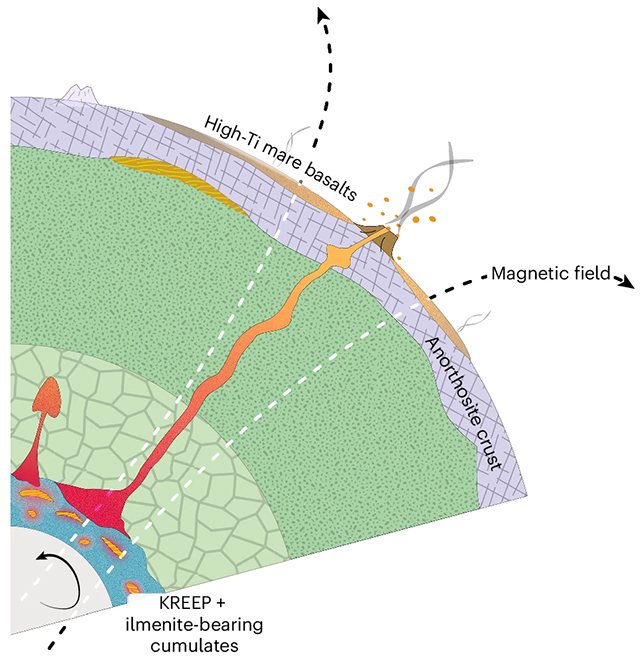
A distinct correlation became apparent: rocks exhibiting stronger magnetism possessed significantly higher concentrations of titanium.
Subsequently, the research group employed computational modeling to investigate how geological processes responsible for generating titanium-rich rocks might also precipitate robust magnetic fields.
The simulations demonstrated that the melting of titanium-rich materials in proximity to the Moon’s core-mantle boundary could transiently augment heat flow from the core. This process, in turn, could stimulate or amplify dynamo activity, thereby intensifying the magnetic field while simultaneously giving rise to titanium-rich lava flows.
Due to the Apollo missions’ focus on analogous Mare basalt regions of the Moon – areas near where the model suggests titanium-rich lavas would have erupted – the rock samples procured by the astronauts consequently exhibit a sampling bias that has perplexed the scientific community for years.
“Were we extraterrestrial observers exploring Earth, and had we made only six landings, we would likely exhibit a similar sampling bias, particularly if we favored landing on flat terrain,” observes earth scientist Jon Wade.
“It was purely by chance that the Apollo missions concentrated so heavily on the Mare region of the Moon; had they landed elsewhere, we might have concluded that the Moon consistently possessed only a weak magnetic field, thereby missing this crucial aspect of its early geological history.”
These episodes of intense magnetism are estimated to have been relatively short-lived, likely spanning mere thousands of years – a fleeting moment in the Moon’s extensive lifespan, according to the study’s authors.
While representing a compelling hypothesis that aligns with the available evidence, the researchers concede that their models incorporate certain assumptions to bridge data deficiencies, given the limited quantity of lunar rock samples at their disposal. Further theoretical work will be imperative to substantiate these findings.
Presently, the Moon’s magnetic field is notably weak and fragmented, contrasting sharply with Earth’s pervasive global field. Numerous prior investigations have proposed alternative explanations for the geological indicators of a more formidable ancient magnetic force, with asteroid impacts on the lunar surface, for instance, being a potential contributing factor.
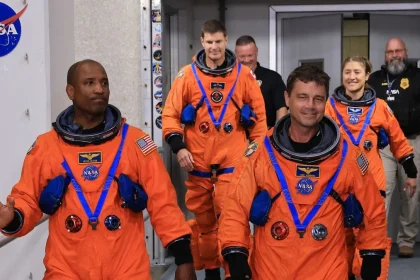
The prospect of renewed human presence on the Moon before the decade’s end bodes well for researchers seeking definitive answers to this ongoing scientific puzzle, offering invaluable opportunities for further experimentation and the acquisition of additional geological samples.
“We are now in a position to predict which types of lunar samples are likely to preserve specific magnetic field strengths,” states geoscientist Simon Stephenson.
“The forthcoming Artemis missions present us with a vital opportunity to rigorously test this hypothesis and illuminate further the history of the Moon’s magnetic field.”