A collaborative effort involving scientists from both the United States and Germany has led to the discovery of fungal proteins capable of initiating water freezing at ambient subzero temperatures. This breakthrough holds significant promise for enhancing the safety of cloud seeding operations, refining climate simulation models, and propelling advancements in food preservation and medical applications.
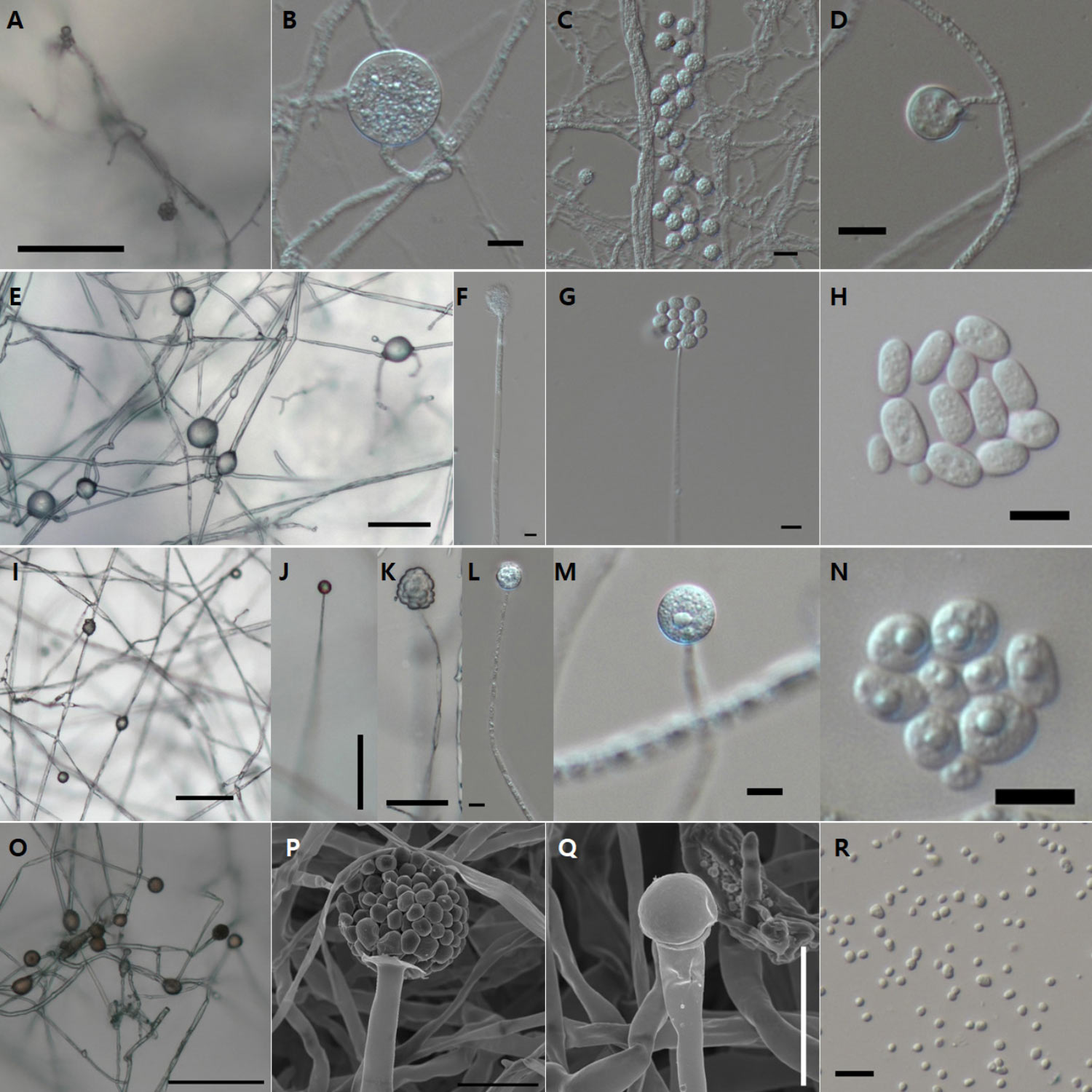
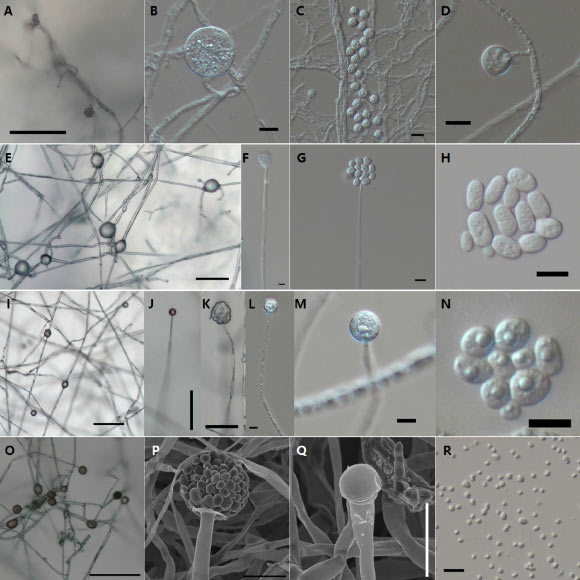
Mortierellomycetes and Umbelopsidomycetes fungi sourced from freshwater environments in Korea. Image courtesy of Goh et al., doi: 10.4489/kjm.20230018.
In the practice of cloud seeding, particles known as ice nucleators are dispersed into clouds. These particles serve the crucial function of stimulating the water vapor within clouds to transform into ice crystals.
Subsequently, these ice crystals expand in size as additional water molecules adhere to their surfaces.
Through a process akin to a snowball effect, the ice crystals gain mass and weight. They then descend towards the earth’s surface, melting upon their passage through the warmer atmospheric layers to ultimately form rain.
Historically, silver iodide has been the particle of choice for nucleating ice. However, this compound is known for its considerable toxicity.
Professor Boris Vinatzer of Virginia Tech, along with his research associates, posits that the fungal protein molecules identified could offer a superior and less harmful alternative.
“Should we ascertain methods for cost-effective mass production of this fungal protein, its deployment in clouds could render cloud seeding operations substantially safer,” Professor Vinatzer commented.
Furthermore, the research uncovered evidence suggesting that the gene responsible for encoding this ice nucleation protein within fungi likely originated from a bacterial species. This transfer is thought to have occurred via horizontal gene transfer, a process that transpired at least hundreds of thousands, if not millions, of years prior.
“While the capacity for fungi to acquire genetic material from bacteria is established, it is not an exceedingly common occurrence,” Professor Vinatzer stated.
“Consequently, the notion that this particular fungal gene possessed a bacterial lineage was quite unexpected.”
Scientific literature has acknowledged the ice nucleating capabilities of fungi since the early 1990s.
However, it is only through recent advancements in DNA sequencing technologies and computational science that researchers have been able to map the genomes of the Mortierellacae family of fungi and pinpoint the specific gene responsible for the ice nucleation protein.
Although the precise evolutionary advantage conferred by this acquired gene to the fungi remains elusive, it is evident that the fungi have subsequently refined the gene over time to enhance its efficacy.
This genetic optimization directly translates to improved potential for beneficial human applications.
The ice nucleating proteins generated by fungi exhibit distinct characteristics compared to those of bacterial origin, notably their cell-free and water-soluble nature.
These differentiating attributes render the fungal molecules more attractive for bio-inspired freezing technologies and engineered weather modification strategies.
For instance, in the context of preparing frozen food products, the fungal molecules present a safer option than their bacterial counterparts. This is because fungi excrete the ice nucleation molecule independently, whereas bacterial ice nucleation necessitates the presence of the entire bacterial cell.
“This represents a significant advantage in food production, as it allows for the utilization of a single, well-defined protein while enabling the complete exclusion of extraneous cellular components,” Professor Vinatzer explained.
“The potential exists to develop a safe and effective additive that aids in the preparation of frozen comestibles.”
Another promising application for fungal ice nucleation lies in the cryopreservation of biological materials, including tissues, gametes (sperm and eggs), and embryos.
“The introduction of a fungal ice nucleator, a relatively small molecule, facilitates the premature freezing of the water surrounding a cell even at slightly warmer subzero temperatures, thereby safeguarding the delicate cellular structure within,” Professor Vinatzer noted.
“This protective measure would be unachievable with bacteria, as it would require the introduction of whole bacterial cells.”
“Ice nucleation also plays a critical role in the accuracy of climate models. These models are designed to forecast the amount of solar radiation reflected by clouds back into space and the quantity that reaches the Earth’s surface. The presence of ice in clouds influences the penetration of radiation to the planet.”
“With the current understanding of this fungal molecule, it will become more feasible to quantify the prevalence of such molecules within cloud formations.”
“In the long term, this line of inquiry holds the potential to contribute to the development of more sophisticated and accurate climate models.”
The research outcomes have been published in the esteemed journal Science Advances.
_____
Rosemary J. Eufemio et al. 2026. A previously unrecognized class of fungal ice-nucleating proteins with bacterial ancestry. Science Advances 12 (11); doi: 10.1126/sciadv.aed9652