Emerging research indicates that a modified approach to the Mediterranean diet, known as the MIND diet, is linked to a deceleration of cognitive decline.
Within a cohort of 1,647 middle-aged and older adults, a strong adherence to the MIND diet regimen correlated positively with a reduced rate of brain tissue volume loss over time.
This protective effect was particularly pronounced in the gray matter, a crucial tissue type responsible for sophisticated cognitive functions such as reasoning, memory recall, and executive decision-making.
Individuals exhibiting a greater alignment with the MIND dietary principles also presented with diminished ventricular enlargement, an indicator of brain tissue reduction.
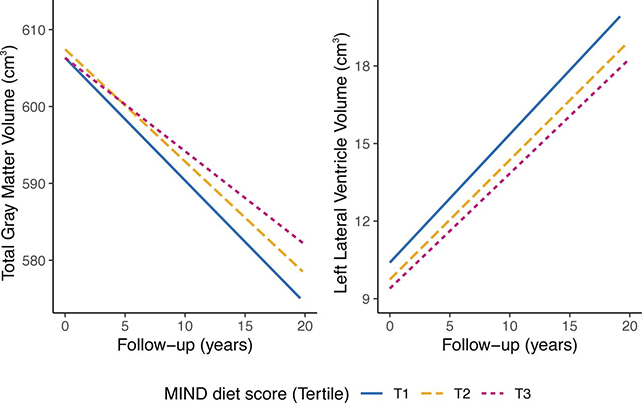
The observed dietary adherence among participants corresponded to brain aging that was approximately 2.5 years slower over the course of the investigation. The study’s participants were monitored for an average of 12 years, with data collected through self-reported dietary habits and subsequent MRI brain scans.
The researchers posited in their published findings that “MIND-recommended foods abundant in antioxidants, such as berries, and high-quality protein sources like poultry, may serve to diminish oxidative stress and mitigate neuronal damage.”
Conversely, they noted that “processed fried foods, frequently laden with detrimental fats, trans fats, and advanced glycation end-products, may contribute to inflammation and vascular compromise.”
The MIND diet, recognized for its multifarious health advantages, represents a synthesis of two established healthy eating frameworks. Its foundation is the Mediterranean diet, characterized by significant intake of plant-based foods and nuts, moderate consumption of fish and dairy, and minimal red meat. Extensive scientific inquiry has linked this dietary pattern to numerous health benefits, including enhanced longevity and a slower trajectory of cognitive decline.
Complementing this is the Dietary Approaches to Stop Hypertension (DASH) diet, designed to lower blood pressure and promote overall well-being by emphasizing fruits, vegetables, whole grains, and low-fat dairy products.
Essentially, the MIND diet integrates the principles of both the Mediterranean and DASH diets, incorporating additional specific modifications intended to combat cognitive impairment. Previous research has suggested its efficacy in reducing the risk of dementia and preserving cognitive acuity.
In the context of the latest inquiry, an international research collective, spearheaded by investigators from the Zhejiang University School of Medicine in China, delved into the MIND diet’s impact on the aging brain process.
Participants were not mandated to adhere to any specific dietary plan; rather, their eating habits were assessed for their degree of alignment with the MIND diet’s guidelines. Findings from the research team indicate that a closer adherence yielded more substantial benefits for brain aging, thereby fortifying the evidence supporting the MIND diet’s favorable effects on neurological health.
The researchers elaborated in their publication that “Gray matter atrophy and ventricle volume enlargement are well-established markers of brain aging.”
They further explained, “Gray matter, rich in neuronal cell bodies, dendrites, and synapses, plays a key role in memory, learning, and decision-making. Ventricle volume expansion, in contrast, reflects brain atrophy, where the brain tissue loss is accompanied by the enlargement of cerebrospinal fluid-filled spaces.”
Nevertheless, the gathered data does not establish a definitive causal relationship. While numerous confounding variables were taken into consideration, including age and educational attainment, other potential factors, such as sleep quality or genetic predispositions, were not specifically controlled for. It is conceivable that underlying influences affect both dietary patterns and brain aging, which were not explicitly addressed within the scope of this study.
Certain findings presented a degree of unexpected divergence. Consumption of whole grain products was associated with accelerated gray matter volume decline, whereas a higher intake of cheese appeared to attenuate the rate of decline in brain health. Intriguingly, cheese is among the foods that the MIND diet advises limiting.
It is evident that individual variations in health can influence the degree of effectiveness a MIND diet might confer. However, on a broad scale, this study offers significant new insights into the profound connection between dietary choices and the maintenance of brain health.
A multitude of studies have already demonstrated that dietary selections can influence the propensity for developing neurodegenerative conditions, including Alzheimer’s disease. The current research team suggests that future investigations could expand upon these discoveries by utilizing larger and more heterogeneous participant groups.
The researchers concluded their paper by stating, “The results highlight the need for additional long-term studies to further reveal how specific dietary patterns influence brain aging and neurodegeneration, which informs future dietary intervention programmes to improve brain health.”