
A recent investigation has revealed the presence of cocaine in sharks inhabiting the Bahamas, according to a new scientific publication.
Collaborative efforts by researchers from the Bahamas, Brazil, and Chile also identified residues of caffeine and analgesic medications within these marine creatures. This finding does not indicate a voluntary behavioral shift by the animals but rather points to an imposed consequence stemming from increasingly widespread marine contamination.
The detection of such substances in a locale often characterized as idyllic and untouched is a cause for significant concern, underscoring the diminishing number of global habitats where wildlife remains unaffected by human activities.
“Pharmaceuticals and illicit substances are increasingly recognized as contaminants of emerging concern (CECs) in marine environments, particularly in areas undergoing rapid urbanization and tourism-driven development,” state the authors of the published research.
“Their persistent introduction poses threats not only to marine biodiversity but also to human welfare through seafood consumption and exposure during recreational activities in affected waters.”
The scientific team conducted an analysis of blood samples drawn from 85 sharks that were apprehended in the vicinity of Eleuthera, an island renowned for its remoteness within the Bahamian archipelago. Among the sampled sharks, 28 exhibited detectable levels of various drugs in their systems.
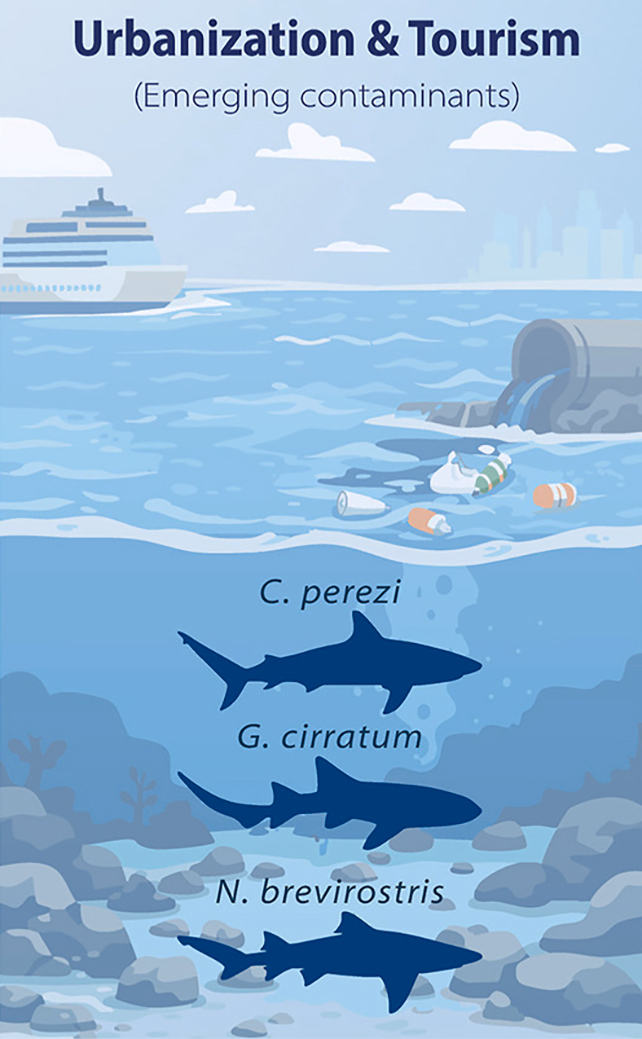
While caffeine was the most prevalent substance identified, two sharks also tested positive for cocaine. The researchers hypothesize that these instances might have occurred if the sharks ingested packets of cocaine that had entered the ocean.
“Their investigative behavior involves biting objects, leading to inadvertent exposure,” explained biologist Natascha Wosnick, affiliated with the Federal University of Paraná in Brazil, in a discussion with Joshua Rapp Learn for Science News.
The sharks were captured in proximity to popular sites for diving and cruise ship tourism. It is suggested that untreated sewage from vessels, coupled with increased wastewater from broader urban development and tourism activities, may be contributing factors to these findings.
This marks the inaugural detection of caffeine in sharks globally, and the first confirmation of cocaine within sharks in the Bahamas. The other two identified pharmaceuticals in the blood analyses were the analgesics acetaminophen and diclofenac.
This phenomenon is a growing source of apprehension among experts. A study released in the preceding year indicated that cruise ships operating in Arctic waters – essentially mobile, self-contained urban centers – were found to be releasing antibiotics, pharmaceuticals, and other chemical compounds into the marine environment.
Such discharges have cascading implications for all aquatic life. Prior evidence of cocaine traces in sharks off the Brazilian coast further amplifies concerns regarding the ocean’s role as a receptacle for waste.
The precise health impacts of these pharmaceuticals on marine organisms remain an area of ongoing investigation. The current study involved an assessment of certain metabolic indicators in the sharks, suggesting that exposure to these substances may be inducing elevated stress levels and increased energy expenditure as the aquatic predators’ bodies endeavor to metabolize and eliminate the toxins.
Future research endeavors are expected to delve deeper into these physiological responses. The study also advocates for enhanced wastewater management protocols related to tourism operations and a more comprehensive examination of the broader ecological ramifications of such pollution.
A considerable body of preceding research highlights the pervasive issue of pharmaceuticals in the environment and underscores the urgent necessity for increased data collection on their effects, particularly in environments presumed to be undisturbed and pristine.
“The identified CECs constitute a varied collection of biologically active compounds capable of disrupting critical physiological functions in marine life,” conclude the researchers.
“This investigation presents the inaugural report detailing CECs and their potential physiological consequences in sharks from the Bahamas, emphasizing the imperative to address marine pollution in ecosystems frequently regarded as pristine.”