An extensive examination encompassing 31 historical civilizations spanning Europe, Asia, and the Americas has revealed that democratic governance structures were considerably more prevalent than previously understood, and their emergence was not dictated by the size of the population or geographical location.
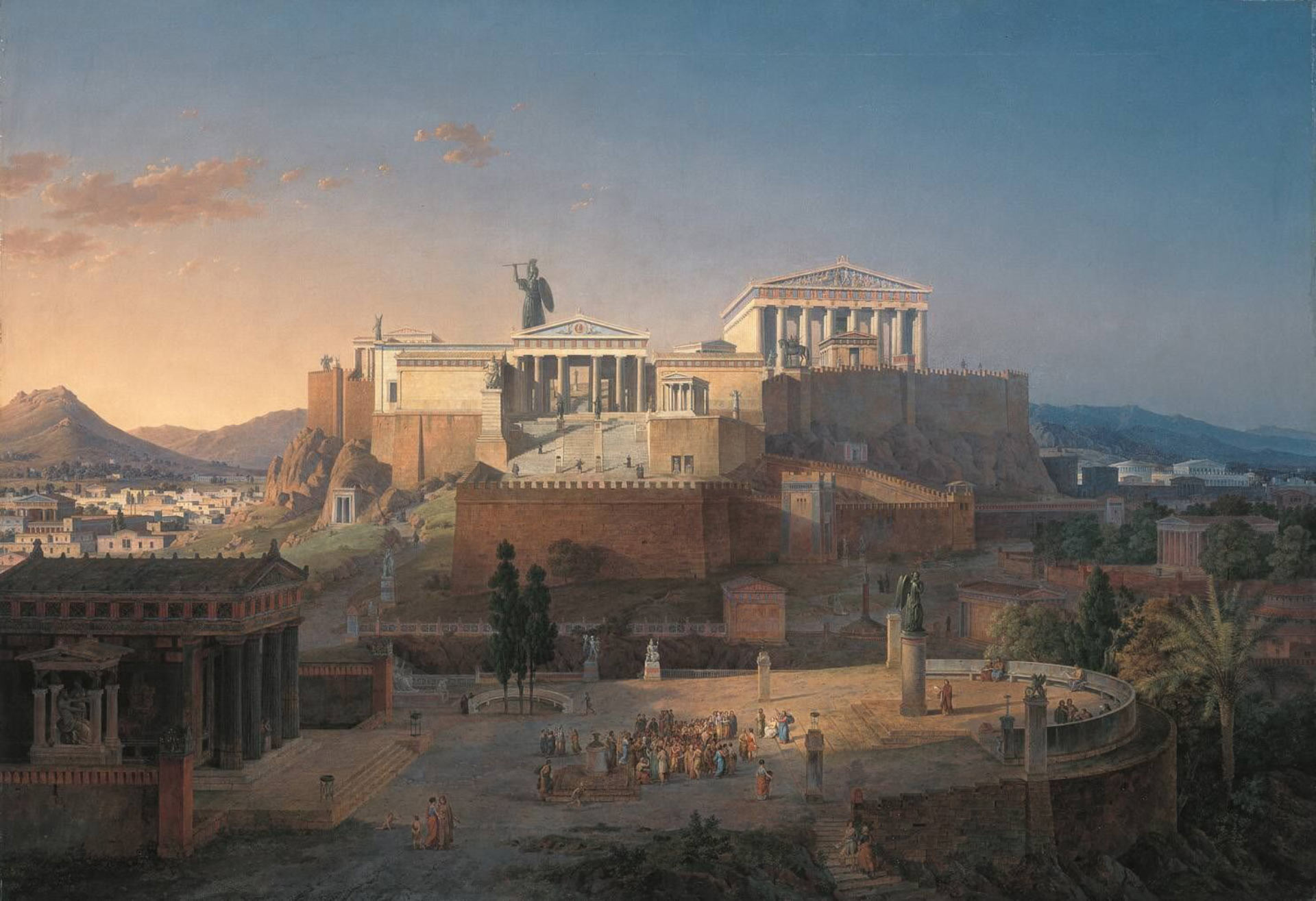
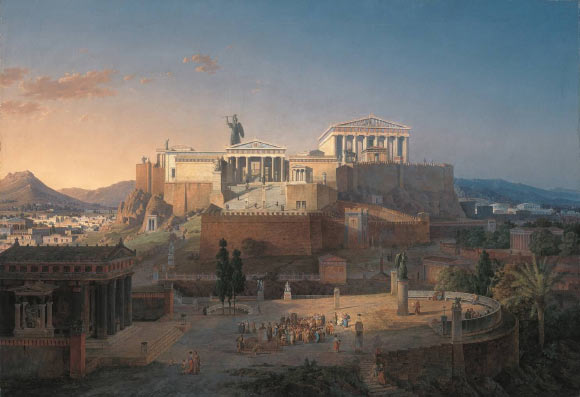
The Acropolis at Athens by Leo von Klenze.
The term ‘democracy,’ derived from the Greek words for ‘people’ (demos) and ‘power’ (kratos), was indeed conceptualized by the ancient Greeks, signifying the authority vested in the populace.
This conceptualization did not denote a fixed set of institutional frameworks; rather, it articulated a societal objective.
Conventional wisdom, often bolstered by scholars within Western social sciences, frequently posits that the fundamental tenets of democratic administration—such as mechanisms for curbing concentrated authority and the inclusion of citizens in governance—were exclusive to the ancient Mediterranean world. These principles were then thought to have remained largely dormant for over a millennium before being revitalized in Renaissance Europe and its colonial extensions, from which they subsequently disseminated.
However, this pervasive perspective, which asserts that collective, or democratic, forms of governance originated and propagated exclusively in the West, has seldom undergone rigorous systematic evaluation.
“There is a common presumption that democratic practices originated in Greece and Rome,” stated Dr. Gary Feinman, the MacArthur curator of Mesoamerican and Central American anthropology at the Field Museum’s Negaunee Integrative Research Center.
“Yet, our findings indicate that numerous societies globally devised strategies to constrain the power of their leaders and to empower ordinary individuals with a voice in public affairs.”
In an autocratic system, a single individual or a small clique wields absolute authority; examples of autocracy include absolute monarchies and dictatorial regimes.
Conversely, in a democracy, the responsibility for decision-making is distributed among the citizenry. While elections are frequently associated with democracy, this is not a universal constant—numerous autocratic leaders have attained power through electoral processes.
“Elections are not necessarily the most definitive indicator of what constitutes a democracy, so for this study, we sought to draw upon historical precedents of human political organization,” Dr. Feinman elaborated.
“We established two principal dimensions of governance. The first pertains to the extent to which authority is centralized in a single person or institution. The second concerns the level of inclusiveness, measuring how broadly the populace has access to power and can participate in various facets of governance.”
In their recent investigation, the researchers analyzed 40 distinct scenarios drawn from 31 varied political entities situated across Europe, North America, and Asia, covering a temporal span of several millennia.
These societies employed diverse methods of record-keeping, and not all of them preserved written documentation.
Consequently, the research team had to employ alternative means to ascertain the nature of governance within these historical contexts.
“I believe the utilization of spatial arrangements offers significant insights,” commented Dr. Feinman.
“The presence of urban zones characterized by expansive, open public areas, or public edifices featuring generous spaces conducive to communal gatherings and information exchange, typically correlates with more democratic societies.”
“Conversely, certain remnants of architectural design and urban planning suggest societies where power was concentrated in fewer hands.”
“Indications such as pyramidal structures with constricted summit areas, urban layouts where all thoroughfares lead to the ruler’s residence, or societal structures lacking sufficient communal spaces for information exchange, all serve as indicators of more autocratic systems.”
The scientific team devised an ‘autocracy index’ to categorize each studied society along a continuum, ranging from highly autocratic to profoundly collective forms of governance.
“Among archaeologists, there is a deeply ingrained belief that Athens and Republican Rome were the sole bastions of democracy in the ancient world, and that governance in Asia and the Americas was inherently tyrannical or autocratic,” Dr. Feinman remarked.
“Our analysis revealed societies in other global regions that exhibited democratic characteristics comparable to those of Athens and Rome.”
“These findings demonstrate that both democracy and autocracy were prevalent throughout the ancient world,” affirmed Professor David Stasavage of New York University.
“Societies also developed mechanisms for power sharing and fostered inclusivity, underscoring that democracy possesses deep and widespread historical antecedents. I suspect many individuals will find this revelation surprising,” added Dr. Linda Nicholas, a researcher at the Field Museum.
The research team concluded that neither population size nor the number of political tiers explained whether a society would lean towards autocracy, thereby challenging the prevailing notion that demographic and political scale naturally foster strong rulers.
“Instead, the most influential determinant of the extent of power held by rulers was the method by which their authority was financed,” Dr. Feinman explained.
“Societies heavily reliant on revenue streams exclusively controlled or monopolized by leadership—such as mining operations, extensive trade routes, enslaved labor, or spoils of war—tended to evolve into more autocratic systems.”
“Conversely, societies sustained primarily through broad-based internal taxation or communal labor were more inclined to distribute power and maintain systems of shared governance.”
Furthermore, the study indicates that societies with more inclusive political structures generally experienced lower levels of economic disparity.
“These findings contravene the notion that autocracy and significant inequality are inherent or unavoidable consequences of societal complexity or growth,” Dr. Feinman stated.
“History illustrates that people across the globe have successfully established inclusive political systems, even under challenging circumstances.”
A publication detailing these discoveries was recently issued in the esteemed journal Science Advances.
_____
Gary M. Feinman et al. 2026. The distribution of power and inclusiveness across deep time. Science Advances 12 (12); doi: 10.1126/sciadv.aec1426