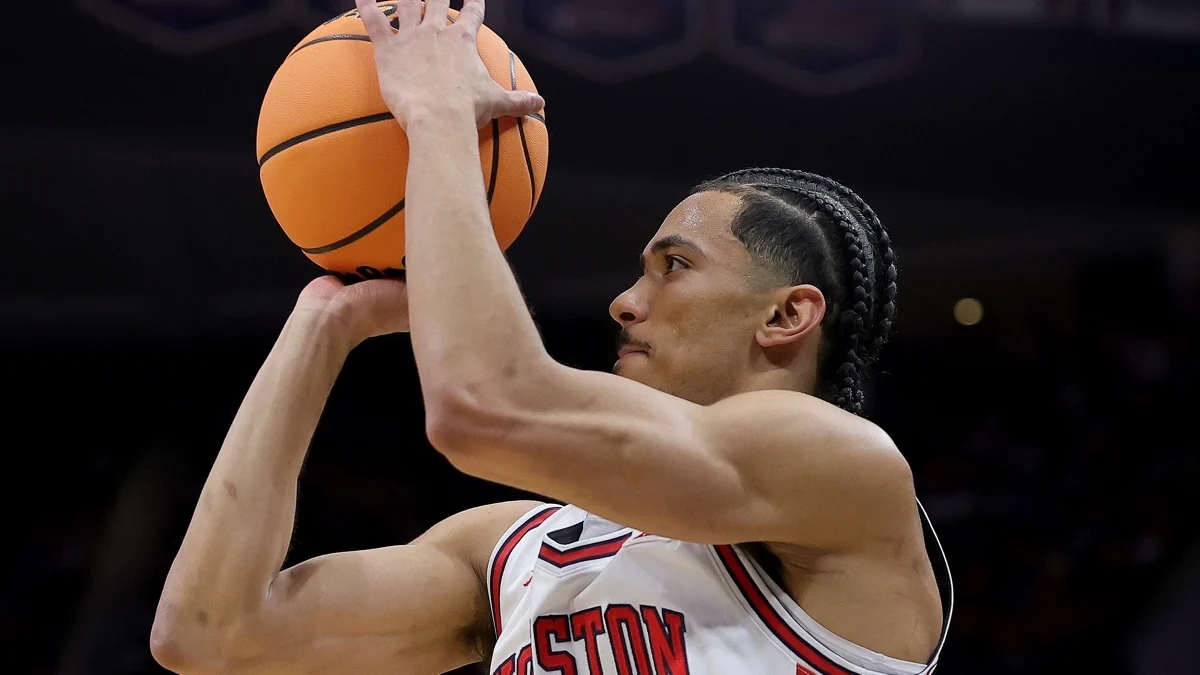
Each year during the March Madness tournament, a predictable scenario unfolds. A player steps to the free-throw line, attempts a shot, and it misses. Consequently, a perfect bracket is dashed.
These are individuals of exceptional athletic caliber. The player has executed this precise shot countless times previously. Therefore, what factors contributed to the miss in this critical moment?
Investigations originating from my laboratory have elucidated that the determinant between a successful shot and a miss might hinge on stability, encompassing not only physical execution but also cognitive processes.
Assessing Neurological Activity
My research group embarked on an endeavor to comprehend the mechanisms by which individuals acquire proficiency in basketball shooting. Consequently, we focused our scrutiny on the initial stages of skill acquisition, a period characterized by the nascent formation of neural-body coordination, rather than its established automatization.
Extensive research spanning decades concerning the performance of elite athletes indicates that their sport-specific movements are remarkably consistent, and their neural processing appears to be optimally adapted for the task at hand.
In essence, they exhibit diminished extraneous neural activation and a more concentrated cognitive focus on the precise execution of a given maneuver. However, it remains uncertain whether these neural states are exclusive to peak performance or if they can manifest early in the developmental trajectory of a skill.
To thoroughly examine this inquiry, my colleagues and I meticulously recorded both the biomechanical movements and the neurological activity of novice and intermediate basketball players as they engaged in shooting practice.
Specifically, we leveraged motion capture instrumentation to dissect their movement kinematics and employed electroencephalography to scrutinize their neural patterns. Following a concise period of practice and acclimatization, each participant attempted 50 shots. Subsequently, we conducted a comparative analysis of the shots that successfully reached the basket against those that did not.
Our findings yielded significant insights.
Successful shots across all participants correlated with more uniform biomechanical patterns. The postural alignment of the feet and lower extremities was configured to establish a robust foundation, thereby enhancing equilibrium and facilitating a more efficacious transfer of force toward the ball.
The synchronized motion across the body’s segments demonstrated improved coordination, with a reduction in variability observed in critical movement phases, notably at the wrist and elbow joints.
At the neurological level, successful shot attempts were associated with greater neural stability. Furthermore, there was an augmentation in neural activity pertinent to the sophisticated integration of sensory input with motor command execution.
Conversely, unsuccessful shots exhibited marked inconsistency, with subtle deviations observed throughout the execution of the movement. This suggests that the athletes were continuously making mid-attempt adjustments to their physical actions.
Similarly, the neural activity during attempted shots that missed appeared to reflect a system still undergoing a process of refinement, characterized by ongoing evaluation, modification, and correction.
This trial-by-trial fluctuation and adaptive response are precisely what one would anticipate during the early stages of skill acquisition. According to a foundational model of skill learning, novices tend to rely more heavily on conscious cognitive effort, processing verbal, visual, and spatial information as they strive to harmonize perception with motor output.
In other words, they are consciously and deliberatively thinking through every aspect of the movement. The learning process itself necessitates exploration, error identification, and subsequent remediation as the brain and body actively seek an optimal solution.
Even within this inherently complex learning paradigm, successful attempts already displayed indicators of enhanced regulatory control. The success of a shot was not solely contingent on the overall level of brain activity, but rather on the degree of consistency with which it operated.
Successful shots were characterized by a more stable, less variable neural state, accompanied by patterns of activation suggesting that the brain was more finely attuned to the specific demands of the shooting task.
Cognitive Influence on Physical Performance
However, there is a critical nuance to consider: the very mechanisms that facilitate learning can, paradoxically, impede performance under certain circumstances.
Elite athletes do not engage in conscious micromanagement of each individual action. Instead, they depend on well-established motor programs that have been meticulously refined through extensive practice. As proficiency advances, performance shifts from being effort-dependent to being primarily consistency-driven, with neural processing becoming more streamlined and less variable.
Nevertheless, under duress, this inherent stability can falter. A collegiate athlete, despite considerable talent, may still be in a phase of ongoing physical and psychological development.
In high-stakes situations, particularly those encountered in the intense environment of March Madness, which may not have been replicated in training, elevated pressure can compel the athlete to revert to a state of self-consciousness. This may lead to a more deliberate and explicit monitoring and control of their movements.
This reintroduction of conscious cognitive processing can disrupt the automatic coordination that has been cultivated through practice, inadvertently increasing the variability of both physical actions and mental focus, thereby diminishing overall performance.
Training regimens that address not only the technical aspects of the sport but also the psychological dimensions of performance could potentially equip athletes with the ability to achieve, sustain, or regain the optimal mental state conducive to consistent execution, even when confronted with significant pressure.
My research laboratory is currently exploring the application of biofeedback and neurofeedback modalities to render these typically imperceptible physiological and neurological states quantifiable, thereby facilitating their use in training protocols.
If athletes can develop a deeper understanding of their physiological and neurological responses under pressure and practice strategies for re-establishing a more stable state, this could represent a viable pathway toward achieving more consistent performance outcomes.
The ultimate objective extends beyond mastering the correct physical technique; it also encompasses learning the appropriate timing and method for relinquishing excessive conscious control.