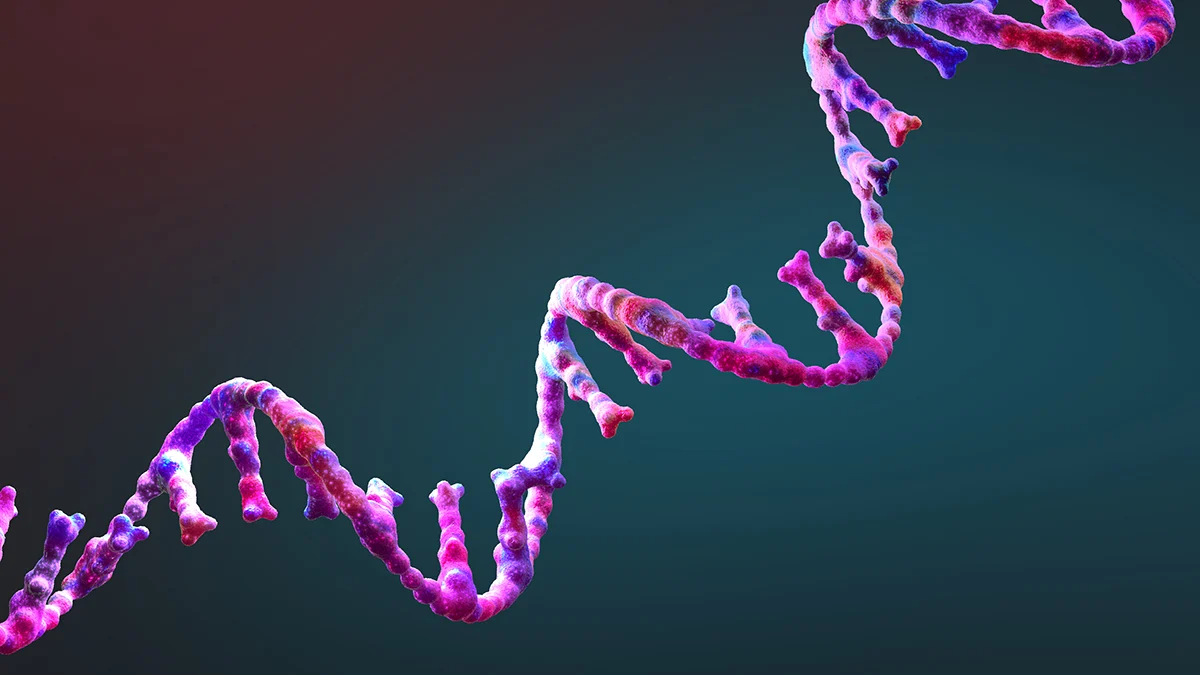
The prevailing notion known as the RNA world hypothesis suggests that entities composed of ribonucleic acids (RNA) were instrumental in initiating evolutionary processes and the emergence of all terrestrial life. Recent scientific findings have unveiled a critical piece of evidence that strengthens this proposition.
The intricate process of life’s genesis from rudimentary chemical constituents presents a formidable enigma that researchers have been endeavoring to unravel for an extended period.
A persistent skepticism surrounding the RNA world hypothesis has centered on the perceived improbability of RNA molecules, capable of self-replication and thus initiating life, arising spontaneously due to their inherent size and complexity.
In response to this scientific inquiry, an RNA molecule designated as Quite Tiny 45 (QT45) has been identified, as detailed in a comprehensive study spearheaded by a consortium of researchers from the Medical Research Council (MRC) Laboratory of Molecular Biology in the United Kingdom.
QT45 exemplifies what is termed a polymerase ribozyme, an RNA variant endowed with enzymatic capabilities. This endowment enables it to accelerate chemical reactions, thereby facilitating the synthesis of molecules guided by genetic blueprints.
Furthermore, the investigative team demonstrated its capacity to approximate self-replication. This is achieved by synthesizing its complementary strand—an enantiomeric sequence mirroring the original RNA molecule—and subsequently employing this synthesized strand to generate a replica of itself through a distinct reaction pathway.
While this process does not constitute complete self-replication, it effectively showcases two foundational stages of the mechanism, each executed independently. Significantly, this occurs within a molecule of diminutive size and simplicity, suggesting its potential ante-dating of life itself. The advent of self-copying genetic material marks the genesis of life.
“This investigative work affords a valuable insight into the nascent stages of life’s development and enhances our comprehension of the fundamental molecular structures that form the bedrock of all living organisms,” states biochemist Edoardo Gianni, affiliated with the MRC Laboratory of Molecular Biology.

In contemporary biological systems, RNA relies on proteins to perform the task of self-replication. Prior scientific endeavors had established the feasibility of multiple RNA molecules cooperating to generate duplicates of themselves. However, the molecules engineered in these laboratory experiments were hitherto too substantial and intricate to have plausibly assembled within the primordial environment.
To achieve the synthesis of the more compact and unadorned QT45, the researchers devised meticulously controlled experimental conditions employing meticulously engineered cryogenic liquid environments. These environments hosted an immense collection of one trillion RNA sequences, characterized by their random composition and extreme brevity. The researchers’ objective was to ascertain whether any of these molecular congregations exhibited the inherent capacity to duplicate and assemble RNA constituent units.
Through a rigorous process of iterative experimentation and refinement, QT45 was isolated. Subsequent detailed analysis and experimental validation confirmed that, under optimized parameters, the RNA molecule could autonomously synthesize itself over a period of 72 days, in addition to generating other RNA templates of progressively increasing complexity. This demonstrated capability and adaptability lend substantial credence to the RNA world hypothesis.
“The identification of a diminutive RNA molecule significantly bolsters the proposition that self-replicating RNA could have emerged spontaneously. Furthermore, owing to its reduced dimensions, it successfully replicated both itself and its template—a feat not accomplished in prior research, where only fragments were copied,” observes Gianni.
While this achievement does not represent full self-replication, QT45 has conclusively demonstrated its ability to perform two of the most challenging steps in the process. It is acknowledged that certain ingenious manipulations by the researchers were still necessary to construct a complete cycle comparable to what would occur naturally.
The subsequent objective of the research team is to enhance both the velocity and the output volume of the QT45 replication process. Presently, the synthesis is relatively time-consuming and yields a modest quantity of material, although it is important to recognize that these are extremely early-stage developments.
Despite the inherent challenges that lie ahead, substantial progress has been made toward elucidating the initial mechanisms of life’s formation and validating the principles of the RNA world hypothesis.
These breakthroughs hold considerable import for the ongoing quest to detect life beyond Earth. Once a comprehensive understanding of the phenomenon that catalyzed the transition from rudimentary chemicals to life on our planet is attained, scientists will be better equipped to identify analogous processes occurring on celestial bodies far removed from our solar system.
“Beyond its profound scientific implications, this discovery also sheds light on the inherent likelihood of spontaneous life emergence and the potential for analogous processes to unfold on other planets,” comments Gianni.