Planetary geologists, leveraging observational data from NASA’s Curiosity rover’s ChemCam instrument, have identified mineral deposits abundant in iron, manganese, and zinc within meticulously preserved ripple formations in Gale Crater. This finding strongly suggests the former presence of a shallow aqueous environment at this locale.
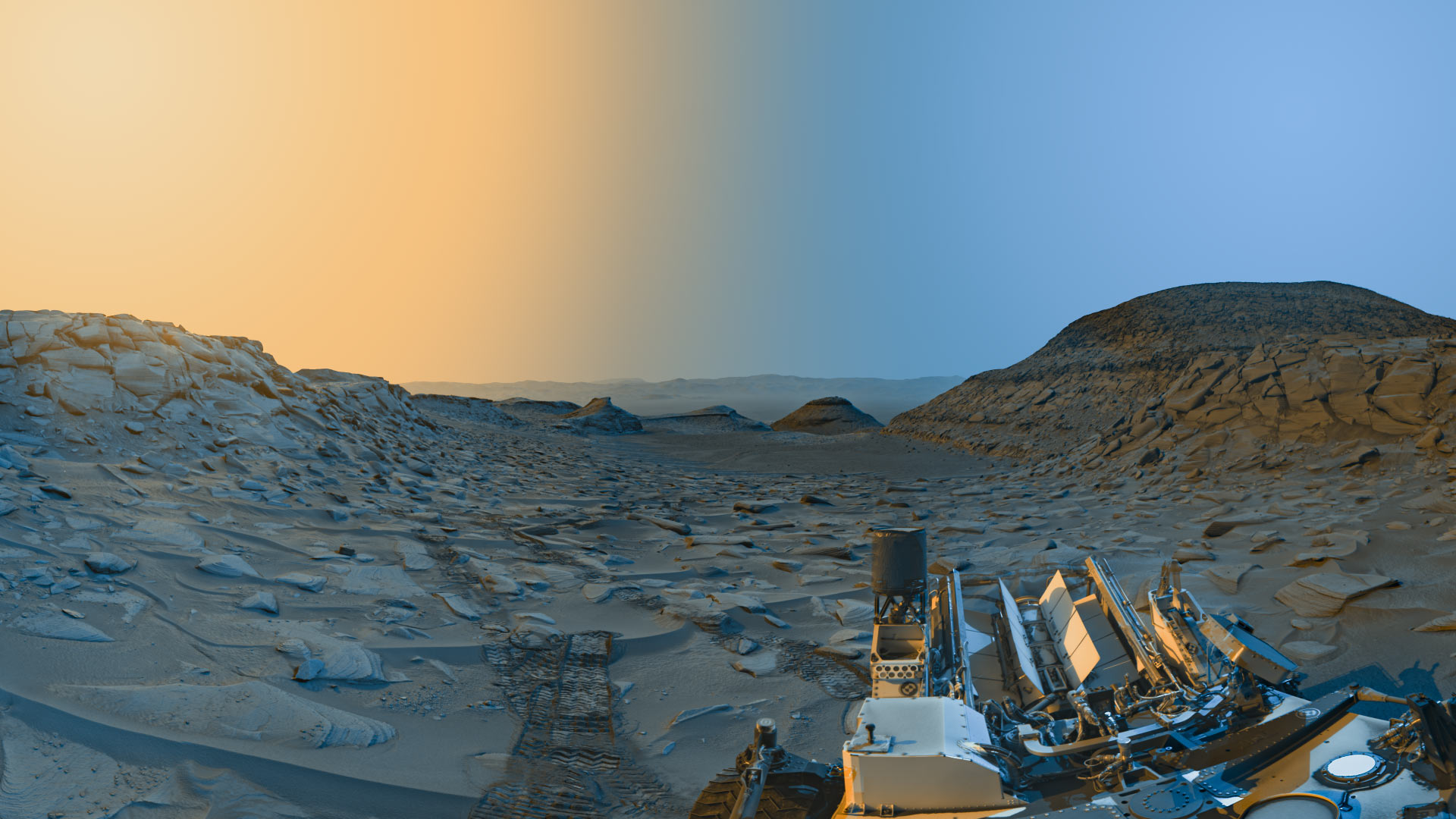
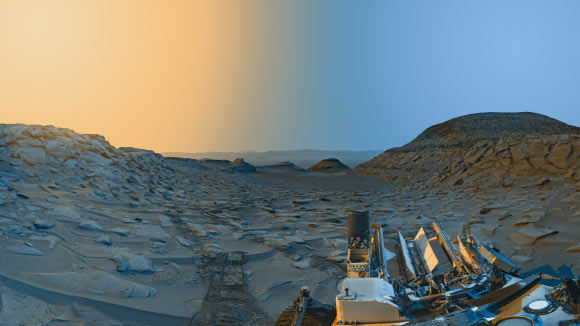
This image illustrates the Amapari Marker Band, an intricate geological feature where NASA’s Curiosity rover detected compelling indicators of a bygone lake. Credit: NASA / JPL-Caltech.
The ChemCam instrument aboard the Curiosity rover employs laser-induced breakdown spectroscopy, a method involving the vaporization of rock surfaces with a laser to generate plasma. The emitted light from this plasma is then analyzed to ascertain the elemental composition of the Martian surface.
The overarching objective of this research is to evaluate the past habitability of Mars, specifically investigating whether the planet once possessed conditions conducive to life.
More recently, the rover has been investigating a substantial sedimentary deposit, which researchers postulate represents a transitional phase from a perennially moist (phyllosilicate-rich) Martian climate to a colder, arid (sulfate-rich) epoch.
The discovery of redox-active metals, including iron and manganese, could serve as crucial evidence suggesting that microbial life might have flourished in this ancient lake, assuming life was present on Mars.
Certain terrestrial microorganisms are known to utilize these metallic elements as fundamental energy sources.
“The presence of these metals within well-preserved ripple structures provides the most definitive evidence to date of a lake occupying Gale Crater,” stated Dr. Patrick Gasda, a researcher at Los Alamos National Laboratory and a science team member for the ChemCam instrument.
“However, the surprising aspect is that this lake persisted at a high elevation on Mount Sharp, where the rover examined strata deposited during a period of significant climatic drying on Mars.”
“In its ancient past, Mars was considerably wetter, and lacustrine environments within craters were a common occurrence.”
“It appears that as Mars transitioned to a drier, colder regime, the lakes that did form were infrequent and transient in nature.”
The identification of iron, manganese, and zinc deposits can establish a robust foundation for subsequent investigations on Mars.
These findings can guide the selection of future exploration sites for the Curiosity rover and identify auspicious locations for potential sample return missions.
“Considering the significant astrobiological implications suggested by the Amapari Marker Band, these material types ought to be prioritized for subsequent chemical analyses by Curiosity or for the repatriation of samples from Mars’ Jezero Crater, should such an opportunity materialize,” Dr. Gasda elaborated.
A research paper detailing this discovery was published this month in the Journal of Geophysical Research: Planets.
_____
P.J. Gasda et al. 2026. Amapari Marker Band Metal-Enrichments: Potential Mechanisms and Implications for Surface and Subsurface Water and Weathering in Gale Crater. JGR: Planets 131 (4): e2025JE009153; doi: 10.1029/2025JE009153