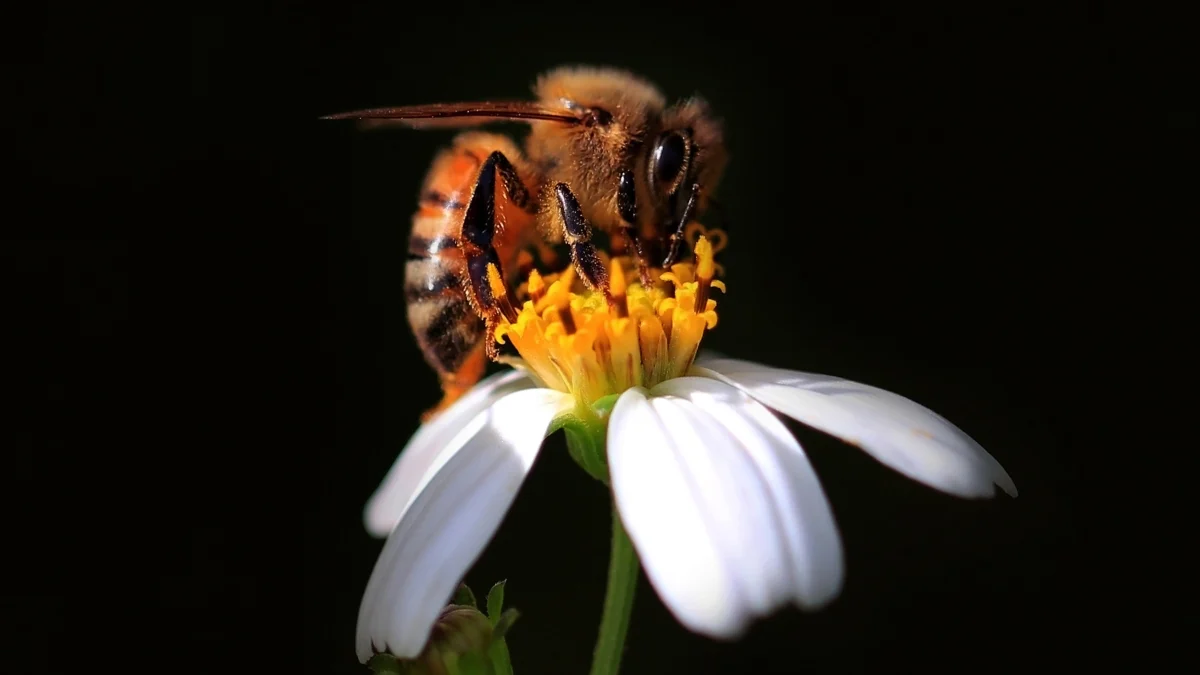
While considerable attention has been focused on insect cognitive abilities, particularly those of bees, in recent years, skepticism persists among a segment of the scientific community.
Given their well-documented proficiency in recognizing patterns, some researchers posited that experiments designed to assess numerical comprehension in bees might not be indicative of true numerical processing, but rather an enhanced capacity to discern visual distinctions.
Emerging investigations have now introduced a novel perspective, one that endeavors to comprehend the world through the visual apparatus of bees, diverging from anthropocentric assumptions.
The outcomes? These insects appear to retain their ability to quantify, even when their perception is taken into account.
“A persistent debate has centered on whether bees engage in genuine ‘counting’ or merely respond to visual configurations. Our findings indicate that this contention loses its validity when the biological realities of the organism are considered,” stated neuroscientist Mirko Zanon from the University of Trento, Italy.
“Upon analyzing the experimental inputs in a manner that accurately mirrors a bee’s visual experience, a distinct sensitivity to quantity remains evident.”
Earlier research aimed at evaluating the numerical acumen of bees, specifically the Western honey bee (Apis mellifera), involved presenting them with stimuli featuring various patterns.
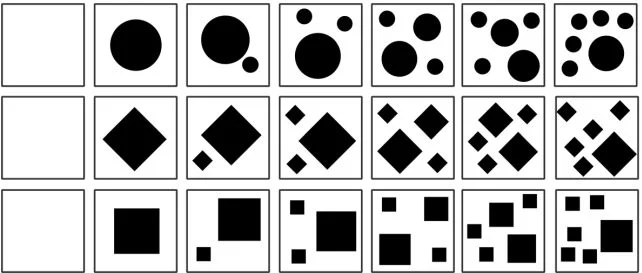
A seminal experiment conducted in 2019 involved associating abstract symbols with specific numerical values, which the bees were subsequently trained to identify. Following this, they were presented with a panel displaying a quantity of shapes and were tasked with selecting the symbol corresponding to that quantity.
During the instructional phase, the bees demonstrated a success rate hovering around 75–80 percent.
In the actual evaluative stages, performance saw a reduction, registering between approximately 60 and 65 percent. Nevertheless, this success rate significantly surpasses what would be expected due to random chance, leading the scientific team to conclude that the bees possessed the capacity to apprehend numerical quantities.
However, a critical assessment published in 2020 raised concerns that the bees might have been engaging in pattern recognition rather than explicit counting, potentially due to limitations in their visual acuity for resolving the presented imagery.
Acknowledging the validity of this critique, the original researchers revisited their collected data for re-examination.
“It is imperative to prioritize the organism’s perspective when assessing its cognitive processes, as otherwise, we risk either underestimating or overestimating their capabilities,” commented zoologist Scarlett Howard of Monash University in Australia.
“Our sensory experiences and interpretations of the world are fundamentally different from those of other animals, necessitating caution against centering human viewpoints and senses when investigating animal intelligence.”
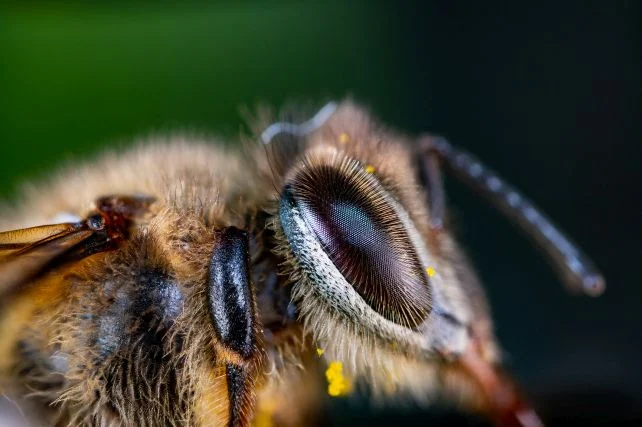
Previous studies concerning bee visual perception indicate that this distinction can be of considerable importance. Bees are capable of resolving only relatively rudimentary, low-detail visual patterns. However, earlier analytical approaches utilized panels featuring fine visual intricacies that may have exceeded the bees’ perceptual limits.
Consequently, it is plausible that the bees resorted to non-numerical visual cues as a means of ‘deceiving’ the experimental setup. To address this, the research team reprocessed the visual patterns from prior experiments to accurately represent their appearance through the lens of bee vision, rather than human perception.
Employing a computational model informed by prior estimations of the honeybee’s spatial resolution capabilities, they re-evaluated the stimuli. This recalibration revealed a significant finding.
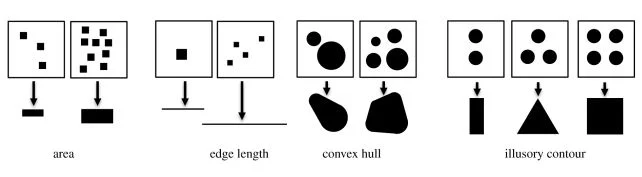
In earlier analyses, images containing a greater number of elements also tended to exhibit higher visual complexity, characterized by more edges and finer details. Critics therefore suggested that bees might simply be selecting the more visually intricate image, bypassing the act of counting.
However, when the images are reinterpreted to align with a bee’s actual visual processing, this correlation diminishes considerably. An increased number of objects does not inherently translate to a proportionally greater amount of perceptible detail.
As a direct consequence, the hypothesis that bees are relying solely on elementary visual cues becomes less tenable, predominantly because this purported shortcut is no longer demonstrably accessible to them.
Instead, the findings support the proposition that the insects are reacting to the count of the shapes, rather than solely their overall visual presentation. This reinforces the original assertion that bees possess a sensitivity to numerical values, as opposed to merely depending on superficial visual characteristics.
“Attempting to internalize the perspective of a bee and envision their world is inherently challenging, yet striving to perceive the environment from an animal’s vantage point is a fundamental component of our research endeavors,” stated Howard.
“The bees consistently astound us with their adept navigation of their surroundings, their interpretation of our queries, and their decision-making processes.”