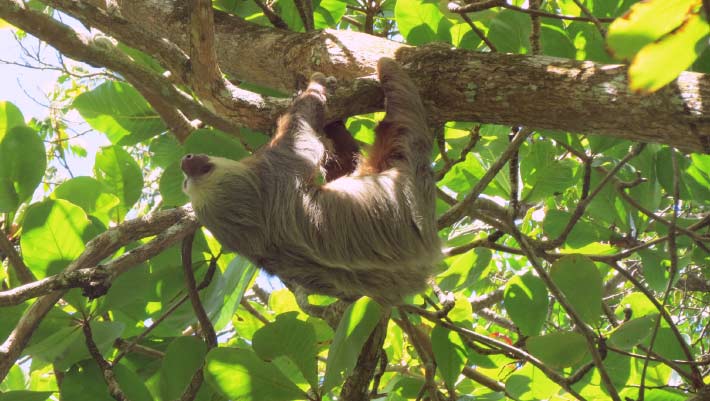
An extensive, genome-wide examination of Amazonian two-toed sloths (genus Choloepus) indicates a greater degree of genetic differentiation than previously understood, suggesting the potential existence of undiscovered species.
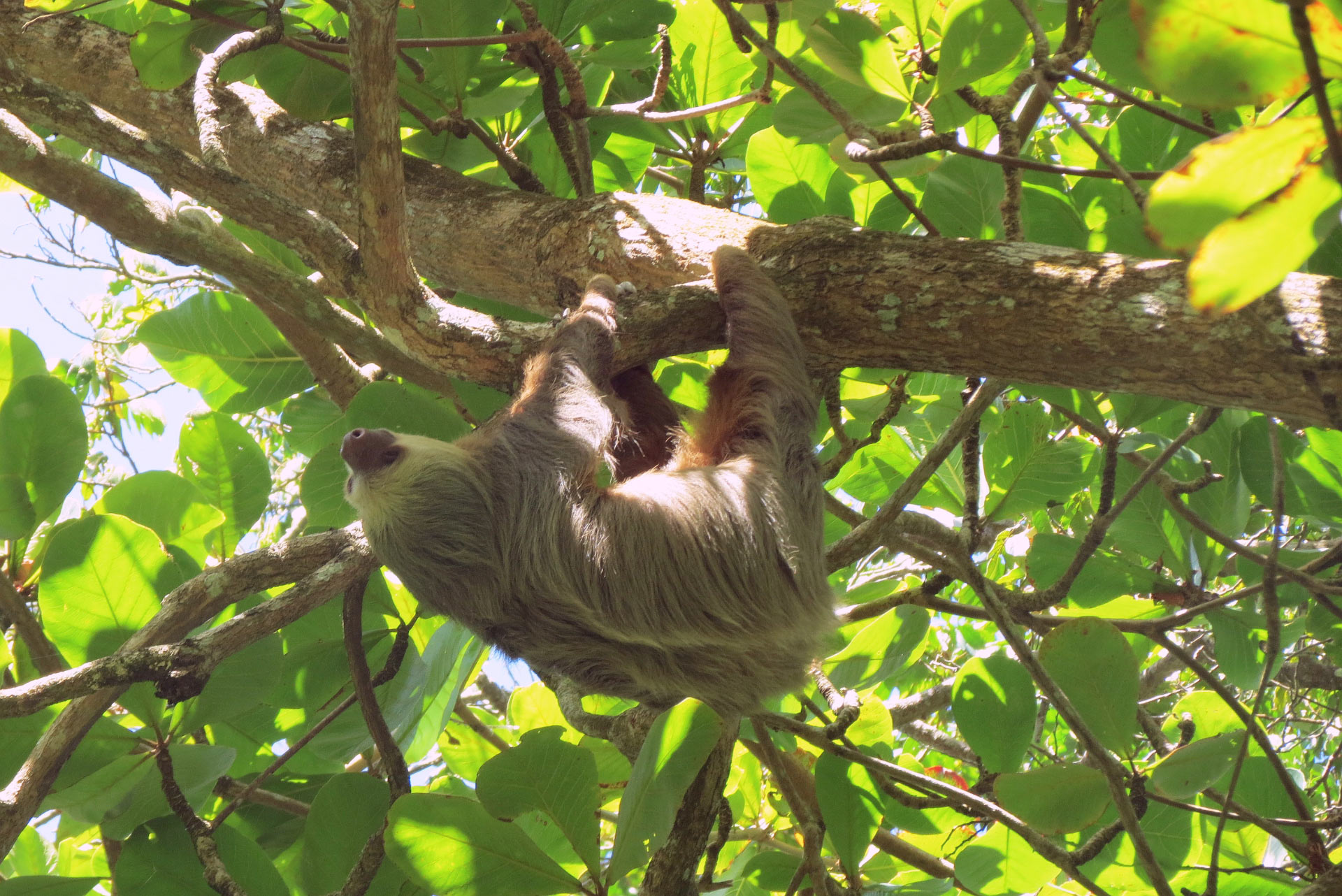
The Hoffmann’s two-toed sloth (Choloepus hoffmanni). Image credit: Camila Mazzoni.
Two-toed sloths
are arboreal mammals characterized by their slow locomotion, inhabiting the rainforests of Central and South America.
Contrary to what their name might imply, these animals do not possess precisely ‘two toes’; this designation refers to the two clawed digits on their forelimbs, distinguishing them from their three-toed counterparts.
The genus Choloepus encompasses two-toed sloths, which are classified within the monotypic family
Choloepodidae
.
Currently, scientific consensus recognizes two distinct species: the
Hoffmann’s two-toed sloth (Choloepus hoffmanni)
, whose distribution spans Central America and extends into portions of South America, and the
Linnaeus’s two-toed sloth (Choloepus didactylus)
, predominantly found throughout the Amazon Basin.
“Although Choloepus didactylus is considered a single, widely distributed entity within Amazonia, Choloepus hoffmanni comprises five recognized subspecies. These subspecies inhabit areas both west (extending from Central America into northwest Venezuela, Colombia, and Ecuador) and east of the Andes mountain range,” stated Dr. Camila Mazzoni of the Leibniz Institute for Zoo and Wildlife Research, alongside her research associates.
“It is presumed that these two species coexist in sympatry within Western Amazonia, a region renowned for its exceptionally high diversity of terrestrial mammals. Morphological distinctions between them are primarily observed in pelage coloration and osteological characteristics.”
“Nevertheless, the substantial overlap in superficial morphology, particularly concerning body mass and coat pigmentation, can pose challenges to precise taxonomic identification.”
To elucidate the systematic relationships and biogeographic trajectory of the genus within the Amazonian region, the researchers amassed all available public mitochondrial data and generated novel genomic information, including mitochondrial and whole-genome sequences from Choloepus specimens collected in three disparate Amazonian locations.
Utilizing these extensive datasets, an assessment was conducted on the population structure, phylogenetic interconnections, demographic evolution, and patterns of genomic variability across the sampled lineages.
The investigation revealed that Choloepus hoffmanni, as presently defined, does not represent a singular, uniform genetic entity.
Instead, populations situated to the east of the Andes demonstrate closer genetic affinity to Choloepus didactylus than they do to their presumed counterparts west of the mountain range.
This finding renders Choloepus hoffmanni ‘paraphyletic’—an indicator that its current taxonomic classification does not accurately reflect its evolutionary lineage.
Perhaps more remarkably, the scientific team identified a minimum of three genetically distinct lineages within Amazonian sloths, exhibiting profound divergences, with indications pointing towards the existence of even more.
The origins of this concealed diversity trace back several million years. Through comparative analysis of nuclear and mitochondrial DNA, the researchers reconstructed the evolutionary timeline of the sloths, discovering that significant divergences between lineages often correlate with periods of environmental flux.
The geographical separation of sloths by the Andes is estimated to have occurred approximately 4.6 million years ago, during the latter stages of the mountain uplift that fundamentally altered the South American landscape.
Subsequently, around 2.6 million years ago, the commencement of the Quaternary glaciations appears to have fragmented the Amazonian forests into isolated refugia.
For arboreal creatures such as sloths, these environmental shifts would have erected barriers to dispersal, fragmenting populations and initiating distinct evolutionary trajectories.
The genetic evidence further suggests that sloth populations have undergone cycles of expansion and contraction, mirroring the fluctuations between glacial cooling and warmer interglacial periods.
“Amazonian sloths serve as both living artifacts of an ancient evolutionary past and indicators of contemporary deforestation,” commented Dr. Mazzoni.
“The emergence of cryptic lineages and the potential for novel species underscore the critical need to expedite sloth research, an objective our team is diligently pursuing.”
“This highly collaborative research effort establishes a crucial foundation for the future of sloth conservation.”
“It powerfully illustrates the indispensable role of genomic research in unearthing concealed biodiversity within the Amazon and directly informs conservation strategies, ensuring that protective measures are targeted towards unique evolutionary units before they are irreversibly impacted by anthropogenic pressures.”
These
findings
have been published in the esteemed journal Molecular Phylogenetics and Evolution.
_____
Larissa S. Arantes et al. 2026. Genomic insights into the evolutionary history and cryptic diversity of two-toed sloths (Choloepus) in Amazonia. Molecular Phylogenetics and Evolution 221: 108620; doi: 10.1016/j.ympev.2026.108620