As the Northern Hemisphere embraces the warmth of springtime, now presents an opportune moment to venture outdoors and appreciate one of the sky’s most captivating celestial displays.
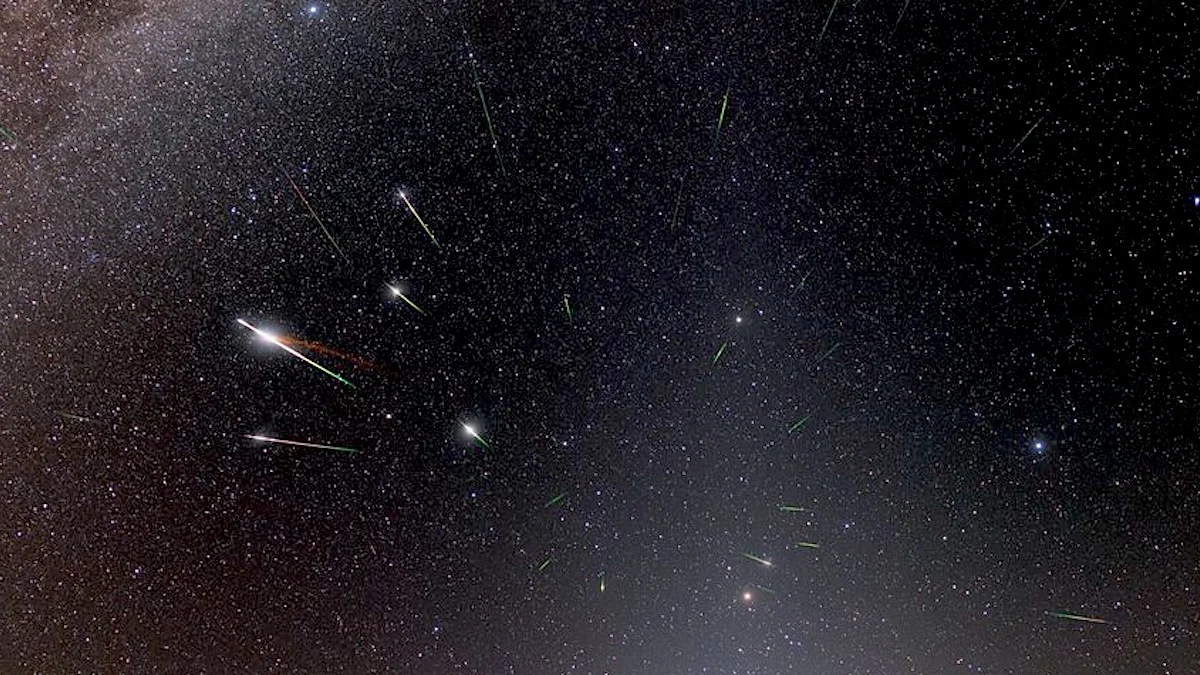
Our planet is presently traversing the cosmic trail of dust and debris meticulously left by the passage of Halley’s Comet around the Sun. This annual phenomenon, recognized as the Eta Aquariids, reaches its zenith of incandescent comet fragments burning through our atmosphere between May 4th and 6th.
According to the American Meteor Society, the optimal period for observing this meteor shower is anticipated around 4:00 AM local time on the morning of May 5th, 2026, precisely when the radiant point ascends to its highest celestial position.
This year, the most rewarding viewing experience is projected for the Southern Hemisphere, where the radiant ascends higher in the firmament, potentially yielding up to sixty meteors per hour. Observers situated in the Northern Hemisphere can anticipate a more modest rate, closer to ten per hour, further diminished by the presence of a brilliant waning gibbous Moon that tends to obscure fainter celestial streaks.
Fortunately, several strategies can be employed to significantly enhance your prospects of witnessing this exceptional cosmic spectacle, ensuring you don’t miss out on one of Earth’s most remarkable astronomical events, weather permitting. The meteor shower gracefully continues its celestial journey until the latter part of May, offering continued opportunities to make wishes upon shooting stars even beyond its peak intensity.
Our planet is perpetually subjected to meteor showers of varying intensities; indeed, it is more precise to state that Earth’s orbital path is interwoven with streams of cosmic detritus, which accounts for the predictable annual recurrence of specific meteor showers.
This particulate matter originates from comets or asteroids as they meticulously chart their elliptical trajectories around the Sun. As these celestial bodies approach the Sun’s warmth, the frozen volatiles trapped beneath their surfaces undergo sublimation, erupting outward as gases and liberating accompanying dust particles.
When Earth intersects these extraterrestrial streams, a portion of the material enters our atmosphere, igniting upon atmospheric entry and frequently creating a luminous incandescent trail visible to the unaided eye. The celestial point from which these meteors appear to emanate is designated as the radiant, with the descending meteors manifesting as swift streaks radiating from this focal point.
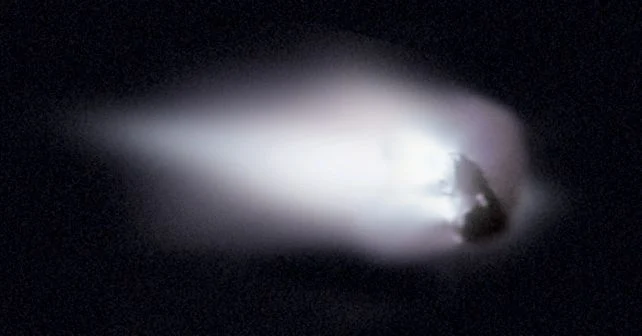
The Eta Aquariids are recognized as the fragmentation products of a comet designated 1P/Halley, more commonly known as Halley’s Comet, which graces our solar system with its presence approximately every seventy-six years. The radiant for this particular shower is situated in close proximity to the constellation Aquarius.
Due to the Moon’s scheduled descent around the break of dawn, it will remain visible in the sky during the Eta Aquariids’ peak performance. However, there is a mitigating factor. As Earth rotates from west to east, most celestial bodies exhibit a general pattern of rising from an easterly direction and setting towards the west.
The waning gibbous Moon ascends during the evening hours. Throughout this Eta Aquariids season, the constellation Aquarius will ascend into view after midnight. Consequently, by the time of the pre-dawn peak, the Moon and Aquarius should occupy opposing quadrants of the sky. The Moon will be progressing towards the western horizon, while Aquarius will be rising in the east.
This fortunate alignment allows observers to orient themselves with their backs to the Moon, thereby minimizing the distracting glare that can overwhelm the visibility of fainter meteors. An even more advantageous viewing position can be achieved by utilizing a substantial natural or man-made obstruction, such as a tree or a building, situated between your vantage point and the Moon.
The lunar influence will progressively wane as May advances, and the meteor shower will persist, albeit with diminished intensity, until approximately May 27th or 28th. Therefore, continued vigilance of the night sky may permit an extended period for celestial observation.
The subsequent significant meteor showers are slated for July, featuring a triumvirate of celestial events: the southern Delta Aquariids, the Alpha Capricornids, and the highly anticipated Northern Hemisphere shower of the year, the renowned Perseids.
Mark your calendars now, as the Perseids are predicted to reach their zenith on August 12th to 13th, coinciding with a new Moon, thereby providing the darkest possible sky for an unparalleled meteor viewing experience.