
Elevated levels of adipose tissue accumulating around vital organs have been implicated in the accelerated aging of the brain, with glucose and insulin identified as probable mediating factors in a recent investigation.
This research, spearheaded by a consortium from Ben-Gurion University of the Negev (BGU) in Israel, posits that a decrease in visceral fat may offer protection against cerebral atrophy.
Similar to other bodily systems, the brain’s aging process is not uniform; its rate of deterioration can fluctuate based on a multitude of influences. Premature brain aging typically correlates with a more rapid decline in cognitive faculties and an increased susceptibility to neurological disorders.
Significantly, this novel research elucidates that visceral fat, in particular, can exert an indirect influence on the brain’s aging trajectory. Conversely, the subcutaneous fat surrounding the majority of the body, which significantly impacts body mass, showed no discernible correlation with brain health.
“Our findings corroborate that prolonged exposure to increased visceral adiposity is associated with both hastened brain atrophy and diminished cognitive performance. Conversely, sustained reduction of visceral fat, achieved through lifestyle modifications, predicts the maintenance of brain structure and cognitive function in later middle age,” state the investigators in their published work.
The dataset for this study was derived from MRI scans conducted on 533 adult participants, predominantly males, who were monitored over varying durations ranging from 5 to 16 years, following their participation in one of four distinct dietary clinical trials.
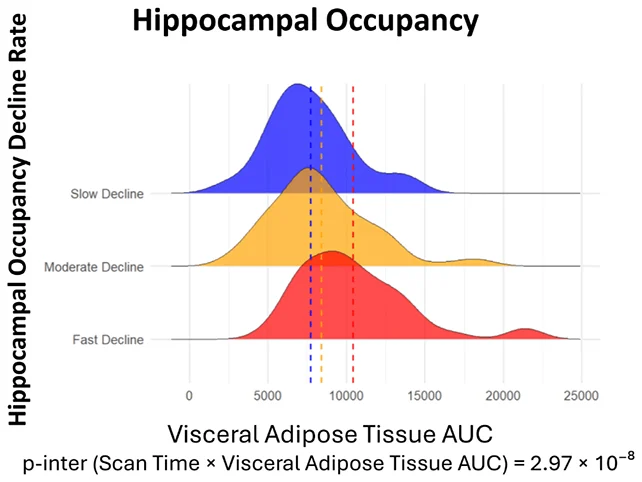
In addition to the visceral fat and brain volume data acquired from the imaging, the researchers employed cognitive assessment tests to gauge the mental capabilities of the participants over time and collected blood samples to analyze a spectrum of biomarkers.
Throughout the observation periods, a diminished presence of visceral fat was linked to superior cognitive test outcomes, greater brain volume and gray matter volume, and improved results on the Hippocampal Occupancy Score – a specialized metric designed to evaluate cerebral atrophy.
Furthermore, the investigators observed that an excess of visceral fat correlated with a more pronounced expansion of brain ventricles, a recognized indicator of brain aging. Subcutaneous fat, however, exhibited no such associations.
The underlying mechanisms for this relationship are currently under scrutiny. Blood analyses revealed that elevated blood glucose levels were associated with brain atrophy progression, suggesting that dysregulation of blood sugar plays a role in the observed damage. Visceral fat has previously been implicated in the development of insulin resistance and dementia.
Encouragingly, participants who achieved the most significant reductions in visceral fat during the initial dietary interventions demonstrated the best preservation of brain volume in subsequent years. When coupled with the blood sugar connection, this suggests that diligent attention to diet and exercise could confer significant benefits for both physical and cognitive health.
“These findings highlight glucose regulation and the diminution of visceral abdominal fat as measurable, alterable, and attainable objectives in midlife, with substantial potential to decelerate neurodegeneration and mitigate the risk of cognitive decline,” asserts epidemiologist Iris Shai of BGU.
Although this study does not establish definitive causation between reduced visceral fat and slowed brain aging, it presents compelling evidence. It is also worth noting that the study cohort comprised primarily males and individuals who were overweight; therefore, further research is warranted to ascertain the broader applicability of these findings.
Considering the existing knowledge regarding brain aging and visceral fat, this research provides an additional compelling reason to prioritize a wholesome diet and maintain an active lifestyle. The research team also advocates for increased emphasis on targeting visceral fat specifically, rather than solely focusing on overall weight reduction, as a pathway to enhanced health outcomes.
“Body weight alone serves as an insufficient indicator of the profound metabolic transformations occurring within the organism,” explains epidemiologist Dafna Pachter, also from BGU.
“We ascertained that even with modest weight reduction, persistent decreases in visceral fat – as quantified throughout the entire study period – are associated with the preservation of brain architecture and a diminished rate of atrophy.”