For a significant number of us, our very existence into adulthood can be attributed to our mothers. This demanding role involves diligently safeguarding children from perilous predicaments.
However, the protective embrace of a mother’s affection may exert an influence extending well beyond the individual child. The remarkable endurance of the entire human species could, in part, be elucidated by the extended duration during which offspring remain under their mothers’ tutelage.
An examination of creatures characterized by prolonged lifespans and gradual developmental cycles, encompassing primates, cetaceans, and hyenas, highlights a unifying characteristic. The progeny of these species exhibit prolonged periods of dependence on maternal provisioning.
According to the research cohort spearheaded by neurobiologist Matthew Zipple of Cornell University, their computational simulations, released in 2024, indicate that natural selection, over vast epochs, tends to favor maternal figures who persist longer, thereby fostering the evolutionary trajectory toward extended lifespans within those populations.
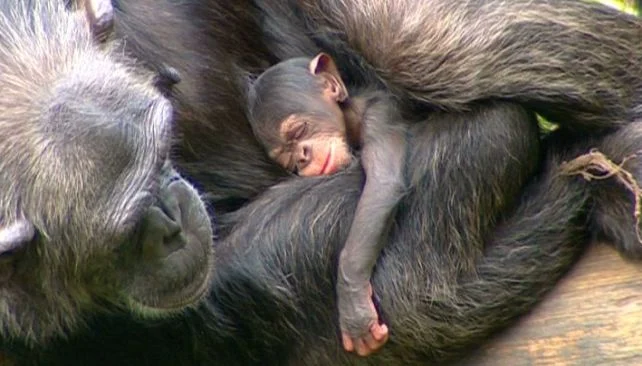
Naturally, a biological trade-off is involved. These long-lived species tend to produce fewer offspring in contrast to, for instance, a litter of kittens or a multitude of spiderlings. Nonetheless, this scarcity benefits the offspring by enabling a greater allocation of parental investment per individual.
“The extended lifespan we observe in humans, compared to numerous other mammalian species, represents a profoundly intriguing phenomenon,” Zipple remarked.
“Our hypothesis suggests that a contributing factor to our extended longevity lies in another fundamental aspect of our existence: the enduring bond between a mother and her offspring.”
Mammalian lifespans exhibit considerable variability, ranging from the brief 12 months attributed to the Müller’s giant Sunda rat to the extraordinary two-century duration of the bowhead whale. For the majority of species, their lifespan correlates loosely but dependably with their body mass.
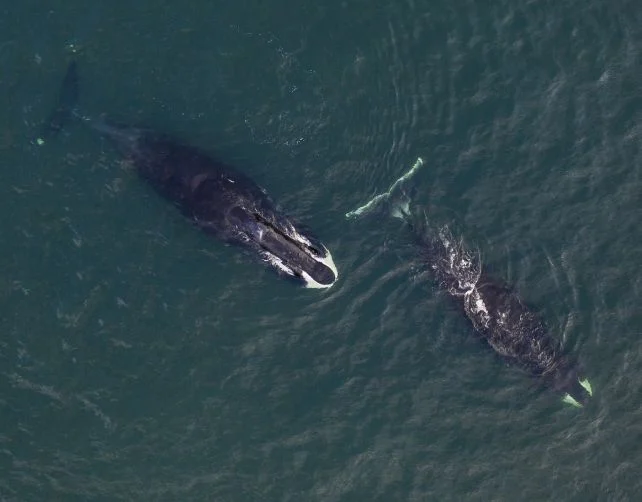
However, certain species diverge from this correlation, exhibiting lifespans significantly greater than those of their similarly sized counterparts. Humans are categorized among these longer-lived species, alongside other primates, hyenas, specific whale species, and elephants.
A shared attribute among these species is their highly gregarious nature, residing in cooperative social structures.
One widely discussed explanation for the extended longevity of at least some of these groups is the grandmother hypothesis.
This theoretical framework posits that, in species featuring a post-reproductive lifespan for females, grandmothers transition out of direct reproduction, thereby mitigating competitive pressures and offering support to mothers actively engaged in child-rearing.
Nevertheless, this concept is exclusively applicable to a restricted number of species, including humans, orcas, beluga whales, narwhals, and potentially chimpanzees.
Motivated to understand the longevity of species lacking postmenopausal grandmothers, Zipple and his colleagues shifted their focus to maternal influences.
“Our objective was to broaden the scope of the Mother and Grandmother hypotheses, examining the specific ways, well-documented in primates, that a mother’s continued existence benefits her offspring,” Zipple explained.
“Furthermore, we aimed to investigate the more extensive and perhaps more nuanced mechanisms through which the advantages conferred by a mother’s presence in an individual’s life can contribute to the evolution of longevity, seeking to interpret this phenomenon across a far wider spectrum of animal life.”
The researchers constructed sophisticated models, utilizing empirical data gathered by field ecologists, to rigorously assess the extent to which maternal survival influences the viability of her offspring and even her grandchildren.
The underlying premise is elegantly simple: in numerous long-lived species, the demise of a mother or grandmother diminishes the survival prospects of her descendants.
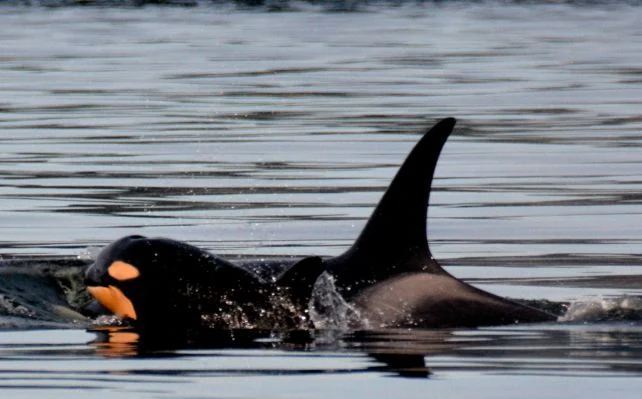
This observation implies that, in species where young are profoundly reliant on their mothers, an extended maternal lifespan directly enhances the probability of offspring survival and successful reproduction. This dynamic generates evolutionary impetus favoring individuals with greater longevity, even if their overall reproductive output is reduced.
Across a variety of simulated scenarios, the research team consistently identified the same prevailing pattern. As the level of offspring dependence on their mothers escalates, populations tend to evolve toward greater longevity and slower reproductive rates.
Conversely, the premature death of a mother can compromise the health of her offspring or their capacity to nurture their own progeny, instigating a ripple effect on survival rates across successive generations.
“As we observe a strengthening of the links between maternal survival and offspring reproductive success, we witness the evolutionary trajectory of animals toward extended lifespans and diminished reproductive frequency – a pattern mirrored in human populations,” Zipple stated.
“What is particularly compelling about this model is its broad applicability to mammals in general, given the established connections in species beyond primates, such as hyenas, whales, and elephants.”
The researchers did not delve into whether this observed phenomenon extends to paternal care. In all species under investigation, mothers are the primary caregivers, and data correlating paternal relationships with offspring survival are more challenging to acquire.
In species where such correlations have been examined – humans, baboons, and other primates – the maternal influence demonstrates a greater magnitude and duration compared to that of the father.
“Observing the interactions between mothers and infants in nonhuman primates provides compelling evidence of the paramount importance of the mother’s presence to the infant,” Zipple commented.
“Therefore, for me, the combination of behavioral observations and demographic analyses has powerfully reinforced a shared evolutionary heritage with our closest primate relatives: a period where our entire world is embodied by our mother, a bond that, while diminishing over time, never entirely dissipates.
“A long-term objective of this research endeavor is to establish a correlation between this maternal influence and longevity, thereby elucidating two of the most enigmatic yet central facets of the human experience.”
The complete findings are detailed in the publication Proceedings of the National Academy of Sciences.