
For pediatric individuals diagnosed with autism spectrum disorder and concurrently presenting with an intellectual disability, avenues for enhancing communication and social competencies are notably restricted.
While psychotherapeutic interventions and behavioral modification programs can facilitate the development of these proficiencies in some youngsters, their efficacy is contingent upon the availability of specialized practitioners, a resource that is scarce, even within affluent nations.
Approximately 30-35% of autistic children, according to research originating from the United States, exhibit co-occurring intellectual disabilities.
These children are less inclined to receive therapeutic interventions compared to their peers without such disabilities. This disparity is partly attributable to healthcare providers’ hesitancy in managing their complex needs and the inconsistent insurance coverage for intellectual disability. Nevertheless, they possess greater needs and impose a more significant burden on their families. This cohort is frequently overlooked in research endeavors.
This identified research lacuna served as the impetus for our investigation into an alternative therapeutic approach: the application of brief, precisely targeted magnetic pulses to stimulate particular neural regions. This methodology, recognized as non-invasive brain stimulation or neuromodulation, requires no surgical procedures, anesthetic agents, or pharmaceutical compounds.
A device positioned in proximity to the scalp generates a fluctuating magnetic field that permeates the cranial vault without causing harm, thereby energizing the underlying neuronal activity.
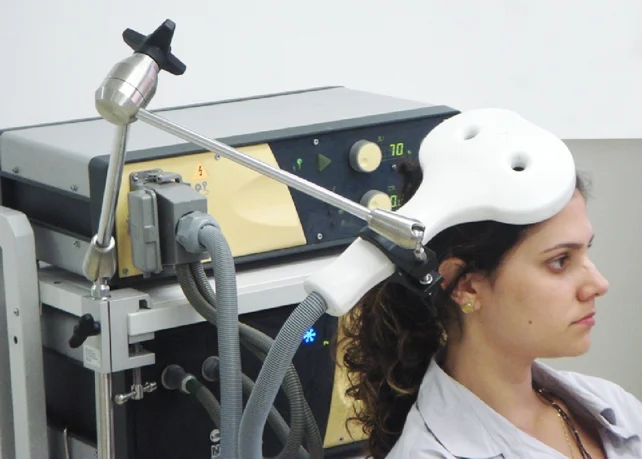
This technique has a history of successful application in the management of depression, and scholarly inquiry has increasingly focused on its potential to ameliorate the social and communicative impairments characteristic of autism.
The specific modality employed in our investigation utilizes a protocol known as theta-burst stimulation, which administers pulses in rapid sequences as opposed to individual applications.
This method substantially abbreviates the duration of each treatment session compared to conventional protocols, presenting a substantial practical advantage when requesting young children to maintain stillness and cooperation.
In our investigation, documented in the BMJ, each session spanned mere minutes, with the complete therapeutic regimen concluding within a five-day period.
One cohort of participants received genuine stimulation, while another was administered a placebo intervention. In the sham treatment, the apparatus was applied identically and produced tactile sensations, but no active pulses were discharged.
This methodological design enabled a direct comparison of outcomes without the participants’ awareness of their assigned treatment, thereby enhancing the reliability of the findings.
A total of one hundred and ninety-four children participated, exhibiting an average age of approximately six and a half years.
Roughly half of the participants registered IQ scores below 70, a threshold generally classified as the low-functioning spectrum, although all scores surpassed 50, the minimum required to ensure diagnostic validity and meaningful engagement in the study.
Prior to the intervention, immediately following its completion, and again one month thereafter, parental questionnaires were completed to assess their child’s social communication abilities.
The observed enhancements after the five-day intervention were sustained for a subsequent month, and the magnitude of the effect was substantial by established clinical research standards. Furthermore, improvements in language proficiency were also evident.
No significant adverse events were reported, and all minor side effects resolved spontaneously without the need for further intervention.
Early Stages
Participants were recruited from multiple locations via advertisements disseminated within outpatient clinics and through local clinical registries. Written informed consent was obtained from all legal guardians.
Individuals with intellectual disabilities are so frequently excluded from trials of this nature that empirical evidence for their effective treatment has remained critically deficient. The inclusion of this population in our trial, particularly in substantial numbers, is inherently significant. However, it represents merely an initial progression.
It remains to be fully elucidated how long the observed benefits persist beyond the one-month mark, the requisite frequency of sessions to sustain these effects, or the efficacy of translating this approach from an experimental setting to a conventional clinical environment.
Brain stimulation does not supplant the necessity for behavioral support, and the requisite equipment is neither inexpensive nor universally accessible.
In contrast, conventional therapeutic modalities—where they are available—often necessitate daily sessions over extended weeks with a qualified professional, entailing its own distinct costs in terms of time, financial outlay, and expert input.
A five-day regimen constitutes a fundamentally different proposition. For families already managing significant challenges, even modest and enduring improvements in a child’s communicative capacity can profoundly impact their lives and those of their families, thereby substantially enhancing their overall well-being and life quality.