
An innovative application is emerging for acoustic waves, a modality already employed in medical diagnostics, with a novel objective: the neutralization of viruses.
Laboratory investigations have successfully demonstrated the capacity of ultrasonic pulses to dismantle the structural integrity of both influenza A (H1N1) and SARS-CoV-2, the pathogen responsible for COVID-19.
The findings indicate that microscopic oscillations induced by ultrasound are sufficiently potent to breach the outer membranes encasing viral particles, thereby rendering them inert.
This groundbreaking research, spearheaded by a consortium from the University of São Paulo in Brazil, presents a potential alternative to conventional antiviral therapeutics and chemical disinfectants for viruses characterized by an outer lipid envelope susceptible to disintegration.
“It’s akin to confronting the virus with a sonic assault,” observes Odemir Martinez Bruno, a computational physicist affiliated with the University of São Paulo.
“Our study has substantiated that the energy inherent in sound waves instigates morphological transformations within viral agents, leading to their disintegration, a process analogous to the popping of popcorn.”
The experimental procedures utilized ultrasound equipment commonly found in clinical settings for medical imaging, subjecting the viruses to frequencies spanning the 3 to 20 MHz spectrum.
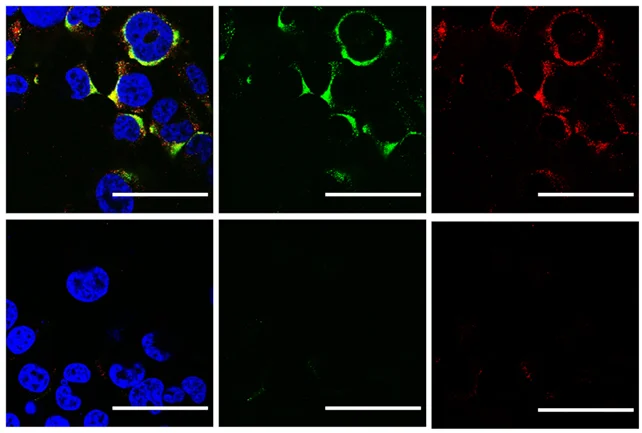
Researchers meticulously documented the physical alterations occurring in the viral samples and subsequently assessed the infectivity of treated SARS-CoV-2 specimens against laboratory cultures of host cells (specifically, Ver-E6 cells).
Compelling evidence emerged of significant physical degradation of the viral envelopes, resulting in a pronounced reduction in SARS-CoV-2’s capacity to infect the surrogate host cells.

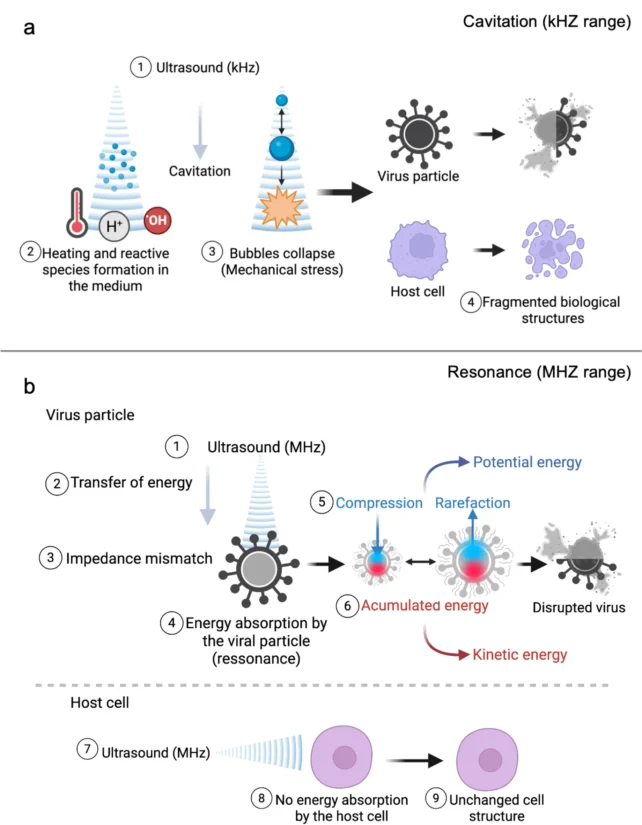
This methodology is predicated on the principle of acoustic resonance, where both the specific ultrasonic frequency and the geometric configuration of the viral particles play critical roles.
The underlying concept posits that when the frequency of the acoustic wave aligns with the intrinsic vibrational frequency of the viral envelope, it triggers amplified oscillations that culminate in structural collapse. Crucially, this energetic interaction preferentially affects the virus, leaving the host cells unharmed.
Under the controlled experimental parameters, the viral entities exhibited a considerably higher susceptibility to disruption than the surrounding cellular matter.
Analytical assessments confirmed that the temperature and pH of the cellular environment remained stable throughout the process, effectively ruling out thermal or chemical factors as contributors to the viral particle degradation.
The researchers further highlight that the spherical morphology of the investigated viral particles is optimal for acoustic resonance absorption.
“The mechanism is fundamentally rooted in geometry,” states Bruno.
“Globular entities, such as a significant proportion of enveloped viruses, are more adept at absorbing acoustic wave energy. This concentrated energy within the particle induces structural alterations in its envelope until it ruptures.”
Had these particles possessed angular geometries, such as triangular or square forms, the resulting interactions would differ significantly.
“Ultrasonic technologies are currently employed for the sterilization of dental and surgical instruments, albeit through a distinct physical mechanism known as cavitation, which results in the destruction of biological matter,” explains Bruno.
“While cavitation operates within the kilohertz range and indiscriminately eliminates both viruses and accompanying tissues via the implosion of gas bubbles, acoustic resonance functions at significantly higher frequencies.”
The application of acoustic resonance ultrasound offers potential solutions to certain inherent limitations associated with current drug-based therapies.
Under laboratory conditions, this novel approach did not induce comparable detrimental effects on the surrogate host cells or the surrounding medium.
Furthermore, given that the target is a physical structure rather than a specific molecular pathway, researchers anticipate that this method may prove more resilient to viral mutations, as such changes are unlikely to alter the fundamental physical geometry of the particles.
The research team expresses optimism that their innovative strategy could be applicable to a broader spectrum of viral infections, with initial investigations already underway to explore its efficacy against dengue, Zika, and Chikungunya viruses.
Ultrasound technology is broadly recognized for its non-invasive, generally painless application, ease of manipulation, and precise targeting capabilities, leading to its exploration in diverse therapeutic avenues, including neurological pain management and oncological treatments.
While this discovery holds considerable promise, it is crucial to emphasize that it has not yet translated into a clinical treatment. Significant further research is imperative, including the meticulous refinement of ultrasonic frequencies.
The scope of this study was confined to in vitro experiments, without any subsequent application to animal models or human subjects, and was limited to investigating only two distinct viral etiologies. Although it represents a robust foundational step, the practical implementation of this technology remains in its nascent stages.
“Although clinical application remains a distant prospect, this represents a compelling strategic avenue for combating enveloped viruses broadly. The development of chemical antivirals is inherently complex and often yields challenging outcomes,” concludes Flávio Protásio Veras, a pharmacologist at the University of São Paulo.