Substantial evidence is emerging that insects might possess the capacity to experience pain, and a recent investigation has further bolstered this proposition.
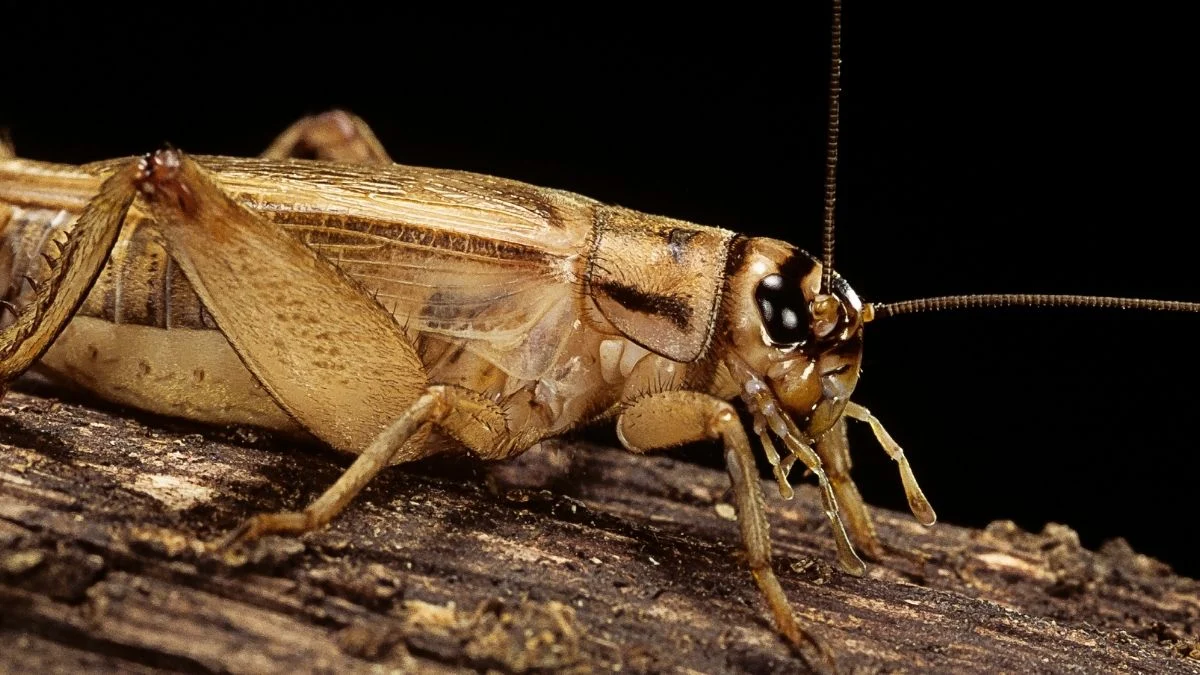
A research collective from the University of Sydney in Australia has documented empirical data suggesting that the common house cricket – an arthropod already understood to possess the physiological mechanisms for pain perception – actively tends to and cleans its antennae subsequent to tactile stimulation with a heated probe.
The assessment of subjective pain remains a considerable challenge; even within the human context, pain is inherently subjective, with direct quantification typically relying on self-reported scales, often ranging from zero to ten.
Nonetheless, the qualitative experience of pain is a pivotal element in determining whether an organism, or entity, can be classified as sentient, meaning it possesses the capability for feelings and emotions, as opposed to mere physiological reflexes.
Naturally, direct interrogation of a cricket regarding its discomfort, such as “Does that hurt?”, is unfeasible. Consequently, researchers must devise methodologies to interpret the cricket’s reactions to stimuli that are potentially noxious.
This precise approach was undertaken by a cadre of specialists in animal cognition and behavior in 2022. They established a framework comprising eight distinct criteria for evaluating an animal’s potential sentience, predicated upon its subjective experience of pain.
While initially applied to decapod crustaceans, such as crabs and lobsters, this methodology has evolved into a foundational benchmark applicable to a broader spectrum of animal life.
An animal’s fulfillment of any of these outlined criteria serves as an indicator of potential pain perception that transcends simple reflexive withdrawal, thereby suggesting a possibility of sentience.
This evaluative framework even influenced the UK government’s legislative update, the Animal Welfare (Sentience) Act 2022, which now encompasses decapod crustaceans (including species like crabs, lobsters, and prawns) and cephalopods (such as octopuses and squid).
The established criteria are enumerated as follows:
- Nociception: The presence of nerve receptors capable of detecting noxious stimuli within the organism.
- Sensory integration: The capacity of the animal’s neural structures to amalgamate information from disparate input sources.
- Integrated nociception: The existence of neural pathways that transmit signals from harm receptors to higher-order integrative brain regions.
- Analgesia: The observation that pharmacological agents known to alleviate pain in humans alter the animal’s reaction to harmful stimuli.
- Motivational trade-offs: The manifestation of behaviors indicative of an animal weighing potential risks against potential benefits, thereby demonstrating flexible decision-making capabilities.
- Flexible self-protection: The exhibition of behaviors such as wound care, guarding, grooming, or rubbing in response to a harmful stimulus.
- Associative learning: Evidence of the animal forming associations between harmful stimuli and neutral cues, or acquiring avoidance strategies through reinforcement mechanisms.
- Analgesia preference: The demonstration of an animal seeking out and self-administering pain-relieving compounds, or prioritizing them over other essential needs, such as sustenance, when injured.
Previous investigations have correlated certain insect species with several of these criteria: flies and cockroaches have demonstrated compliance with six criteria, while bees, wasps, and ants have met four criteria.
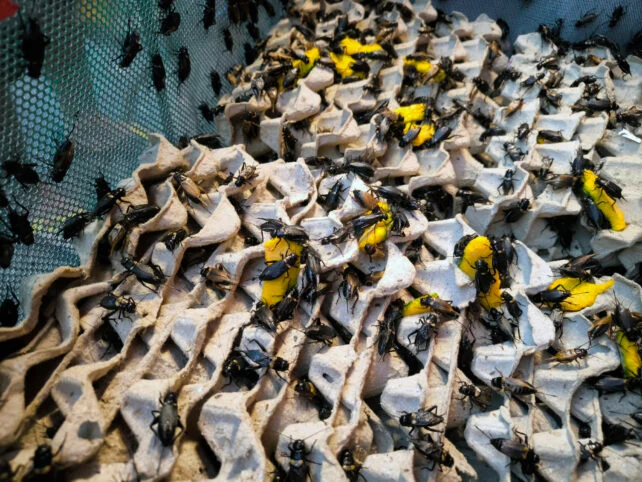
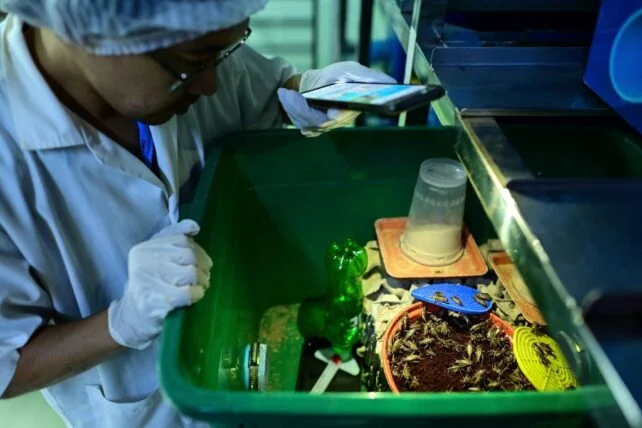
However, insects belonging to the order Orthoptera, which includes crickets, have not undergone comprehensive scrutiny, particularly considering that the house cricket, Acheta domesticus, is extensively bred for human consumption, as well as for animal feed and scientific research.
A research contingent from the University of Sydney, Australia, conducted an experimental protocol designed to ascertain whether house crickets engage in injury-tending behaviors following heat application to their antennae.
“Our findings indicate that crickets did not merely exhibit a reflexive withdrawal and subsequent recovery,” state entomologist Thomas White and philosopher-biologist Kate Lynch in a publication for The Conversation.
“Instead, they actively nursed the afflicted area, repeatedly grooming the site, a behavior analogous to humans tending to a burn injury.”
Both male and female crickets displayed this protective behavior, with a twofold increase in its occurrence when the probe used for antennal interaction was heated to 65 °C (149 °F), in comparison to instances where the probe was unheated or made no contact.
This specific temperature is sufficient to activate the cricket’s ‘harm’ detection mechanisms without inducing permanent tissue damage.
Following each interaction with the probe, the research team meticulously observed the crickets for a duration of ten minutes.
“The grooming was specifically directed at the stimulated side, rather than being uniformly distributed across both antennae, as was observed after gentle tactile contact or no contact,” White and Lynch elaborate.
“Furthermore, this behavior was not a fleeting, reflexive response. It was evident from the outset and gradually diminished over several minutes, akin to the persistent rubbing of a burned hand as the sensation subsides.”
This recent study substantiates that this common pet store inhabitant indeed meets the criteria for flexible self-protection. This revelation carries potential ethical ramifications concerning the welfare of these insects during agricultural practices, handling, and experimental procedures.
“Evidence already indicates that crickets possess nociceptors, centralized sensory integration capabilities, demonstrate learning from aversive events, and can modulate their responses to noxious stimuli following the administration of analgesics,” White, Lynch, and their team assert.
The current findings introduce flexible self-protection to this list, bringing the total number of met criteria for crickets to five out of the eight established benchmarks.
“Collectively, these lines of evidence suggest that orthopterans exhibit the same constellation of characteristics – nociception, integrative processing, learning, and targeted self-protection – that warrant serious consideration regarding their sentience,” the research group concludes.