A sobering global trend indicates that nearly 80 percent of the world’s rivers are experiencing a decline in dissolved oxygen levels, and this vital resource will continue to diminish without substantial interventions.
Analysis of satellite and climate data spanning from 1985 to 2023 has revealed that more than 16,000 river systems worldwide are progressively losing their dissolved oxygen content.
On average, these waterways have seen a reduction of 0.045 milligrams of oxygen per liter over each decade.
A deficiency in dissolved oxygen, crucial for supporting aquatic life, places rivers and the communities dependent on their water and resources under significant peril.
These groundbreaking findings emanate from a research collective at the Chinese Academy of Sciences, spearheaded by environmental scientist Qi Guan.
The team meticulously aggregated data from 3.4 million satellite images accumulated over the past four decades to discern patterns in global riverine dissolved oxygen and project future trajectories under various climatic assumptions.
By the close of the current century, assuming carbon dioxide emissions persist at current rates (rather than escalating to more extreme predictions), rivers in large portions of South America, India, the Arctic, and the Eastern United States are anticipated to experience a depletion of approximately 10 percent in their dissolved oxygen.
The most pronounced deoxygenation effects have thus far been observed in tropical rivers, including India’s Ganges and South America’s Amazon River. Notably, the Ganges River is losing oxygen at a rate twenty times faster than the global average.
These developments have taken scientists by surprise.
Previously, the prevailing scientific consensus suggested that rivers in high-latitude regions would face the most severe deoxygenation, given their status as climate change hotspots.
However, rivers in tropical zones were inherently disadvantaged from the outset: their waters, being naturally warmer, already possessed lower concentrations of dissolved oxygen. Consequently, they are closer to the critical threshold of hypoxia, a state characterized by oxygen insufficiency for most life forms.
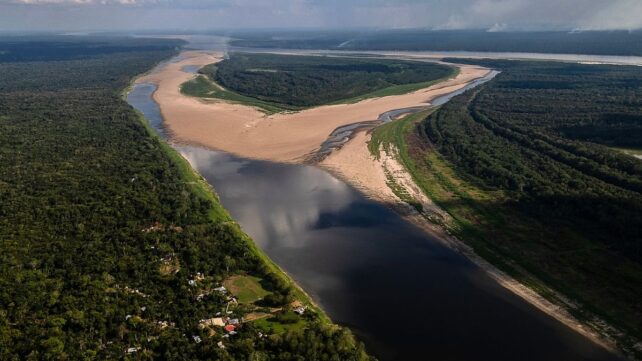
Guan and his colleagues identified numerous factors contributing to the global decline in riverine oxygen, with climate change being the most significant driver.
Anthropogenic climate change is demonstrably reducing oxygen solubility, which is the capacity of water bodies to retain dissolved oxygen. The recent study indicates that oxygen solubility accounts for roughly 63 percent of the worldwide deoxygenation trend in rivers.
The prevailing theory posits that water temperature is the primary determinant of this alteration in oxygen solubility. Warmer aquatic environments can hold less dissolved oxygen due to increased thermal energy imparted to oxygen and water molecules.
It is important to distinguish dissolved oxygen from the oxygen atoms that bond with hydrogen to form water. Dissolved oxygen is indispensable for the respiration of all aquatic organisms, encompassing fauna, flora, plankton, and bacteria.
However, the molecular bonds that sustain gaseous oxygen in solution within water are relatively fragile. Even minor temperature fluctuations can disrupt these bonds, facilitating the escape of oxygen from the water.
The dissolved oxygen requirements for aquatic species exhibit considerable variability. Nevertheless, a reduction of just 0.1 milligrams per liter of river water – approximating the average loss observed over the past four decades – can precipitate significant ecological disturbances within riverine systems.
Aquatic plant life contributes to dissolved oxygen levels through photosynthesis, thereby playing a crucial role in maintaining waterway health. Atmospheric oxygen can also become dissolved in water through physical processes, such as turbulent river currents or aeration devices employed in artificial water bodies.
Consequently, in many rivers examined in this research, the presence of dams in shallow areas and periods of extreme heat have exacerbated the decline in dissolved oxygen. Reduced water flow limits the incorporation of atmospheric oxygen, while heatwaves effectively drive dissolved oxygen out of the water.
The chemical composition of water also exerts a substantial influence on its capacity to hold dissolved oxygen. Human activities are altering water composition on two fronts: by diminishing river flow volumes and by increasing the concentration of dissolved substances, including salts, nutrients, and organic matter, which further reduces oxygen solubility.
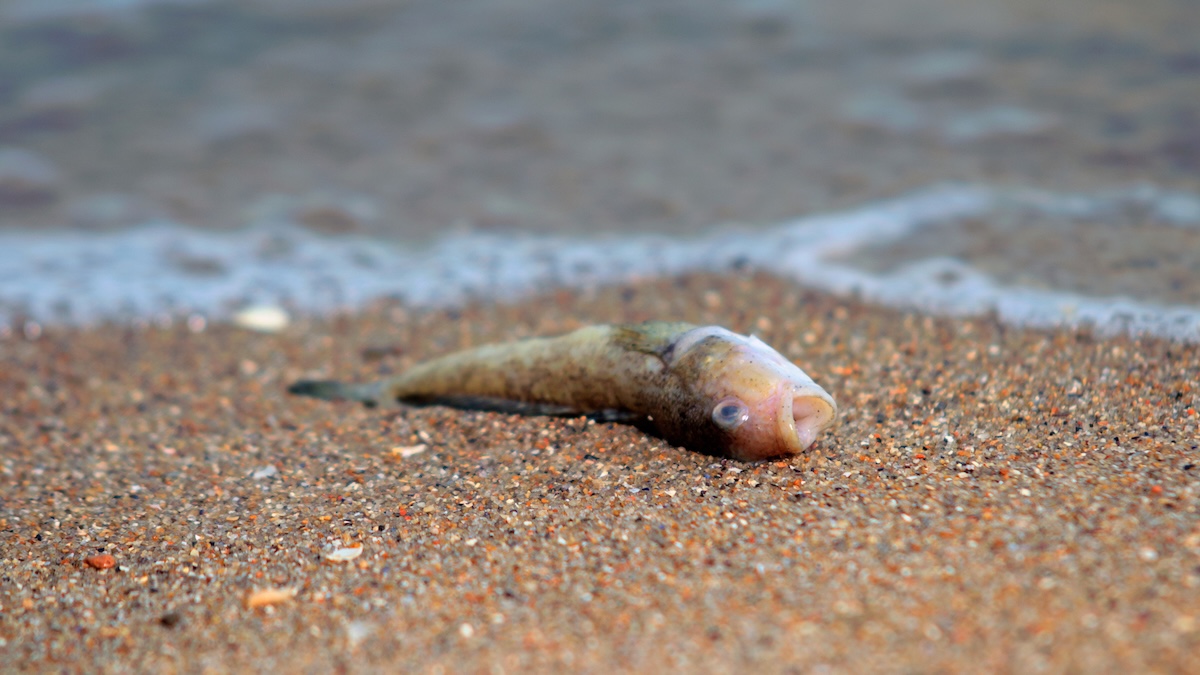
Given that aquatic ecosystems are fundamentally reliant on dissolved oxygen for survival, even marginal decreases in its concentration can rapidly trigger mass mortality events.
Following such events, a river inundated with deceased aquatic life and algal blooms will rapidly deplete any remaining dissolved oxygen as microbial decomposition of the organic detritus commences.
With escalating rates of river deoxygenation globally, the prevalence of such anoxic “dead zones” is likely to increase.
“Deoxygenation is a very slow process. If we have a long period, the negative impact will attack the river ecosystems,” Guan informed Seth Borenstein of the Associated Press.
“The low level of oxygen can cause a series of ecological crises such as biodiversity decline [and] water quality degradation.”
These dire scenarios are considerably more probable should rivers experience an additional four to five percent loss in dissolved oxygen – an amount comparable to what is projected over the next seven decades, absent prompt human action to curb further fossil fuel emissions.
“Systematically understanding these changes is crucial for enhancing the resilience of fluvial ecosystems to sustained deoxygenation risks through targeted measures and strategies, and helps to achieve sustainable management in global rivers,” Guan and his team concluded.
This research was disseminated in Science Advances.