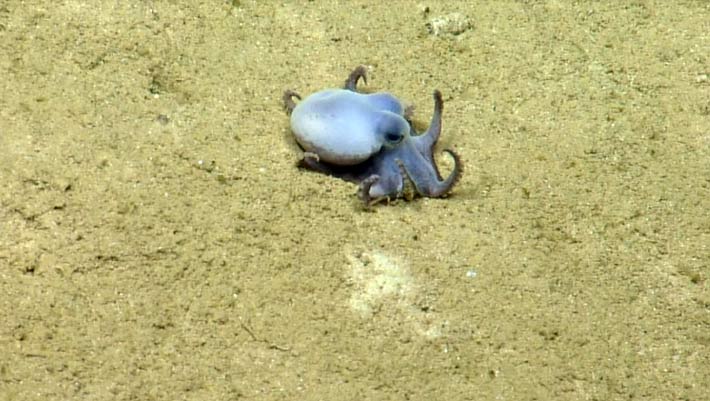
A solitary female cephalopod, retrieved from a depth of 1,773 meters near Darwin Island, has been formally identified as a novel species of deep-sea octopus. This remarkable find challenges established classifications, necessitating a re-evaluation of the diagnostic parameters for the Megaleledonidae family to which it belongs.
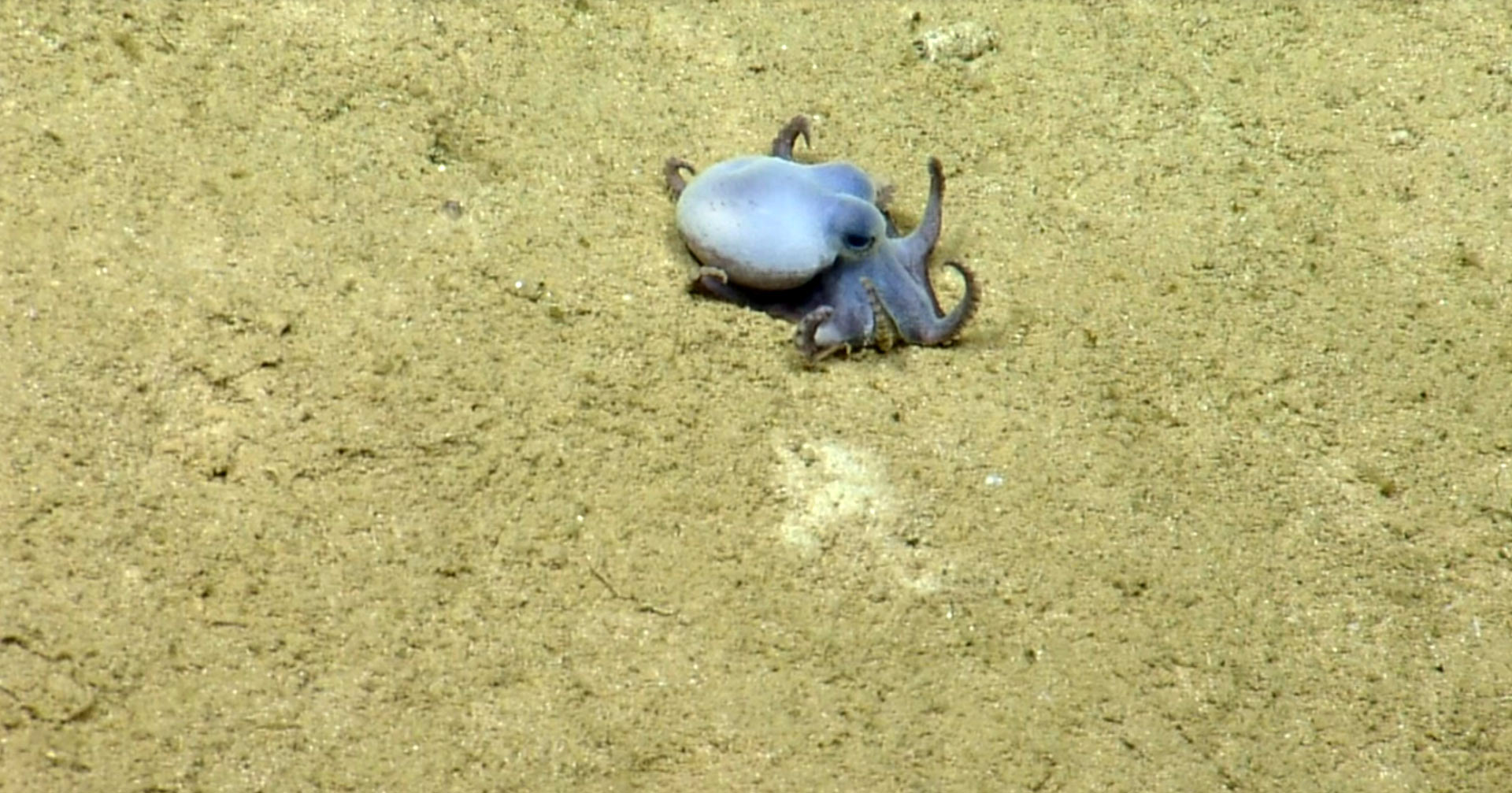
Microeledone galapagensis. Image credit: Voight et al.
, doi: 10.11646/zootaxa.5814.4.5.
Historically, the Megaleledonidae were characterized as a group of large-bodied octopuses exclusively inhabiting the frigid, remote marine environments of the Southern Ocean.
The recently cataloged member of this family, designated Microeledone galapagensis, defies both these established descriptors.
“Incirrate octopods residing in the deep, eastern tropical expanse of the Pacific Ocean remain largely uninvestigated,” commented Dr. Janet Voight, an emerita curator of invertebrates at the Field Museum of Natural History, alongside her research associates.
“However, submersible vehicles, presenting exceptional yet infrequent opportunities to observe these organisms, have brought to light unexpected taxa.”
“Among the most surprising revelations might be diminutive tropical octopods attributed to the Megaleledonidae.”
“This taxonomic group was initially defined by attributes mirroring those of the exceedingly large, Antarctic species Megaleledone setebos, and more recently, was characterized as a ‘taxon with uniserial suckers and large body size, endemic to the cold and deep waters of the Southern Ocean.’”
The singular known specimen, a mature female Microeledone galapagensis, was collected during a scientific expedition in 2015 aboard the research vessel Nautilus. The collection site was situated in proximity to Darwin Island, a landmass at the northern periphery of the Galapagos archipelago, named in honor of the naturalist whose seminal work in the region provided the foundational insights for his theory of evolution.
Given the considerable challenges inherent in obtaining a second specimen from such abyssal depths, the researchers employed micro-computed tomography. This advanced imaging technique allowed them to visualize the organism’s internal structures without necessitating invasive dissection.
“When one is tasked with describing a novel octopus species, a thorough examination of all anatomical features is mandatory, encompassing the mouth, beak, and dentition. Accessing these components typically requires dissecting the specimen. As only one specimen was available, I was reluctant to perform such a procedure,” stated Dr. Voight.
“The non-destructive nature of CT imaging renders it particularly valuable for holotypes and other critical reference specimens like this one.”
“This is tremendously beneficial for me, as I frequently have the privilege of virtually dissecting incredibly rare and exquisitely beautiful specimens that are presented to me,” shared Dr. Stephanie Smith, also affiliated with the Field Museum of Natural History.
“There is an unparalleled satisfaction in examining an organism that no other human has witnessed before.”
The CT scans provided an exceptionally detailed rendering of Microeledone galapagensis’ internal anatomy, from its bifurcated stomach to the developing eggs still contained within its body cavity.
“A particularly striking observation was the amount of information the scan of this small octopus yielded regarding its internal organ systems. Typically, imaging soft tissues using micro CT necessitates the application of contrast agents based on heavy metals, which would be disadvantageous for such a rare specimen,” remarked Dr. Alexander Ziegler, a researcher at the University of Bonn.
“Consequently, the creation of 3D models of the pertinent organs was surprisingly straightforward.”
During the same submersible dive, the scientific team observed two additional octopuses that appeared to be conspecifics. This observation suggests that the collected specimen is not an isolated individual but rather represents a component of a localized population.
“These are small octopuses inhabiting the deep sea, and remarkably few individuals on Earth have had the opportunity to observe them. I feel fortunate to have had the chance to work with them,” Dr. Voight expressed.
“If one were to aggregate all terrestrial landmasses, their total area would not encompass the Pacific Ocean. The oceans are of immense scale, with vast unexplored regions remaining.”
The findings concerning Microeledone galapagensis have been formally documented in a scholarly publication within the scientific journal Zootaxa.
_____
Janet R. Voight et al. 2026. A new species of Microeledone from Galápagos Islands and an amended diagnosis of the Megaleledonidae (Octopoda: Incirrata). Zootaxa 5814 (4): 533-549; doi: 10.11646/zootaxa.5814.4.5