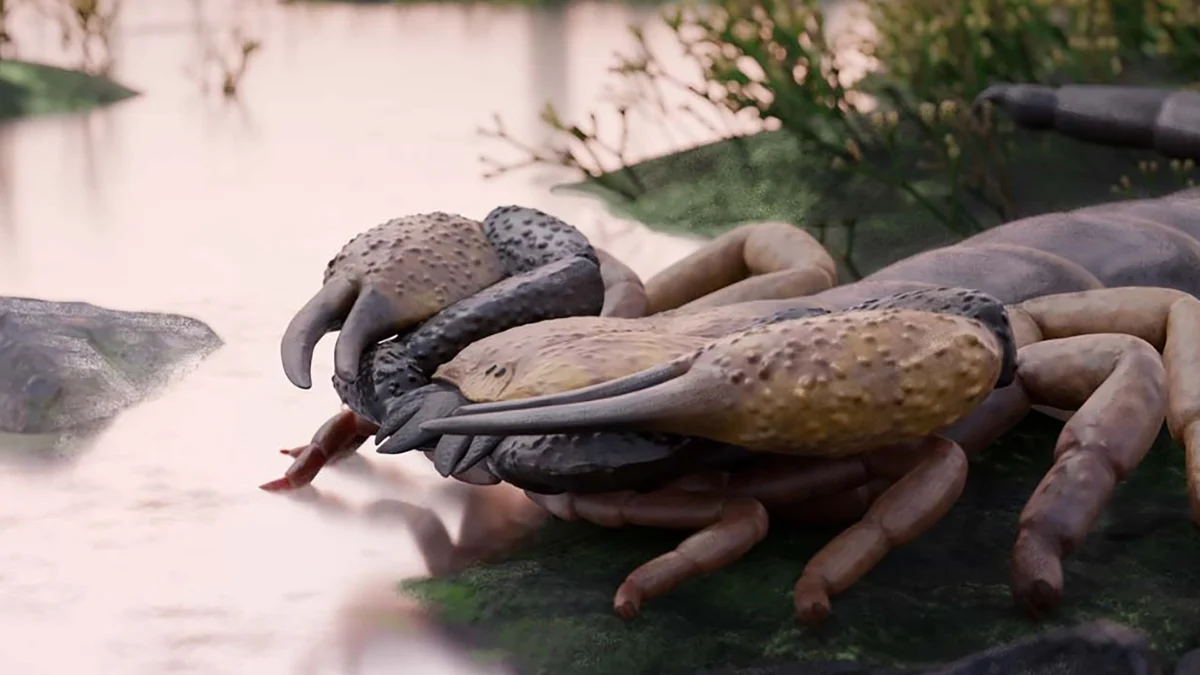
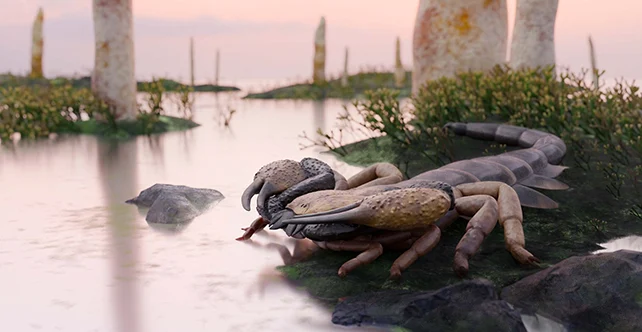
During the Devonian period, approximately 415 million years ago, terrestrial environments offered no mammalian fauna. However, individuals exploring Earth’s ancient floodplains would have needed to exercise caution due to the presence of colossal scorpions, some exceeding a meter (3.3 feet) in length.
Following a comprehensive new investigation of fossil evidence, scientists based in the United Kingdom have conclusively identified Praearcturus gigas, a contender for the most substantial scorpion species ever recorded.
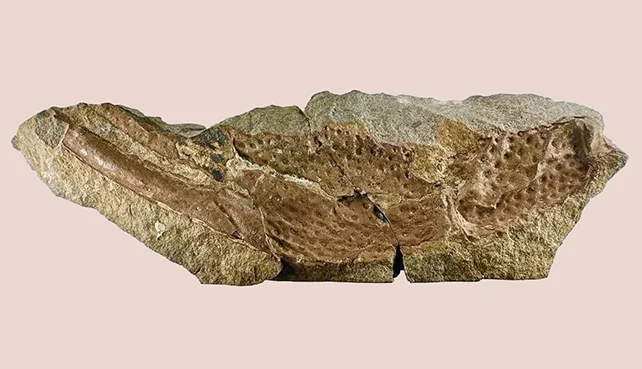
The initial discovery of this arthropod’s fossilized remains occurred in 1870 within the UK. Since that time, considerable academic discussion has ensued regarding the precise classification of this ancient creature. Through the application of diverse, sophisticated imaging methodologies, researchers assert that this ongoing debate has now been definitively resolved.
Beyond solidifying the existence of this formidable scorpion, the current research significantly enhances our comprehension of early terrestrial life. This era was characterized by rudimentary flora such as small plants and fungi, and it marked the initial emergence of fauna from marine habitats onto land.
“When Praearcturus inhabited the planet, life on land was in its nascent stages, and the evolutionary precursors to reptiles, mammals, and birds had not yet transitioned from aquatic environments,” stated lead author Richie Howard, a paleontologist affiliated with the Natural History Museum in the UK.
“It is posited that this species achieved such remarkable dimensions due to a scarcity of formidable predators, which afforded it ecological dominance over its environment.”
The recent analytical undertaking involved the creation of novel camera lucida tracings, the execution of computed tomography scans, and detailed comparisons with numerous other fossil specimens sourced from various UK locations dating back to the Early Devonian epoch.
In the present investigation, reference was also made to fossilized remains from Canada, studied previously in 2015, belonging to the ancient scorpion species Eramoscorpius. Anatomical comparisons served as corroborating evidence that P. gigas is indeed a scorpion.
And what a scorpion it was! The investigative team estimates that its formidable pincers measured an impressive 16 centimeters (6.3 inches) in length. Individually, these appendages were longer than the entire bodies of many extant scorpion species.
Furthermore, the research team identified textured surfaces on the creature’s limbs, strongly indicative of their use in sound production—a process known as stridulation, which aligns with observations in other extinct scorpion species.
While it would have represented one of the most imposing terrestrial predators, evidence suggests that this colossal scorpion also spent considerable time within aquatic environments.
“In the absence of complex ecosystems to sustain Praearcturus on land, these creatures likely spent portions of their existence hunting in water,” explained Howard.
“Certain fossil discoveries in Wales reveal the presence of lobe-like structures, termed epimera, which bear resemblance to those found in modern lobsters and crabs.”
Terrestrial life would have presented a vastly different landscape for the larger arthropods that emerged later, such as car-sized millipedes and dragonflies comparable in size to modern birds of prey. These later arrivals would have encountered expansive forests and a greater diversity of terrestrial fauna for sustenance.
Given the escalating competition for food resources, researchers propose that P. gigas may have persisted for an additional 40 million years beyond the period represented by the examined fossils, before ultimately becoming extinct.
Subsequent scholarly endeavors and additional fossil analyses are anticipated to provide further chronological detail, now that the classification of P. gigas as a scorpion has been firmly established.
These findings are also expected to prove invaluable for paleontologists investigating the transitional periods when fauna transitioned from marine realms to terrestrial habitats, particularly with regard to arthropods where the boundaries were less distinct.
By elucidating the identities and timelines of ancient land-dwelling creatures, our understanding of evolutionary pathways—extending to contemporary scorpion species—is significantly enhanced.
“Our most robust phylogenetic trees, derived from DNA sequencing, indicate that scorpions share a proximate evolutionary relationship with other arachnids, such as spiders, with whom they share book lungs,” commented paleontologist Greg Edgecombe from the Natural History Museum in the UK.