
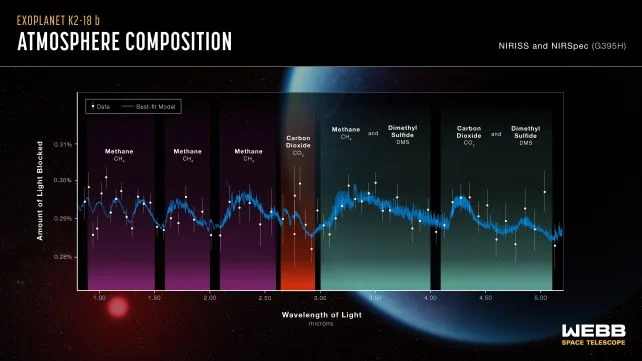
The prospect of discovering extraterrestrial life appears to be drawing nearer. In 2025, a notable press release indicated the existence of the “most compelling evidence to date” for life on the exoplanet K2-18b.
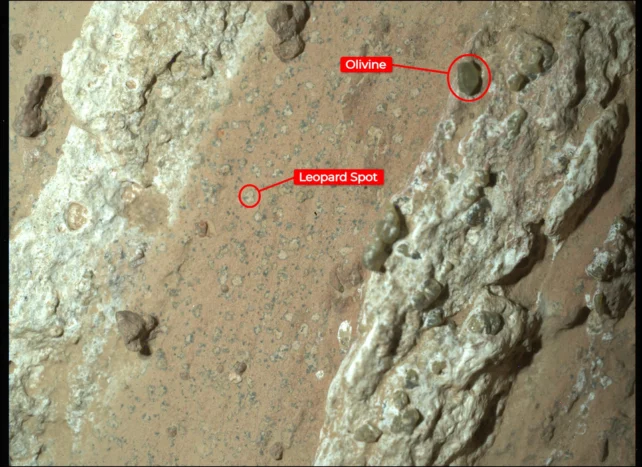
Furthermore, concerning a sample collected from a Martian rock designated “Cheyava Falls,” NASA Administrator Sean Duffy commented that this represented “the closest we have ever approached” the discovery of life on the red planet.
Such developments ignite public fascination. However, they also prompt a crucial inquiry: what is the prevailing viewpoint within the scientific community?
Remarkably, this consensus is often not readily apparent.
When scientific debates or groundbreaking discoveries garner significant media attention, press officers and journalists typically solicit opinions from a select group of experts. While their insights can be valuable, they seldom reflect the collective stance of the broader scientific populace.
Nevertheless, public discourse frequently relies on generalizations such as “the scientific consensus indicates” or “researchers posit,” implying a definitive and quantifiable answer.
In actuality, systematic data pertaining to scientific sentiment is frequently absent. My colleagues and I recently undertook an initiative to address this gap within the field of astrobiology.
Following the dual significant announcements regarding potential extraterrestrial life in 2025, we conducted a survey of astrobiologists to ascertain the distribution of expert judgment across the discipline.
The initial case pertained to the exoplanet K2-18b. In April 2025, researchers reported the potential detection of molecules such as dimethyl sulfide and/or dimethyl disulfide. On Earth, these substances are intrinsically linked to biological processes.

Media coverage was extensive, with numerous reports framing the discovery as a monumental leap forward in the quest for alien life.
The subsequent development occurred in September, when NASA disclosed that Cheyava Falls exhibited characteristics suggestive of a potential biosignature – specifically, “leopard spots,” which are mineral formations often attributed to microbial activity on Earth.
Once again, both headlines and statements from NASA officials implied a discovery of profound significance.
Expert Perspectives
We surveyed a considerable number of astrobiologists from scientific institutions worldwide, within days of each announcement. Our inquiry was straightforward: did these experts believe extraterrestrial life had likely been detected?
The findings revealed a predominantly conservative outlook. Regarding K2-18b, a mere 6.6% of the surveyed astrobiologists concurred that extraterrestrial life had likely been discovered. Conversely, nearly two-thirds expressed disagreement, while 28.0% maintained a neutral stance.
In the case of the Martian rock specimen, confidence levels were higher, yet still temperate: 15.1% agreed with the premise, disagreement declined to 44.6%, and neutrality increased to 40.3%.
However, focusing solely on agreement and disagreement overlooks a critical aspect of the situation.
The percentage of astrobiologists who strongly dissented diminished substantially, dropping from 35.1% in the K2-18b scenario to only 11.1% for the Mars analysis.
Consequently, the majority of shifts were not from outright rejection to acceptance, but rather from firm opposition to more qualified positions.
In essence, expert opinions evolved along discernible trajectories. The transition from K2-18b to the Mars findings did not represent a simple switch from a negative to a positive conclusion. Instead, the scientific community demonstrated an increased receptiveness to the possibility without definitively embracing it.
One plausible explanation for this phenomenon resides in the differing natures of the evidence presented in each case.
The assertion concerning K2-18b was predicated on potential atmospheric signatures observed from vast interstellar distances. In contrast, the Martian investigation involved a rock specimen amenable to direct and far more detailed examination.
Concurrently, astrobiologists have long acknowledged that apparent indicators of life can occasionally arise from abiotic processes. A pertinent study highlights this concern.
Frequently, the scientific challenge lies not in conceptualizing how life might generate a signal, but in comprehending the myriad ways natural phenomena could produce similar results in the absence of life.
Scientific consensus is seldom a simple dichotomy. Public discourse often portrays scientific opinion as a binary of agreement or disagreement.
However, the nuanced distribution of opinion is equally significant. Degrees of strong agreement, agreement, neutrality, disagreement, and strong disagreement each offer distinct insights into how a scientific community is processing a given claim.
A substantial neutral response can signify several factors. Scientists might deem the evidence genuinely equivocal. They may hold a moderate level of conviction. Or, they could consider a proposition too speculative to either endorse or refute definitively.
Similarly, a movement from pronounced disagreement towards more moderate opposition can indicate a softening of stances, even if overall dissent remains prevalent.
Characterizing scientific opinion as merely “in favor” or “opposed” risks obscuring these vital distinctions.
Broader Implications Beyond Extraterrestrial Life
The overarching lessons learned extend far beyond the domain of extraterrestrial life. In fields such as climatology, pandemic response, artificial intelligence, and medical research, public discourse frequently refers to scientific consensus.
In some instances, a robust consensus genuinely exists. In others, it does not.
However, we often lack systematic methodologies for quantifying the actual viewpoints of scientists, particularly when evidence is nascent or substantial uncertainty persists. Consequently, discussions tend to rely on selective quotations, prominent individuals, or assumptions about communal perspectives.
Initiatives aimed at achieving this more systematically are beginning to emerge.
At Durham University, our research collective, C-Scope (the Centre for Scientific Community Opinion Polling and Evaluation), focuses on analyzing how expert opinions are distributed and evolve over time.
Our objective is not to substitute empirical evidence with polling, nor to equate majority opinion with absolute truth. Rather, we aspire to gain a deeper understanding of how scientific communities navigate and respond to uncertainty.
Scientific advancement is inherently intertwined with uncertainty, disagreement, and incremental refinement. If public discourse, and by extension, political decision-making, increasingly hinges on assertions about scientific consensus, then a greater effort to accurately determine these opinions is warranted.