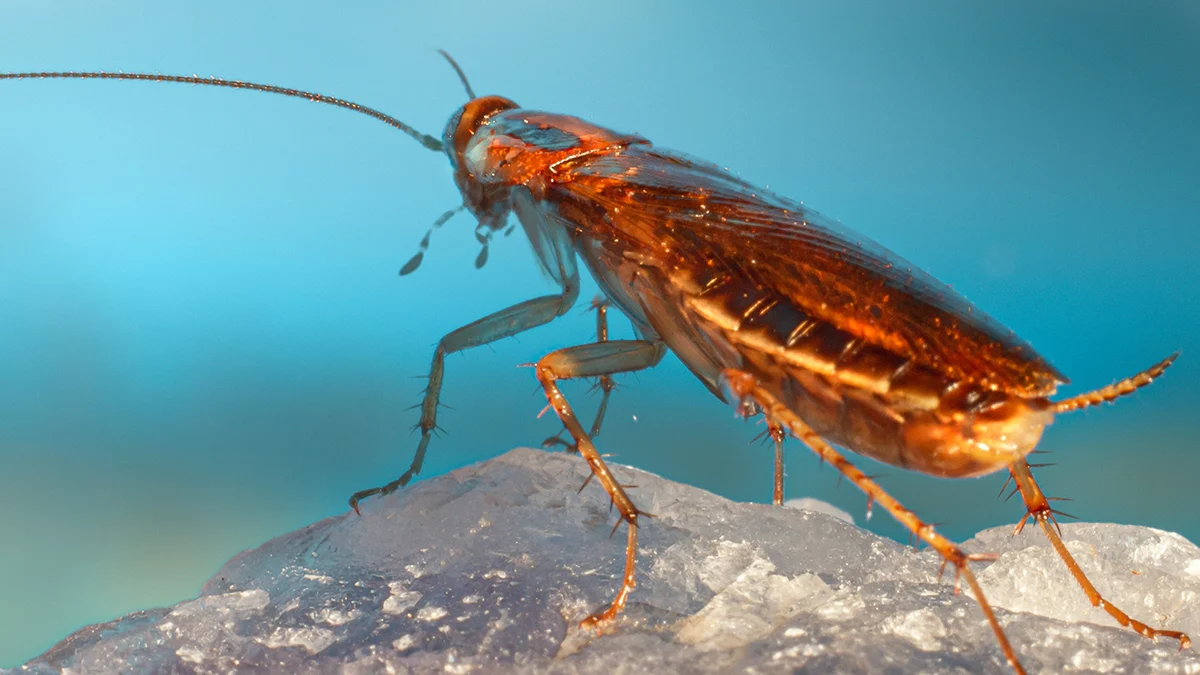
Cockroaches are widely perceived as incredibly resilient organisms, largely attributed to their genetic makeup. This genetic blueprint enables them to possess a remarkable array of survival mechanisms, from the capacity to neutralize hazardous substances to the ability to regenerate lost appendages.
A recent investigation, spearheaded by scientists at the University of Sydney, has delved anew into the cockroach genome, uncovering a rather unexpected revelation.
It appears these arthropods have assimilated a substantial quantity of genetic material from a completely distinct organismal type.
This organism is the bacterium known as Blattabacterium cuenoti. While it was previously understood that this bacterium resides within cockroaches and aids in nitrogen metabolic processes, its role in transferring tens of thousands of DNA fragments to its host had not been previously identified.
The phenomenon of gene exchange between different species is formally termed horizontal gene transfer (HGT), a process commonly observed in microbial life forms, including bacteria.
Although evidence of HGT exists in more complex life forms such as plants and animals (eukaryotes), it was generally presumed to be a considerably rarer occurrence in these domains.
In their peer-reviewed publication, the research team stated, “We have identified a multitude of chimeric sequences, each composed of up to nine short segments originating from disparate loci within the B. cuenoti genome.”
“Our findings suggest that pervasive HGT is occurring within eukaryotic genomes, potentially leading to significant consequences for adaptation and the formation of new species.”
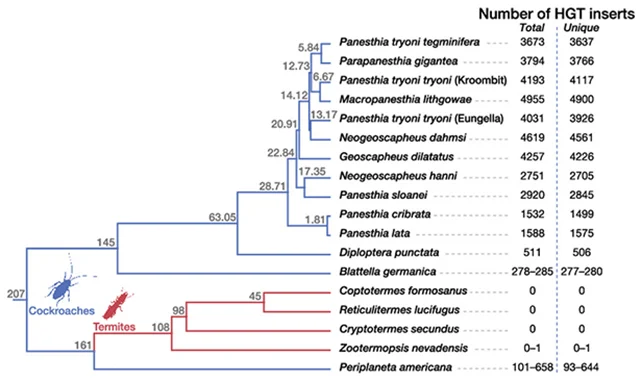
The researchers meticulously examined the complete genomic sequences of 18 species of cockroaches and termites. Cockroaches and termites are evolutionarily proximate, sharing ancient common ancestors. However, upon diverging on the tree of life, most termite lineages no longer harbored B. cuenoti.
In contrast to many prior analyses of this nature, this study incorporated an examination of smaller, non-coding DNA segments that do not contribute to protein synthesis. These particular fragments had been overlooked in earlier investigations that focused on more substantial genetic material.
This comprehensive search revealed a total of 40,485 distinct fragments of B. cuenoti DNA, with the number of fragments per insect ranging from 93 to 4,900. Prior to this research, the highest recorded instance of horizontal gene transfers in a eukaryote was less than 300.
Furthermore, it appears that a subset of these genetic implants originates from the earliest stages of the cockroach evolutionary path.
The authors noted, “Certain inserted sequences seem to have been retained for a duration of ≥28.7 million years within this group, suggesting potential functional significance.”
For the eukaryotic organism that incorporates these foreign genetic elements, the outcome can be an enhanced genomic versatility and resilience over time, conferring molecular capabilities that would not have been naturally acquired.
Nevertheless, it is crucial to underscore that the researchers have not yet determined the precise function, if any, of these transferred DNA segments within cockroaches. It is plausible that they may even impart a minor detrimental effect, yet not severe enough to be eliminated through evolutionary selection pressures.
The researchers elaborated, “The enduring presence of numerous inserted sequences over extended geological periods implies that they might have acquired functional roles in both coding and non-coding genomic regions, are effectively neutral in their impact, or exhibit only a slight disadvantage.”
As analytical methodologies and scientific comprehension continue to advance, there has been an increasing discovery of HGT instances occurring outside the typical domains of bacteria and microorganisms.
This particular study highlights the vast scope of undiscovered biological phenomena. Given that numerous animal species engage in symbiotic relationships with bacteria, it is conceivable that such genetic exchanges are occurring on a far more widespread scale than previously understood.
In addition to broadening their investigations to encompass other species, the research team intends to conduct a more in-depth analysis of the cockroach genome. Their objective is to ascertain whether any of these 40,485 assimilated DNA fragments possess actual functional utility.
“Our findings demonstrate extensive horizontal DNA transfer from prokaryotic symbionts to eukaryotic hosts,” the researchers concluded.
“Subsequent investigations involving cockroaches and other species that host obligate endosymbiotic prokaryotes will be instrumental in elucidating any functional consequences of these insertions, thereby fostering a more holistic understanding of how HGT influences genomic evolution.”