
Picture experiencing a visceral unease or a quickened heartbeat, yet being unable to ascertain whether the sensation stems from anger, apprehension, or exhilaration.
For a significant portion of the global populace, this internal ambiguity is a daily reality.
This condition is known as alexithymia, a term derived from classical Greek, signifying “an absence of words for emotions.”
Contrary to common oversimplifications, this does not imply an inability to perceive feelings. Instead, it characterizes a profound difficulty in discerning and comprehending one’s own affective states.
While this might seem like a minor inconvenience, emotions serve a more extensive purpose than merely informing us of our internal disposition.
They are instrumental in interpreting our lived experiences, facilitating inter-personal communication, navigating interpersonal dynamics, and formulating decisions. When emotional cues are obscure, the repercussions can permeate numerous facets of an individual’s life.
The nomenclature of alexithymia was established by psychotherapeutic practitioners during the 1970s to delineate a constellation of specific challenges.
This typically encompasses a struggle to pinpoint one’s emotions and articulate them to others; confusion between emotional states and somatic sensations; and a predilection for concrete, externally focused cognition over introspective emotional analysis.

Determining the precise prevalence of alexithymia is challenging, as individuals may not be cognizant of their condition. However, current estimations suggest it might impact approximately 5 to 10 percent of the general population.
But what is the subjective experience of alexithymia?
A hallmark characteristic of alexithymia is the inability to differentiate an emotional state from a physiological one. That internal tightening might register solely as indigestion, while a racing pulse could be interpreted as physical exertion. Awareness of a bodily sensation is present, but its affective origin remains elusive.
Another prevalent trait is what psychological professionals refer to as externally oriented thinking. Individuals experiencing alexithymia frequently fixate on the observable specifics of a situation—the sequence of events, the dialogue exchanged, and the actionable steps required.
The implications of this cognitive pattern extend well beyond immediate circumstances.
Affective responses are a fundamental mode of human communication. They are vital for conveying needs, forging bonds, and understanding the emotional landscapes of others.
When an individual faces obstacles in identifying and articulating their own feelings, these communicative processes become significantly more arduous. Others may misinterpret the emotional reticence displayed by those with alexithymia as indifference or detachment, even in instances where profound care is present.
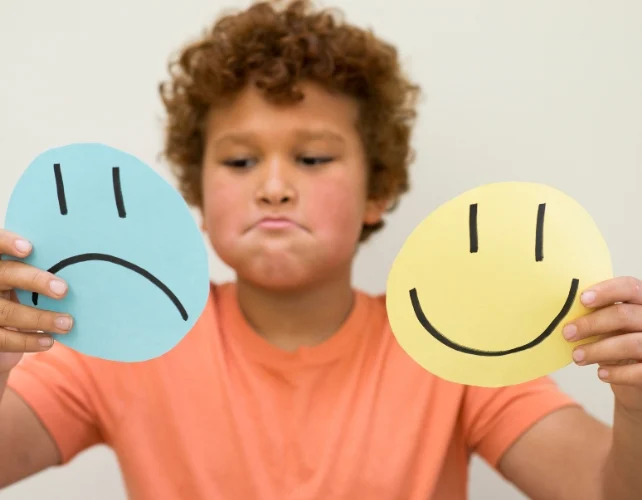
Empirical investigations have established a correlation between alexithymia and various interpersonal challenges, including difficulties in achieving emotional closeness and overall relationship contentment.
For instance, an individual might be aware of being displeased with a partner without being able to articulate the specific reason, or they may hold deep affection for a friend yet struggle to convey that sentiment.
Furthermore, individuals with alexithymia often encounter obstacles in modulating their emotional responses, which can contribute to the adoption of detrimental coping mechanisms.
Research has identified associations between alexithymia and certain behaviors, such as social isolation, the suppression of emotions, and avoidance strategies. Each of these can further complicate interpersonal connections and communication endeavors.
The ramifications of this condition can also extend to the realm of decision-making.
Our emotional states provide crucial data that assists us in evaluating risks and navigating ambiguity. Numerous studies have indicated a link between alexithymia and divergences in decision-making patterns, particularly in scenarios lacking a clear-cut solution where emotional signals typically offer guidance.
If an individual cannot easily distinguish between feelings of fear, excitement, unease, or intuition, they may be deprived of an essential signal that many people unconsciously rely upon when confronting complex choices.
While alexithymia is not formally categorized as a distinct mental health disorder, it is observed with greater frequency among individuals with a number of other conditions.
Perhaps its most widely recognized association is with autism spectrum disorder. It is estimated that approximately 50 percent of individuals diagnosed with autism also experience alexithymia.
Additionally, it has been linked to conditions such as post-traumatic stress disorder, obsessive-compulsive disorder, schizophrenia, anxiety and depressive disorders, premenstrual dysphoric disorder, and a variety of chronic physical ailments, including cancer.
It is important to note that not all individuals with these conditions exhibit alexithymia, nor do all those with alexithymia have any of these co-occurring conditions. Nevertheless, this strong co-occurrence has prompted researchers to explore whether difficulties in emotional identification might contribute to some of the challenges encountered across these diverse conditions.
This overlap can also render alexithymia challenging to diagnose. Patients may seek therapeutic intervention for a primary condition without recognizing that a deficit in emotional recognition might be a contributing factor.
Although alexithymia can present considerable difficulties, it is not necessarily an immutable characteristic.
The physiological sensations—the stomach’s unease, the heart’s rapid beat, the tension in the shoulders—all serve as potential carriers of information. The crucial endeavor lies in developing the capacity to interpret these signals.
Interventions such as enhancing emotional literacy, engaging in mindfulness practices, and utilizing various psychotherapeutic modalities can empower individuals with alexithymia to establish a connection with their emotions and learn to decipher the messages their bodies are conveying.