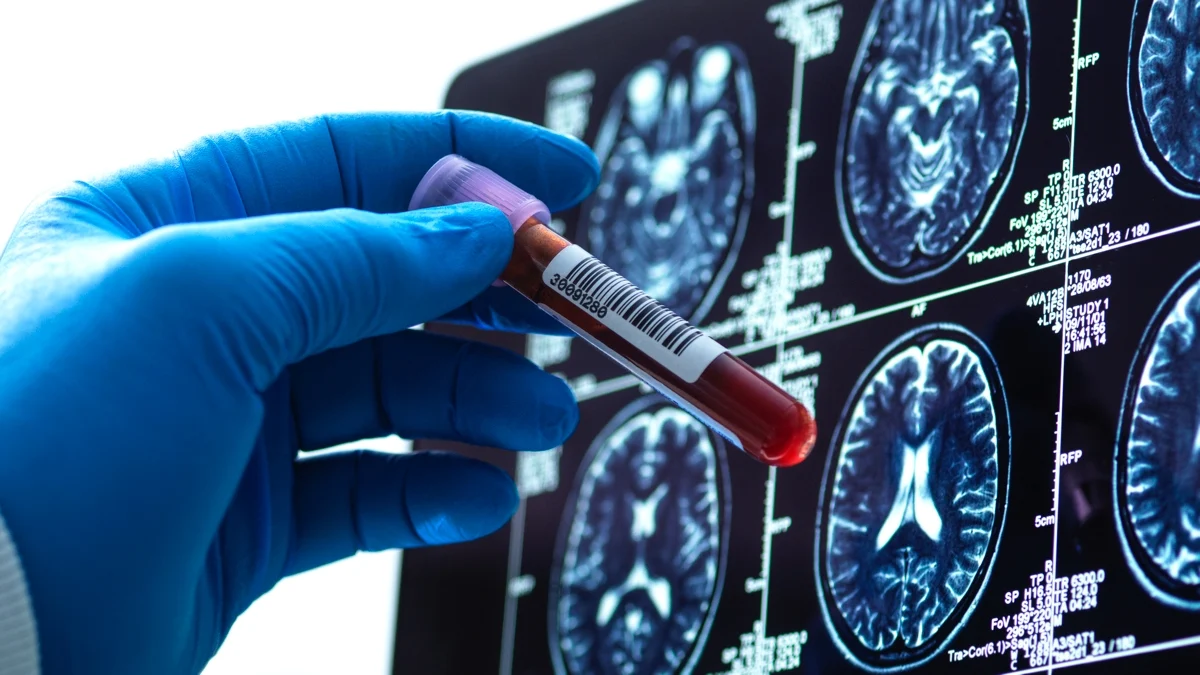
It is estimated that depression impacts approximately 6% of the adult population. However, accurately identifying this condition presents challenges, as its manifestations are diverse, and diagnostic assessments largely rely on subjective patient accounts.
The development of a more definitive blood diagnostic could offer significant advantages for both individuals experiencing depression and healthcare providers.
Recent scientific inquiries are advancing us towards this objective. One particular study, predominantly involving women diagnosed with HIV—a demographic disproportionately affected by depression with incidence rates two to three times higher than the general populace—provides a promising foundation.
Researchers from various U.S. institutions meticulously examined blood samples from 261 women with HIV and 179 without the virus. Concurrently, survey data was gathered to document any recent experiences of depressive symptoms among these participants.
A key finding emerged from the comparative analysis of blood biomarkers and reported depression symptoms: a statistically significant correlation was identified between the biological senescence of immune cells known as monocytes and the non-somatic (i.e., non-physical) indicators of depression, such as feelings of despair or apathy towards previously cherished activities.
“This is particularly noteworthy because individuals with HIV frequently exhibit physical manifestations like fatigue, which are often attributed to their chronic condition rather than a diagnosis of depression,” observes Nicole Beaulieu Perez, a psychiatric researcher affiliated with the New York University Rory Meyers College of Nursing.
“However, our findings suggest a different perspective, as these biomarkers are associated with mood and cognitive disturbances, rather than physical symptoms.”
The examination of monocytes employs a novel methodology known as an ‘epigenetic clock,’ specifically the MonoDNAmAge technique. This approach quantures biological age in contrast to chronological age and is a relatively recent advancement in the field.
MonoDNAmAge scrutinizes DNA methylation patterns within monocytes—molecular markers that influence gene expression—to ascertain the rate at which these cells undergo aging.
Beyond its connection to the emotional and psychological facets of depression, the monocyte aging metric proved more effective in this investigative context than an established epigenetic clock, namely the Horvath clock, which has been in use for a longer duration.
This suggests that a more focused analytical strategy, concentrating on specific cell types like monocytes, may yield superior results for certain epigenetic clock applications when the objective is to elucidate the relationship between biological aging and disease states.

Although this research has not yet yielded a clinically ready blood test for depression, the observation that certain symptoms lacked a correlation with biological aging implies the potential for such diagnostic tools in the future.
Furthermore, this work underscores the diverse ways in which depression can manifest.
“Depression is not a uniform condition; its presentation can vary significantly from one individual to another. Consequently, it is crucial to acknowledge these varied presentations rather than rigidly adhering to a singular diagnostic label,” states Perez.
“For women living with HIV who may be experiencing depression, a deeper understanding of their condition is vital to facilitate earlier detection and prevent adverse impacts on their overall well-being.”
Subtle indicators of depression, such as feelings of hopelessness or a diminished capacity for pleasure, might be overlooked if not accompanied by overt physical symptoms. This research offers a promising avenue for identifying such less apparent signs of the disorder.
“I find resonance with the principle, ‘what gets measured gets managed’,” remarks Perez. “An ambitious objective in mental healthcare would involve integrating subjective patient experiences with objective biological assessments.”
The ability to achieve an earlier and more precise diagnosis facilitates the prompt exploration and implementation of therapeutic interventions. Moreover, it is well-established that untreated depression can precipitate a cascade of other health complications and even lead to premature mortality.
Our biological age—representing the cumulative physiological wear and tear rather than the number of years lived—has previously been correlated with depressive symptoms. This current study provides further substantiation for the utility of aging markers as a potential reliable diagnostic modality.
“Our findings represent a significant stride toward achieving the goal of precision mental health care, particularly for vulnerable patient groups,” Perez concludes. “By establishing a biological framework, we can pave the way for enhanced future diagnosis and treatment strategies.”