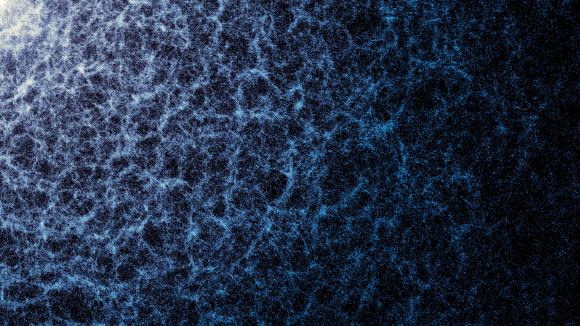
Leveraging the Dark Energy Spectroscopic Instrument (DESI) mounted on NSF’s Nicholas U. Mayall 4-m telescope, astrophysicists have meticulously constructed the most extensive, high-fidelity three-dimensional cartography of the cosmos to date, meticulously charting the spatial distribution of over 47 million galaxies and quasars.
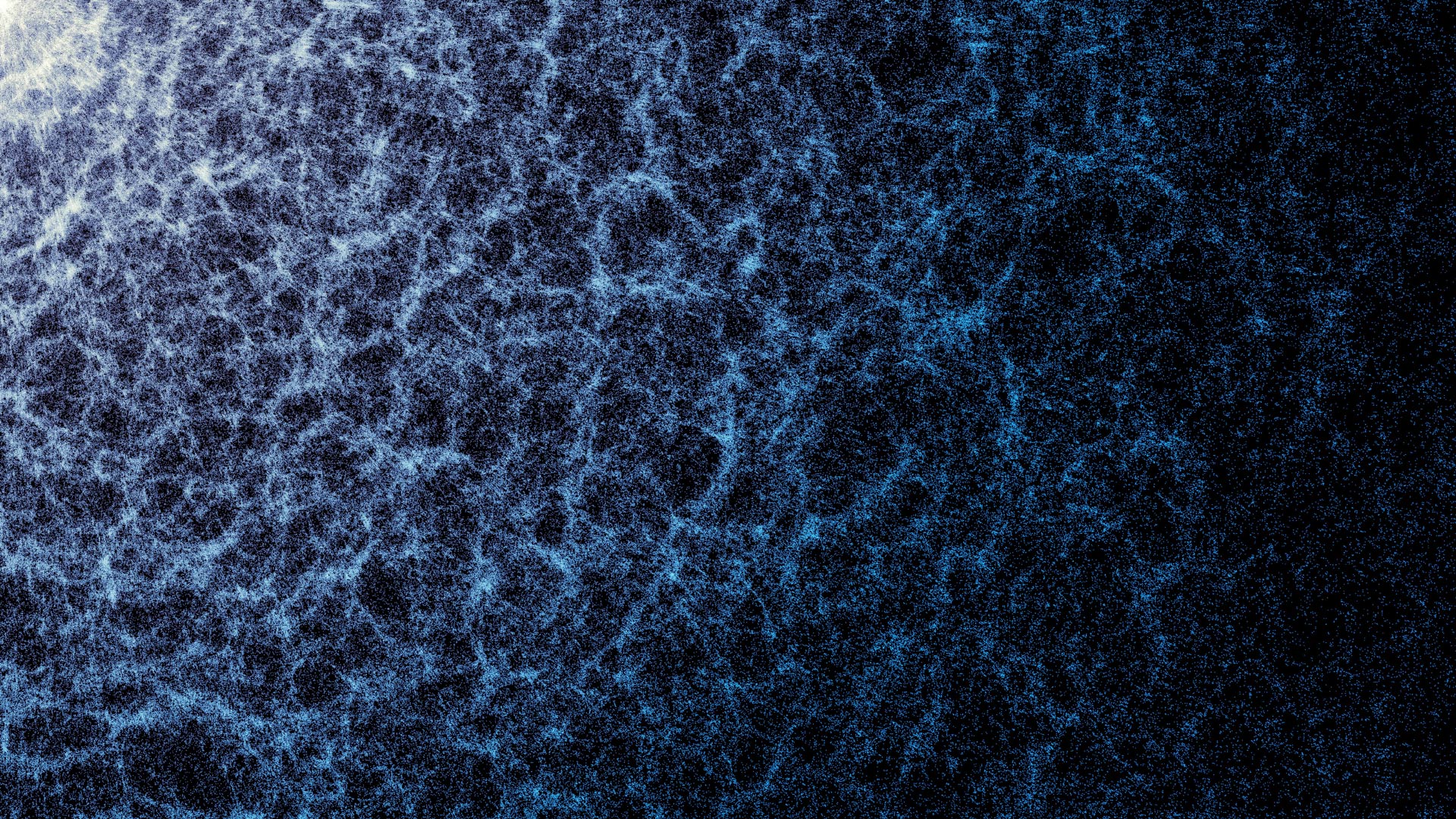
A segment of DESI’s fifth-year celestial atlas, vividly illustrating the Universe’s grand architecture sculpted by gravitational forces. Each point signifies a galaxy, with denser concentrations denoting areas where galaxies and galactic clusters have coalesced into the filamentary structures of the cosmic web, interspersed with vast, empty regions. Attribution: DESI Collaboration / DESI Member Institutions / DOE / KPNO / NOIRLab / NSF / AURA / R. Proctor / M. Zamani, NSF’s NOIRLab.
This ambitious undertaking, orchestrated by Berkeley Lab and supported by financing from the DOE Office of Science, represents a global scientific coalition dedicated to deciphering the enigmatic nature of dark energy.
By juxtaposing the historical aggregation patterns of galaxies with their contemporary distribution, researchers are empowered to meticulously trace the influence of dark energy throughout an 11-billion-year cosmic epoch.
DESI commenced its data acquisition phase in May 2021. Since its inception, the instrument has demonstrably surpassed the initial objectives set forth by the research consortium.
The original strategic blueprint anticipated the cataloging of light from 34 million galaxies over the course of its five-year observational period. However, DESI has impressively cataloged over 47 million galaxies and quasars, in addition to 20 million stars.
Presently, DESI has compiled cosmological data from a galactic and quasar population sixfold larger than the aggregate of all prior observational efforts combined.
The collaborative team will now proceed with the immediate processing of this completed data repository, anticipating the release of the inaugural dark energy findings derived from the comprehensive five-year survey in 2027.
Concurrently, the DESI cadre remains actively engaged in scrutinizing the initial three years of survey data, diligently refining dark energy quantitative assessments and generating supplementary scientific insights pertaining to the Universe’s structural configuration and evolutionary trajectory, with several peer-reviewed publications slated for release later this year.
“The sheer breadth of dedication and expertise that converged to forge DESI into such a triumphant scientific endeavor is genuinely immeasurable,” remarked Dr. Stephanie Juneau, the NSF’s NOIRLab liaison for DESI.
“From the visionary architects of the instrument and the proficient software engineers to the skilled technicians, the steadfast observatory personnel, and the illuminating scientists—including a significant cohort of nascent researchers—it unequivocally required a collective effort of extraordinary magnitude.”
“Fundamentally, our pursuit is for the betterment of all humankind, aiming to cultivate a more profound comprehension of our cosmic abode and its ultimate destiny.”
“Having detected preliminary indications that dark energy might exhibit deviations from a constant state, thereby potentially reshaping that predetermined fate, reaching this juncture feels akin to teetering on the precipice of discovery as we meticulously dissect this novel cosmic map to ascertain if those nascent indicators will achieve empirical validation.”
“Furthermore, I am profoundly captivated by the prospect of myriad other groundbreaking revelations that undoubtedly lie concealed within this newly amassed dataset.”
“DESI’s performance has unequivocally transcended all prior benchmarks, yielding an unprecedented three-dimensional panorama of the cosmos that promises to fundamentally reshape our understanding of dark energy,” stated Dr. Kathy Turner, the designated program manager for the cosmic frontier within the Department of Energy’s Office of High Energy Physics.
“From its very inception, our vision was to instigate a project that would definitively push the frontiers of cosmological research, and to witness its culmination in such a remarkably successful conclusion for its initial survey, accomplished ahead of its projected timeline and yielding such an exceptionally rich trove of data, is a profoundly gratifying achievement.”
“The unwavering commitment and remarkable inventiveness demonstrated by the entirety of the DESI collaborative network have transformed this world-leading scientific pursuit into a tangible reality, and I am filled with immense pride regarding the pioneering results we are already beginning to observe and the future discoveries that await us as we continue our exploration of the cosmos’ profound enigmas.”
“DESI’s five-year observational campaign has been nothing short of a spectacular triumph,” affirmed Dr. Michael Levi, the director of DESI and a distinguished scientist at Berkeley Lab.
“The instrument’s operational performance exceeded all anticipations. The resultant findings have been extraordinarily compelling. Moreover, the sheer magnitude and comprehensive scope of this compiled map, coupled with the remarkable alacrity with which we have executed this complex undertaking, are truly phenomenal.”
“Our immediate objective is to commemorate the successful completion of the original survey’s mandate, and subsequently, to embark on the rigorous process of analyzing the accumulated data, driven by our collective anticipation of the unforeseen marvels that await our discovery.”