Our planet, Earth, along with the celestial neighborhood it occupies, the Solar System, is not stationary but undertakes a majestic, unhurried celestial ballet, revolving around the core of the Milky Way galaxy.
Pinpointing the exact trajectory of the Solar System throughout its eons-long voyage has historically presented immense challenges. However, recent discoveries, preserved for millennia within the frozen strata of Antarctic ice, offer compelling new insights.
In this frigid expanse, a cadre of scientists, spearheaded by Dominik Koll, a nuclear astrophysicist affiliated with the Helmholtz-Zentrum Dresden-Rossendorf in Germany, has unearthed minute quantities of uncommon iron isotopes. These isotopes serve as markers, charting our planet’s relatively recent passage through an interstellar nebula composed of supernova remnants – the residual particulate matter from stellar cataclysms.
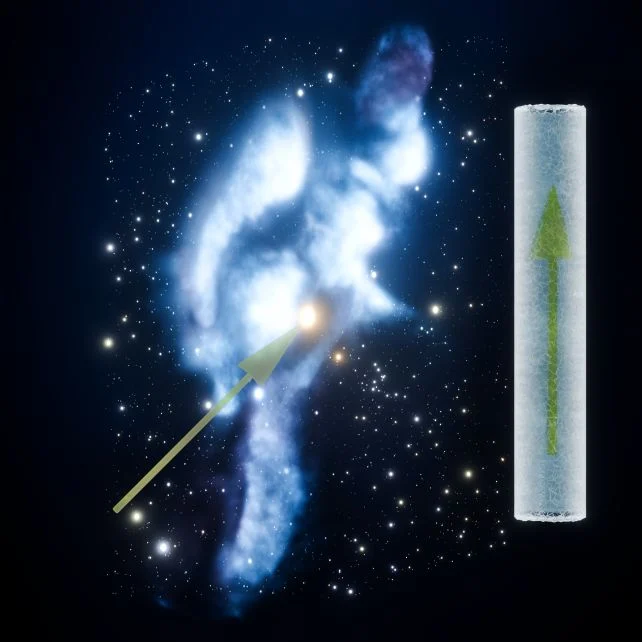
Over recent decades, the Antarctic ice sheet has proven to be an indispensable repository of data concerning our planet’s historical chronicle. Its formation commenced approximately 35 million years ago, as successive layers of snowfall accumulated and compacted. Encapsulated within each stratum are atmospheric particles, preserved in a frozen state.
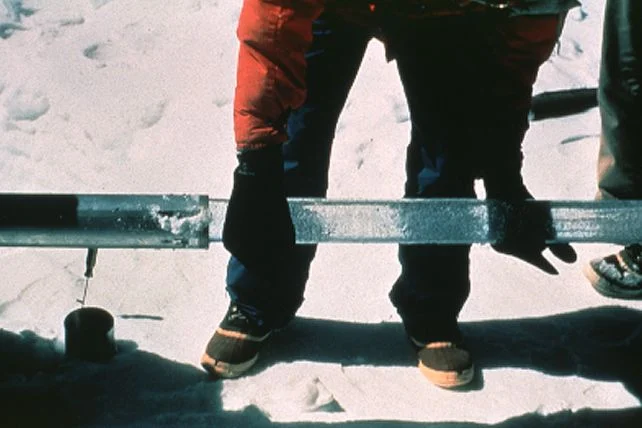
This stratigraphic accumulation, subjected to immense pressure from its own mass, has effectively transformed into a vertical archive. From this archive, scientists meticulously extract columnar samples of ice, yielding a chronologically ordered record of atmospheric transformations spanning millions of years.
In the year 2019, Koll and his research associates conducted an analysis of freshly fallen Antarctic snow, detecting minute traces of an iron isotope designated as 60Fe, commonly referred to as iron-60.
Subsequent investigations have now identified iron-60 embedded within ice cores dating back to periods between 40,000 and 81,000 years in the past.
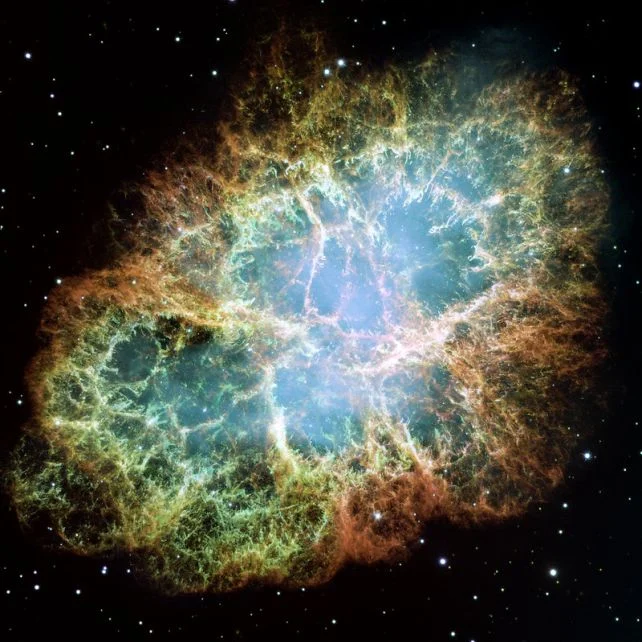
The unique characteristic of iron-60 lies in its origin; it is solely synthesized under exceptionally energetic cosmic phenomena, such as the explosive deaths of stars (supernovae), and is not naturally produced on Earth.
While it’s conceivable that some iron-60 might have been incorporated during Earth’s formative stages, its relatively short half-life of 2.6 million years means that virtually all of it would have undergone radioactive decay within approximately 15 million years. Consequently, any iron-60 that existed when Earth coalesced 4.5 billion years ago has long since vanished.
This fundamental principle dictates that any detectable iron-60 found on our planet, exceeding a specific background level, must have originated from extraterrestrial sources. No terrestrial mechanisms are known to generate significant quantities of this isotope.
Furthermore, the manner in which iron-60 is produced leads scientists to infer that its presence on Earth, detectable in both marine sediments and recent snowfall, indicates that our Solar System has traversed – and potentially continues to navigate – regions enriched with supernova debris.
Following the initial detection of iron-60 in surface snow, Koll and his team embarked on a mission to investigate deeper stratigraphic layers, seeking to ascertain the temporal extent of the iron-60 record.
Utilizing ice samples acquired through the European Project for Ice Coring in Antarctica (EPICA), the researchers meticulously processed 295 kilograms (approximately 650 pounds) of Antarctic ice, in their pursuit of elusive iron-60 atoms.
The ice was melted to liberate its dissolved components, which were then processed to isolate and quantify the entrapped iron-60 atoms.
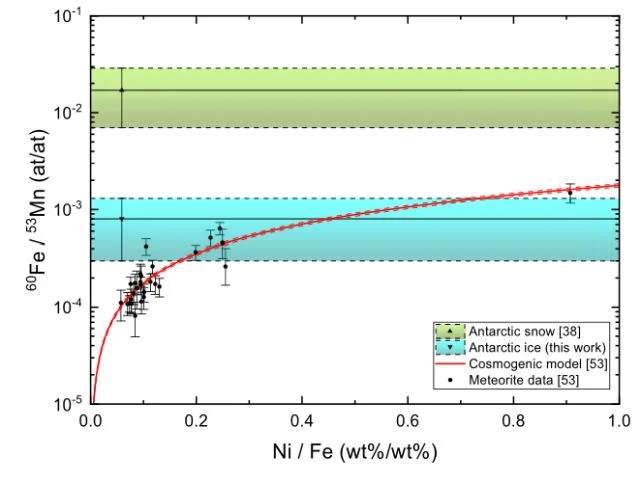
Their findings revealed a concentration of iron-60 that significantly exceeds the minimal background contribution expected from cosmic rays interacting with Earth. This disparity strongly suggests that a substantial portion of the iron-60 identified in the Antarctic ice originated from interstellar space.
The implications of this discovery are particularly fascinating. The concentration of iron-60 found in ice from tens of thousands of years ago is notably lower than that observed in snow from more recent decades.
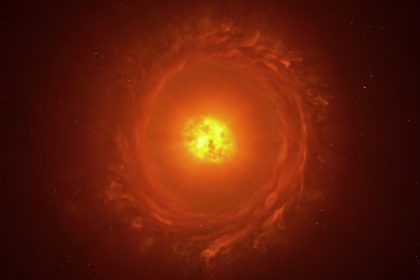
The Solar System is presently navigating through a region known as the Local Interstellar Cloud, a vast expanse composed of gas, dust, and plasma that scientific consensus points to as being enriched by supernova events. It is therefore logical to surmise that this cloud is depositing a faint, continuous shower of iron-60 onto Earth.
The research conducted by Koll’s team suggests that the Antarctic ice samples effectively serve as a historical record of Earth’s trajectory through this cloud. This record, in turn, offers a detailed insight into the internal structure of the cloud, implying the existence of regions with varying densities of iron-60-laden dust.
This observation, derived from the analysis of mere trace elements within ice samples, represents a remarkable scientific breakthrough.
The stratigraphic record within the ice cores suggests that the Solar System has been encountering this cloud for at least 80,000 years, initially passing through a less dense area before entering a more densely populated region that we currently inhabit.
The precise origins of the Local Interstellar Cloud remain a subject of ongoing investigation. However, the team’s findings align with a supernova-driven genesis and underscore the potential to reconstruct the cloud’s structure through tangible terrestrial materials.
“These findings posit the Local Interstellar Cloud as a cosmic repository for iron-60 generated by supernovae,” the researchers elucidate.
“The imprinted temporal profile of iron-60 serves as evidence of a dynamic local interstellar environment over the past 80,000 years.”