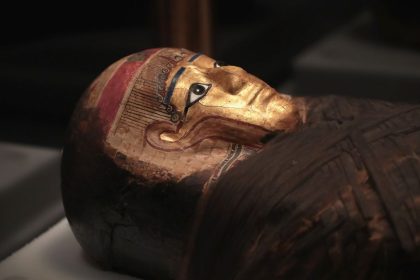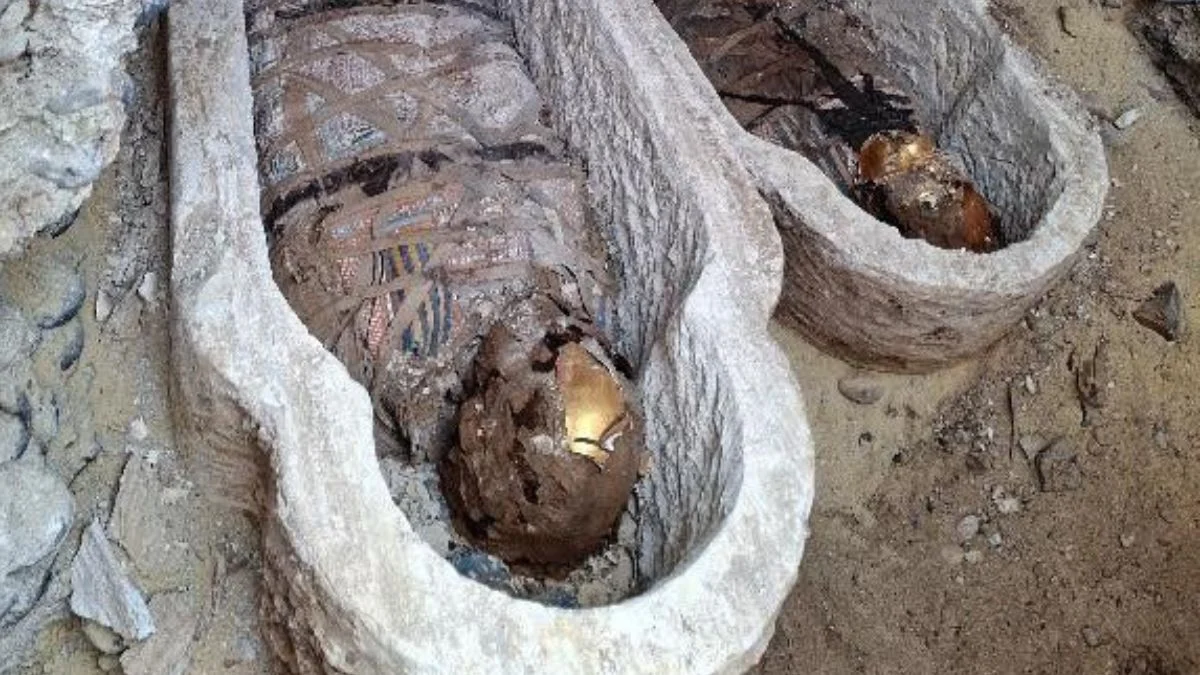
This archaeological find presents a scenario rarely, if ever, encountered by researchers: the discovery of an ancient Egyptian mummy bearing a segment of the renowned Greek epic, the Iliad, affixed to its abdominal region.
This statement warrants considerable elaboration, so we shall commence with the mummy itself. Representing a groundbreaking revelation, these 1,600-year-old remains were unearthed in Al Bahnasa, a locale in the heart of Egypt historically known as Oxyrhynchus.
Up to this point, the circumstances are relatively conventional, albeit still a source of considerable excitement for excavation specialists. The unexpected element, however, is the inclusion of classical literature, specifically Homer’s monumental poem, the Iliad, which chronicles the events of the Trojan War and the legendary hero Achilles.
The genesis of this poem can be traced back approximately 2,700 years. This particular segment was discovered inscribed on papyrus and had been intentionally secured to the mummy’s abdomen as an integral part of the embalming ceremony.
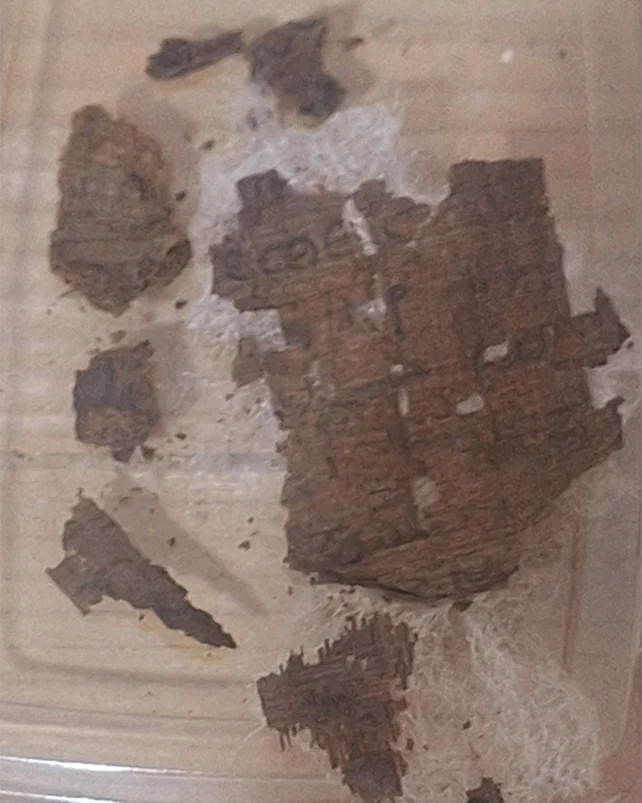
While Greek inscriptions have been previously discovered in association with mummies, the presence of literary texts had not been documented until this present discovery.
“While we have encountered Greek papyri previously, bound, sealed, and incorporated into the mummification process, their content was predominantly of a magical nature,” states Ignasi-Xavier Adiego, a classical philologist from the University of Barcelona and director of the Oxyrhynchus Archaeological Mission, speaking in reference to the find. “Since the latter portion of the 19th century, Oxyrhynchus has yielded a vast quantity of papyri, including Greek literary manuscripts of significant importance. However, the truly novel aspect is the identification of a literary papyrus within a funerary context.”
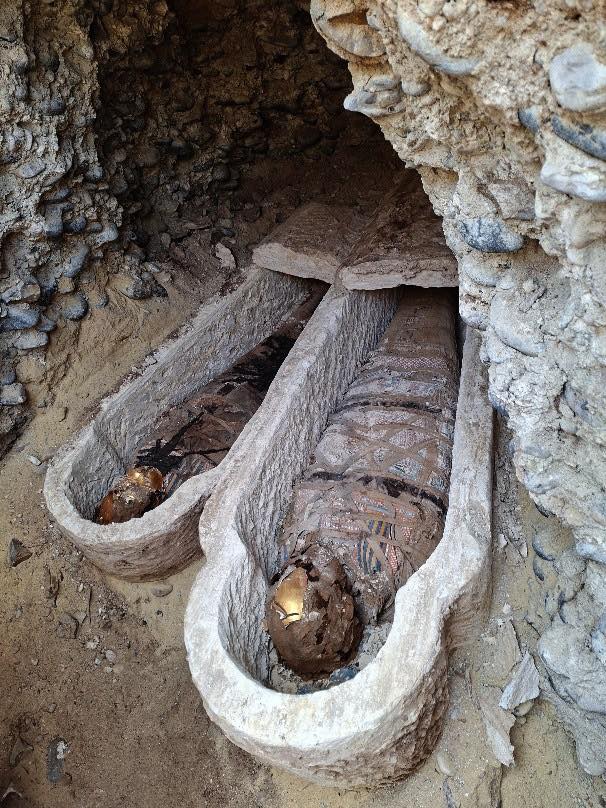
Despite the papyrus’s fragile condition, the investigative team has ascertained that it contains an excerpt from the second book of the Iliad, detailing a compilation of vessels involved in the conflict. This is an unprecedented finding that offers additional insights into the funerary customs and embalming practices prevalent during that epoch.
The enigma that remains is the rationale behind the inclusion of the Iliad with a mummy.
One hypothesis proposed by the discovery team, as elaborated by Adiego to Jack Guy in a report for CNN, suggests it might have served as a kind of identifier or signature for the embalmer, akin to a recognizable mark of their craftsmanship.
Other written materials found with mummies, which are not famous Greek epics, are generally believed to have served a ritualistic or protective purpose – perhaps functioning as invocations for the deceased – but it is more challenging to ascertain the significance of Homer’s celebrated work in this context.
“We have not yet had the opportunity to subject it to advanced analytical techniques such as X-ray imaging, which could potentially enhance our ability to decipher its contents,” Adiego disclosed to CNN. “Our efforts have been limited to what can be achieved without causing damage to the papyrus.”
The subsequent phase of the research will involve employing various non-invasive methodologies for the examination of ancient texts, even those in a state of deterioration. These techniques are anticipated to shed further light on the motivations behind the incorporation of this particular poem into the mummification ritual.
The research collective continues its efforts to gain a more profound understanding of the individuals interred at this site. The fact that the bodies underwent embalmment indicates a degree of affluence, and evidence of gold and copper foil has been discovered on the tongues of some of the deceased.
Regarding the archaeological site of Oxyrhynchus, it is a well-established location where excavation activities have been ongoing since the closing decades of the 19th century. While only remnants of the ancient city are discernible, the necropolis situated beneath it has yielded a substantial collection of artifacts and human remains.
During the period when mummification was practiced, the inhabitants of Egypt were undoubtedly familiar with Homer and the broader spectrum of Greek literature. Greek was employed for official documentation at that time, and the narrative of the Iliad would have been extensively taught and disseminated.
It is plausible that further discoveries await as work at the Oxyrhynchus site progresses, potentially revealing additional iconic literary texts concealed within the ancient ruins.