The tapestry of the hominin lineage is considerably more intricate than a simple, linear progression; it resembles a complex, interwoven thicket.
While Homo sapiens stands as the sole surviving representative of its genus in the present era, past millennia witnessed the coexistence of numerous related Homo species. These included notably the Neanderthals, Homo erectus, and Homo habilis, alongside enigmatic remnants of a poorly understood group identified as Denisovans.
Recent scientific discourse has been enriched by emerging evidence challenging the notion of these hominin populations existing in isolation. It is now understood that diverse, overlapping human groups traversed Eurasia, engaging in occasional conflict, exchanges, and crucially, reproductive intermingling.
A significant new contribution has surfaced, further illuminating this complex evolutionary narrative. From six H. erectus teeth excavated at three distinct sites across China, archaeologists have successfully identified proteins exhibiting a genetic variant also observed in Denisovans. This discovery strongly suggests a history of genetic exchange between these distinct hominin groups.
The preservation of ancient organic material is inherently challenging due to its susceptibility to degradation over extended periods, making the investigation of our distant ancestry a formidable task. However, teeth represent an exceptionally valuable repository of information. The robust structure of tooth enamel effectively safeguards proteins that can be analyzed to reveal genetic variations inherited through successive generations.
When scientists achieve the feat of deciphering such ancient genetic information, the revelations are often profoundly surprising.
Evidence indicates that Homo sapiens interbred with Neanderthals. Neanderthals, in turn, engaged in gene exchange with Denisovans. Denisovans also contributed genetically to human populations. Furthermore, the genetic makeup of modern humans even contains discernible imprints from long-vanished, unidentified ‘ghost’ hominids.
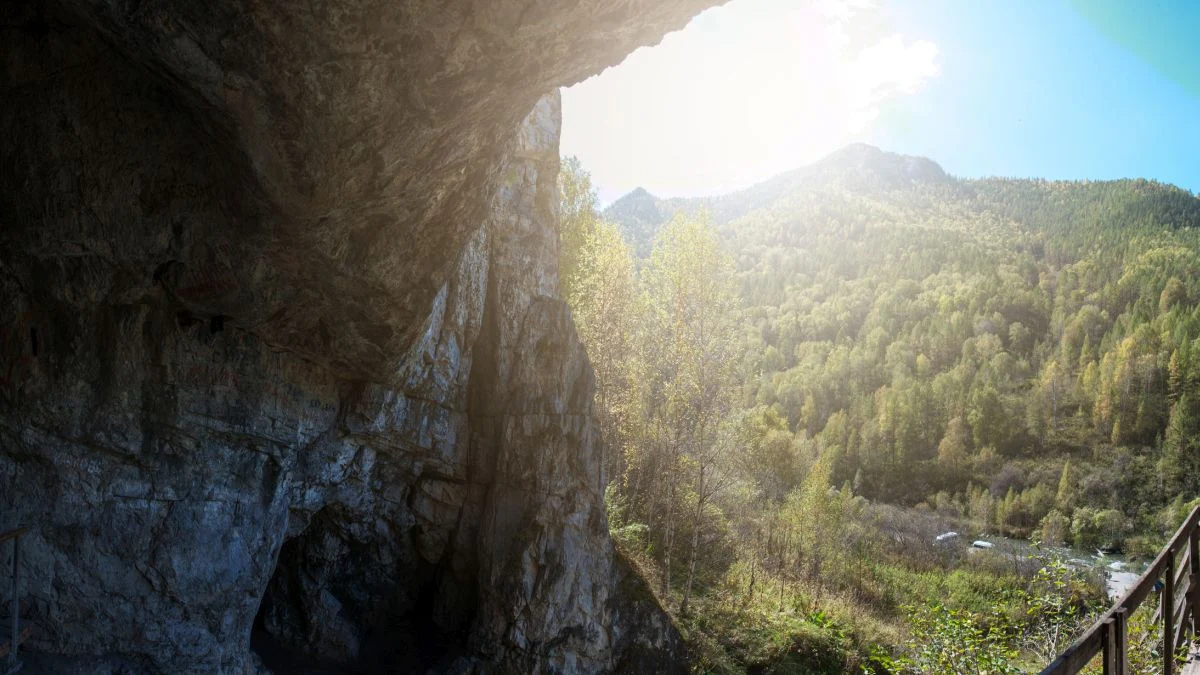
However, the Denisovans continue to be shrouded in considerable mystery. The archaeological record has yielded only a scant collection of fragmented remains – comprising teeth, a jawbone, and bone fragments – which, while exhibiting characteristics distinct from both humans and Neanderthals, nevertheless share discernible commonalities amongst themselves.
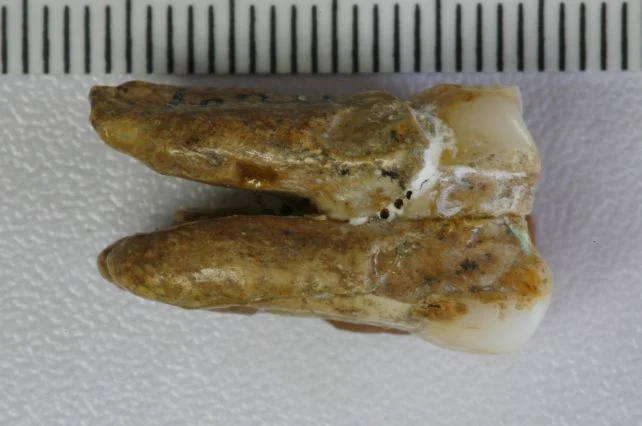
The precise composition of Denisovan populations – whether they constituted a singular entity or a collection of related groups – remains undetermined. Their geographical distribution, duration of existence, and the timeline of their disappearance are also subjects of ongoing inquiry.
Currently, there is no formal taxonomic classification, description, or species designation for the Denisovans. The limited physical evidence that has been recovered suggests a close genetic relationship to the Neanderthals, and that they shared a common ancestor with both Neanderthals and contemporary humans.
The latest insights into this enigmatic group stem from the protein analysis of no fewer than six H. erectus teeth. These specimens were unearthed from three significant archaeological locations within China: Zhoukoudian, situated near Beijing; Hexian, in Anhui Province; and Sunjiadong, located in Henan Province.
H. erectus preceded the emergence of modern humans, yet it belongs to the broader evolutionary lineage from which H. sapiens ultimately evolved.
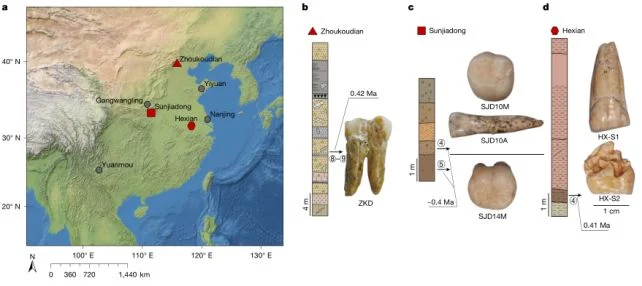
The teeth examined in this research are approximately 400,000 years in age – a temporal span far exceeding the typical survivability of DNA under most environmental conditions. Nevertheless, DNA encodes genes responsible for protein synthesis, and the exceptionally durable nature of tooth enamel allows for the enduring preservation of proteins over immense geological timescales.
Through the meticulous extraction and subsequent analysis of proteins found within the enamel of these ancient dental specimens, a scientific contingent, spearheaded by paleoanthropologist Qiaomei Fu from the Institute of Vertebrate Paleontology and Paleoanthropology in China, successfully pinpointed inherited genetic variants preserved within these proteins.
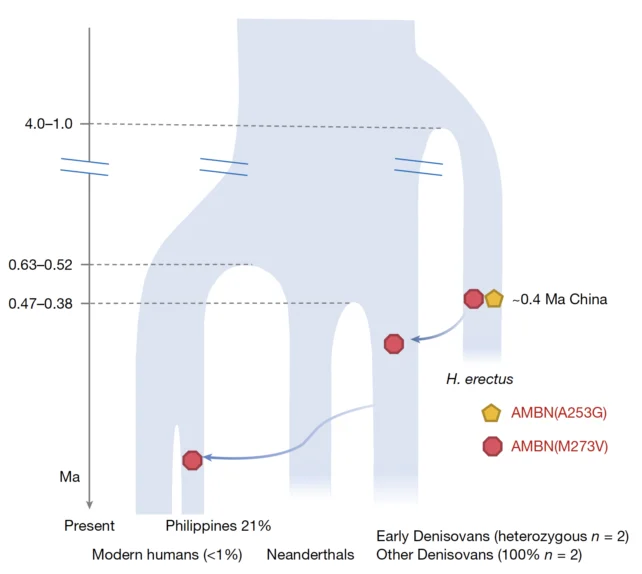
Remarkably, the proteins extracted from all six teeth contained two uncommon inherited variants of the enamel protein ameloblastin.
One identified variant appears to be exclusive to these specific H. erectus individuals from China, having never been documented in any previously known hominin. This finding could potentially signify the presence of a distinct evolutionary branch of East Asian H. erectus.
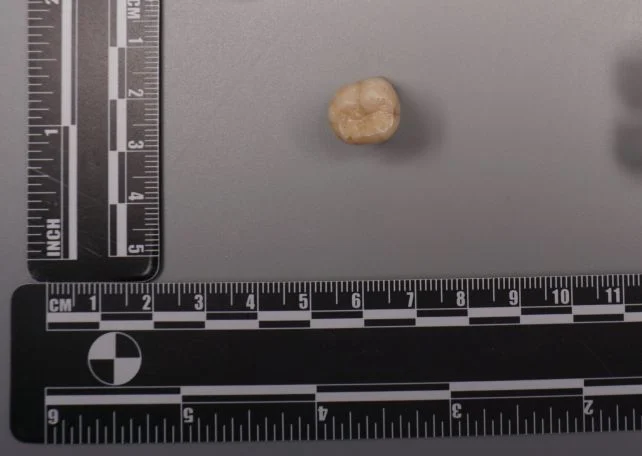
The second variant had previously been identified within Denisovan genetic material, indicating that populations closely related to both groups likely engaged in interactions at some point during their existence.
The considerable sparseness of the fossil record makes it exceedingly challenging to ascertain the true geographical extent of Denisovan populations. However, the available evidence points towards their coexistence with H. erectus in East Asia for a period of time.
Given that this specific genetic variant was detected in all six H. erectus teeth studied across multiple Chinese excavation sites, the researchers propose that it most plausibly originated within populations ancestral to H. erectus before subsequently appearing in Denisovans.
“Their overlapping geographical ranges created avenues for inter-group encounters,” the researchers articulate in their published findings.
These groundbreaking discoveries do not resolve the enigma surrounding the Denisovans. Instead, they bolster a growing corpus of evidence suggesting that the path of human evolution was a significantly more convoluted affair than even Charles Darwin might have envisioned, characterized by frequent intermingling and genetic exchange.
Rather than a single, clearly defined evolutionary pathway, the emerging picture depicts numerous hominin groups repeatedly overlapping, interacting, and exchanging genetic material over hundreds of thousands of years.
The implications of these findings also lend considerable support to the hypothesis that Denisovans, at the very least, had a geographical range extensive enough to facilitate interbreeding with other species, suggesting a greater degree of genetic diversity among them than was previously assumed.
Furthermore, an intriguing possibility emerges: a complete H. erectus genome has yet to be successfully isolated due to the age and degraded state of available samples. This study, however, introduces the compelling notion that genetic material originating from populations closely related to H. erectus may have been incorporated into the Denisovan genome, and subsequently, portions of that Denisovan genetic legacy might have found their way into the modern human genome.
The second identified protein variant, which was previously associated with Denisovans, has also been detected in certain contemporary human populations.
Recent scientific investigations have similarly unearthed evidence of Denisovan genetic contributions within the genomes of extant humans, thereby augmenting our own species’ genetic richness.
Consequently, it is highly stimulating to contemplate that with the continuous advancement of analytical tools and methodologies, scientists are progressively unveiling the more complex and convoluted chapters of ancient human history.
With the acquisition of additional fossil specimens and genetic samples in the future, it is conceivable that we may eventually identify the nature of the elusive ‘ghosts’ residing within our genetic makeup.
The comprehensive details of these revelations have been disseminated in the esteemed scientific journal Nature.