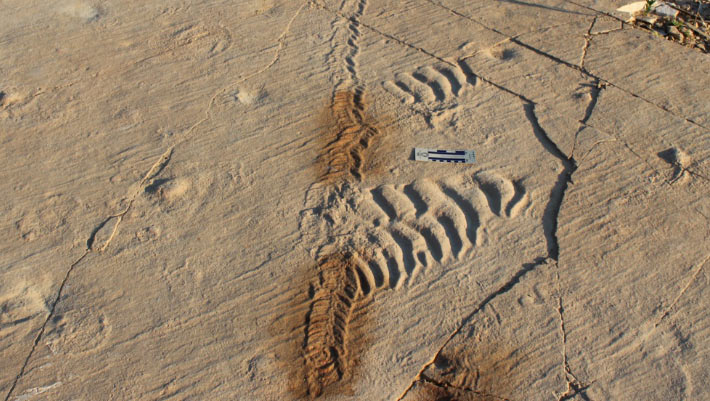
Recent discoveries of trace fossils unearthed from the half-billion-year-old Cambrian tidal flats of Wisconsin, specifically at a location designated as Blackberry Hill, are progressively illuminating the activities and potential dietary habits of some of the earliest terrestrial fauna.
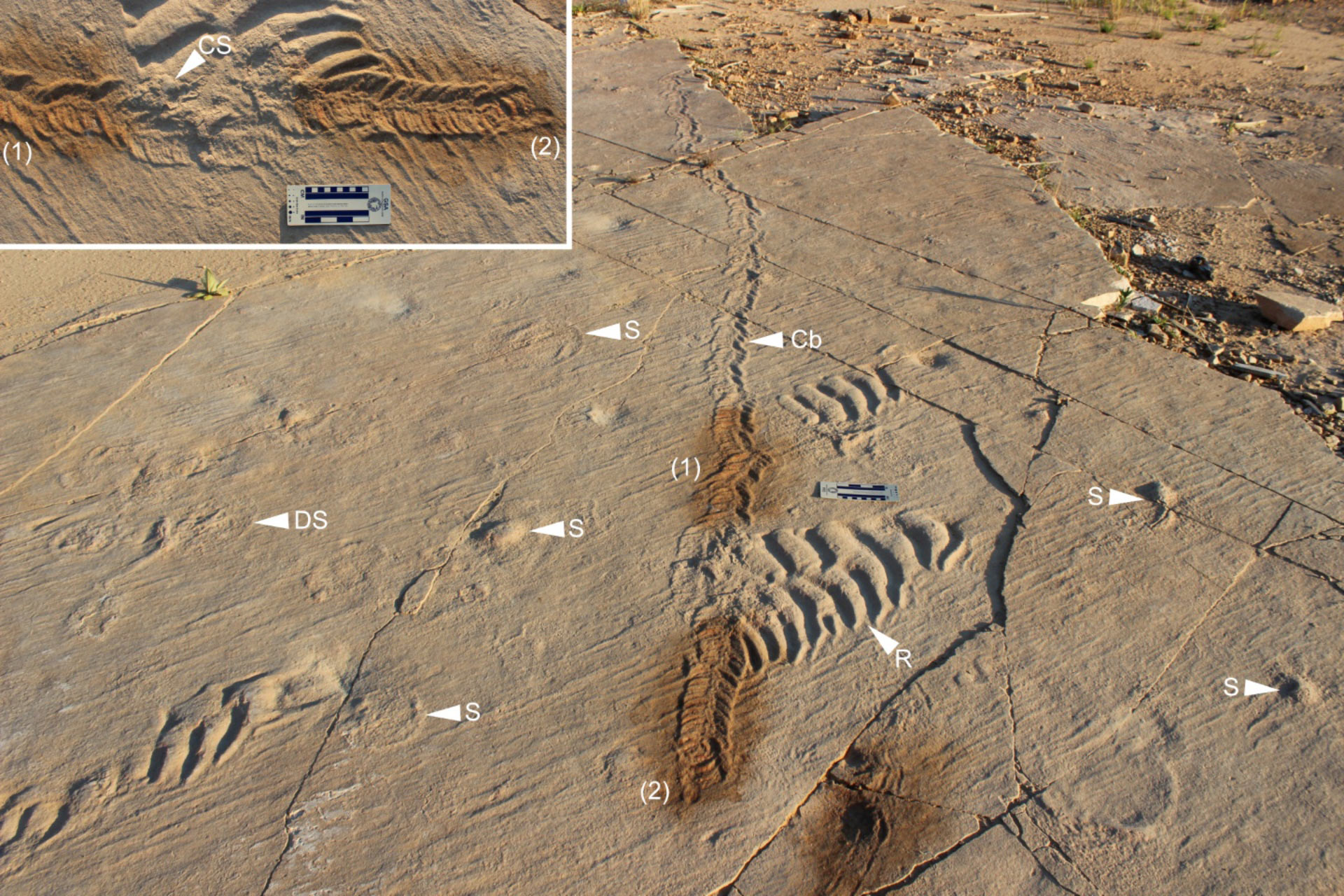
The mollusk trail Climactichnites blackberriensis (Cb) is depicted, hypothetically pausing to consume a scyphozoan (jellyfish) that had been deposited on the shore. CS denotes clasts of a scyphozoan, DS indicates a decomposing scyphozoan, R represents ripple marks, and S marks a scyphozoan.
The trace and body fossils recovered from Blackberry Hill had previously facilitated the identification of the organism responsible for the Protichnites trackway, literally translated as ‘first footprints.’ This organism has been identified as an euthycarcinoid, a creature related to millipedes.
The precise identity of this ancient animal had remained an enigma to paleontologists for more than 150 years.
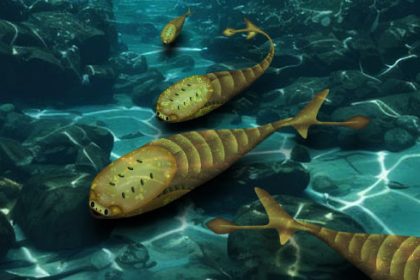
Further discoveries at these same tidal flat environments included fossilized remains of a phyllocarid, a type of crustacean, alongside numerous well-preserved trace fossils attributed to a variety of arthropods and mollusks.
Among the newly identified traces, Climactichnites blackberriensis stands out as a substantial trail, believed to have been generated by an as-yet-unidentified mollusk.
This distinctive trail was likely formed as the creature traversed the tidal flat environment.
Crucially, evidence suggests that during its progression, the mollusk appears to have paused to scavenge on a scyphozoan (jellyfish) that had become stranded above the waterline.
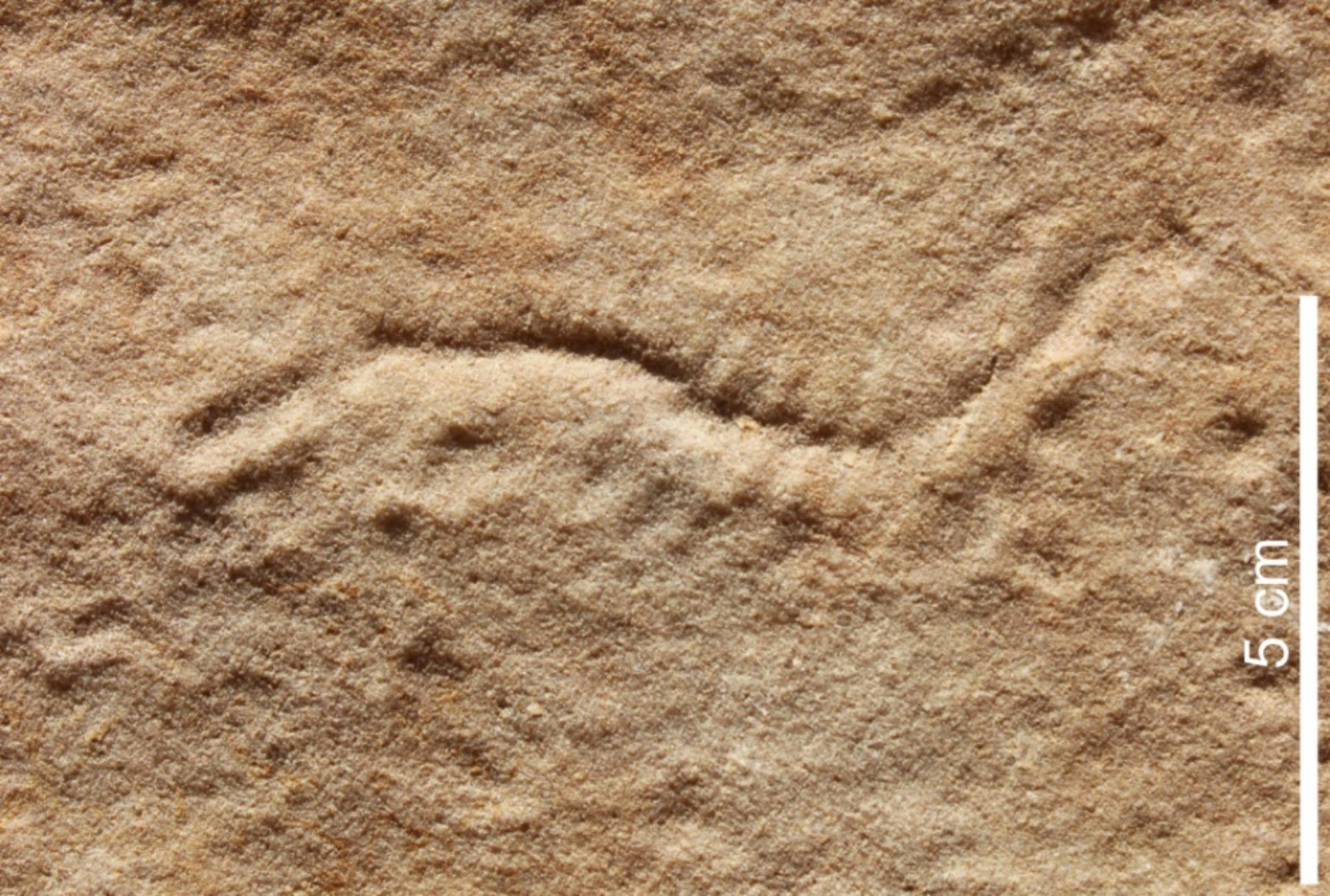
Cochlichnus? – the presumed resting trace of a polychaete worm.
Fragmented material, identified as clasts, is scattered across the locale, with scyphozoans also observed in close proximity.
If this interpretation holds true, it would constitute the inaugural fossilized evidence of an animal preying upon a scyphozoan within a Cambrian tidal flat setting.
Furthermore, this dietary opportunity may have served as a significant impetus for certain fauna to venture ashore, initiating the process of terrestrialization.
Additional newly identified trace fossils encompass a resting trace attributed to a probable polychaete worm, including imprints of its parapodia (appendages), and the earliest documented occurrence of Stiallia pilosa, which is thought to be a feeding trace left by an arthropod, possibly an euthycarcinoid.
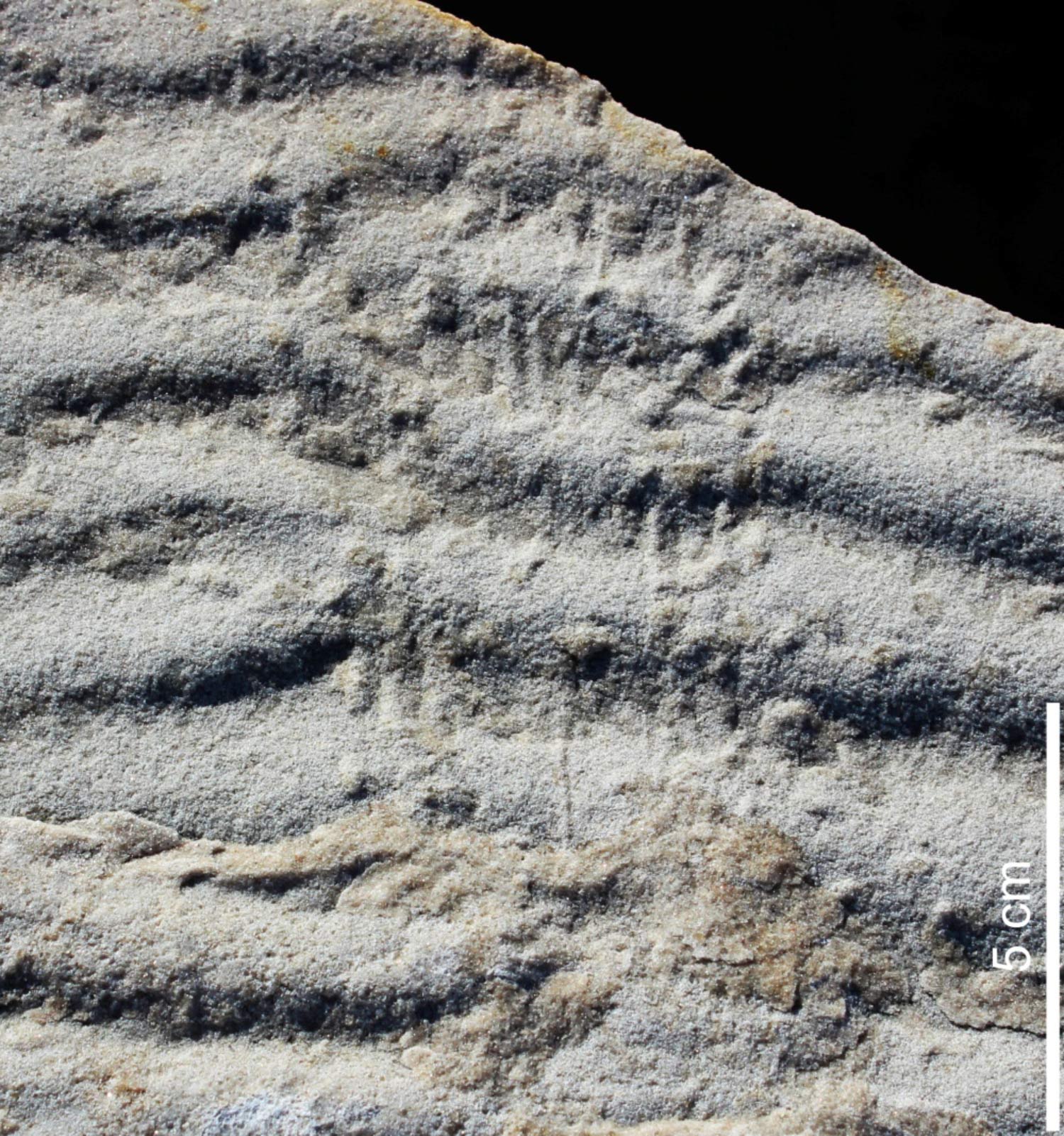
Stiallia – the presumed feeding trace of an arthropod.
The researchers, Kenneth C. Gass of the Milwaukee Public Museum and Nora Noffke from Old Dominion University, recently published their findings in the Journal of Paleontology.
The authors also presented corroborating evidence suggesting that certain trackways may have been produced by a specific species of extinct, primitive arthropod known as an aglaspidid, characterized by a bifurcated, spike-like tail.
“This evidence underscores that Cambrian tidal flats harbored a greater level of activity than previously surmised. It almost appears as though all these creatures were congregating at the tidal flats, eager to transition to terrestrial life,” stated Gass.
“Further paleontological fieldwork and material analysis are anticipated to reveal an even greater taxonomic and behavioral diversity within these ancient tidal flat environments.”
_____
K. Gass & N. Noffke. 2026. New ichnotaxa from the tidal flat facies of the Cambrian Elk Mound Group, Wisconsin, USA. Journal of Paleontology, p. 1-15; doi: 10.1017/jpa.2026.10225