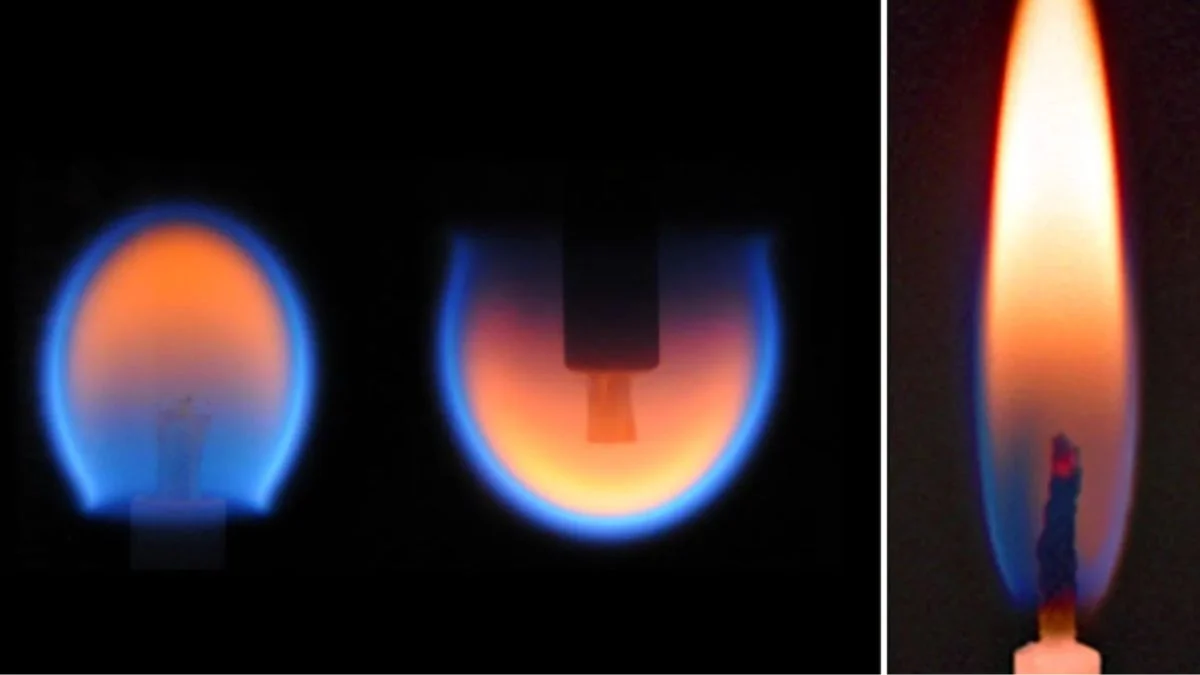
A significant concern for upcoming crewed space endeavors, posing a greater threat to mission planners than nearly any other hazard, is the risk of fire.
A recent publication by researchers affiliated with NASA’s Glenn Research Center, Johnson Space Center, and Case Western Reserve University outlines a proposed initiative designed to investigate the combustibility of materials within the lunar environment. It is anticipated that flames will behave quite differently on the Moon compared to their terrestrial counterparts.
On Earth, the force of gravity compels hot gases to ascend, thereby drawing cooler, fresh oxygen towards the base of a flame. In scenarios involving materials with marginal flammability, this process can trigger a phenomenon known as “blowoff,” which effectively extinguishes the fire.
While airflow exists on the Moon, it is considerably attenuated. This reduced flow allows for a continuous supply of oxygen to the flame without generating vapor movement rapid enough to induce a blowoff state.
In essence, substances that might exhibit limited flammability on Earth could potentially sustain combustion for extended periods on the lunar surface.
Given the inherent dangers, future lunar inhabitants must prioritize averting uncontrolled fires within their habitats. Consequently, it is imperative that we develop a comprehensive understanding of fire prevention strategies well in advance of establishing a permanent human presence on the Moon.
For many years, our approach to assessing material flammability for spaceflight has relied on a NASA standard known as NASA-STD-6001B. However, the complexities of space present challenges that are not fully captured by terrestrial testing methodologies.
To grasp the nature of this challenge, it is beneficial to first understand the existing test protocol.
The NASA-STD-6001B procedure involves exposing the lower extremity of a vertically oriented material sample to a six-inch flame. If the material ignites to a height exceeding six inches from its base or emits burning particulate matter, it is deemed to have failed the test. While seemingly straightforward, a critical limitation exists: the test is conducted under Earth’s gravitational conditions.
In terrestrial conditions, ambient air movement creates convective currents. Furthermore, distinct directional orientations of “up” and “down” are present, unlike in microgravity environments such as the International Space Station, where such spatial references are absent.
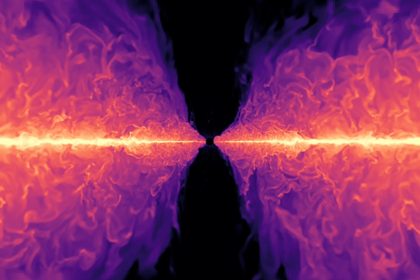
Consequently, fires in microgravity do not maintain an upward trajectory; instead, they form spherical pockets of flame that propagate slowly outward, primarily sustained by the station’s environmental control and life support systems.
However, deactivating the ventilation system would not entirely resolve the issue. While diminished airflow might decelerate a fire’s progression, it could lead to smoldering, leaving the material susceptible to reignition once the fans are reactivated.
The optimal strategy would involve examining flame physics directly aboard the ISS. To this end, researchers have previously conducted numerous small-scale fire experiments to study combustion processes.
Nevertheless, NASA aims to avoid fires of a magnitude that could cause material damage, as such occurrences would pose an unacceptable risk to the integrity of the entire habitable volume of the space station.
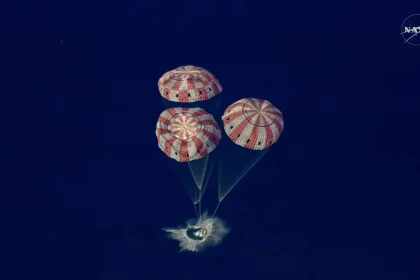
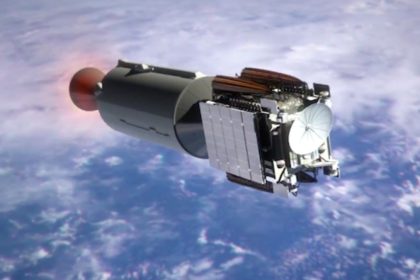
As an alternative, NASA has historically employed the Spacecraft Fire Safety (Saffire) test. These investigations have been executed within an uncrewed Cygnus cargo module after its detachment from the ISS and prior to its atmospheric reentry and eventual burn-up.
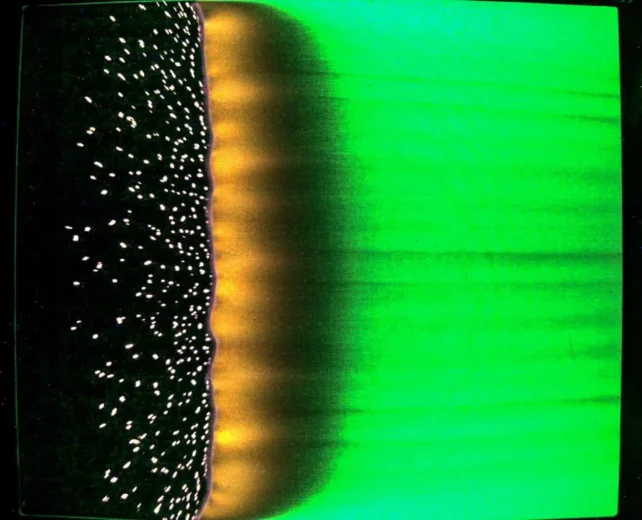
During these experiments, researchers ignited extensive sections of cotton/fiberglass, fabric, and acrylic materials to observe their burning characteristics in microgravity.
These observations revealed anomalous phenomena, including flame propagation against airflow and disproportionately intense burning on thinner material substrates.
The data obtained from the Saffire experiments provided sufficient evidence to highlight the discrepancies between the existing NASA standard and the actual behavior of fires in a space environment.
Consequently, the next most viable approach was pursued: drop testing. However, observing flame behavior during a release from a drop tower (providing 5 seconds of weightlessness) or aboard a parabolic aircraft (offering 25 seconds of weightlessness) is insufficient for assessing the potential for long-term damage.
Introducing the Flammability of Materials on the Moon (FM2) experiment, which leverages the Moon’s reduced gravity as a unique platform for studying flame dynamics.
The FM2 initiative will contribute to this research by being deployed on a Commercial Lunar Payload Service (CLPS) mission to the lunar surface.
Upon arrival, a self-contained apparatus will facilitate the combustion of four solid fuel samples under sustained lunar gravity, an environment currently impossible to replicate elsewhere. The chamber will be outfitted with cameras, radiometers, and oxygen sensors to continuously monitor the flame and its surrounding atmosphere in real-time.
This endeavor will establish the inaugural connection between theoretical flame behavior under partial gravity and observed phenomena from prior studies conducted in 1G and zero-gravity conditions.
Crucially, the experiment is expected to yield minutes of valuable data, a significant increase compared to the mere seconds provided by drop tests and parabolic flights.
It remains uncertain whether NASA will revise its existing standard, as deploying a self-contained capsule for flame analysis to the Moon might prove prohibitively expensive.
Nevertheless, empirical data derived from actual environments is irreplaceable, and the FM2 experiment will, for the first time, provide crucial insights into flame behavior from our forthcoming major extraterrestrial outpost.
Scientists and science fiction enthusiasts alike will keenly await the outcomes of this research.
This content was originally presented by Universe Today. Review the original publication.