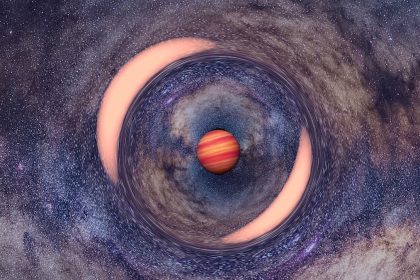
Far beyond the orbital path of Neptune, within the vast, uncharted expanse, astronomers have identified a diminutive celestial body that challenges conventional understandings of planetary atmospheres.
This perplexing entity, measuring approximately 500 kilometers (310 miles) in diameter, is considered too insubstantial for its feeble gravitational pull to sustain an atmosphere for any considerable duration. Nonetheless, it possesses one. While undoubtedly tenuous and ephemeral, an atmosphere should not, by all current models, exist around an object as diminutive as (612533) 2002 XV93.
Although this may not initially seem significant, this relatively small fragment of ice and rock, situated in the frigid, obscure frontiers of our Solar System, could fundamentally alter our comprehension of how atmospheres are retained by celestial bodies.
In the course of investigating this icy world, researchers have demonstrated sophisticated methodologies for discerning faint phenomena situated at extreme distances.
Designated 2002 XV93 for brevity, this object belongs to a classification known as a plutino. It is a minor body that shares a resonant orbital path with Pluto’s orbital trajectory, maintaining an approximate distance of 40 times Earth’s distance from the Sun and existing in a gravitational resonance with Neptune’s orbit.
These small, icy bodies are hypothesized to serve as primordial archives of the early Solar System, preserving information about its initial composition and the dynamics of celestial movement. The resonance with Neptune, for instance, provides evidence that Neptune migrated outwards, effectively clearing its orbital vicinity.
However, the region beyond Neptune—the Kuiper Belt—constitutes a challenging and understudied domain for astronomical observation. It is populated by numerous small, icy constituents that are exceedingly difficult to detect, let alone scrutinize in minute detail, owing to their considerable distance from the Sun, which limits the amount of detectable reflected light.
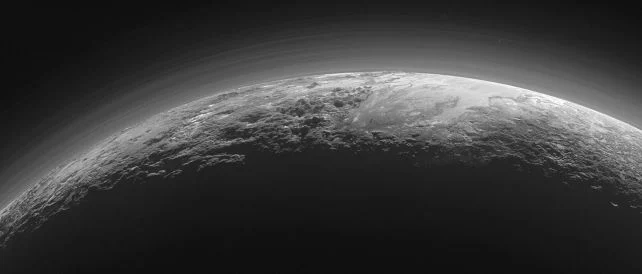
Frequently, researchers must resort to indirect detection techniques. In the instance of 2002 XV93, the observational strategy was largely contingent on serendipity. In 2024, a team of astronomers, spearheaded by Ko Arimatsu from the National Astronomical Observatory of Japan, were strategically positioned to witness its passage across the face of a distant star—an occurrence termed a stellar occultation.
The scientific team successfully recorded the occultation from three distinct vantage points within Japan, meticulously documenting the temporary obscuration of the star’s luminescence by the significantly closer plutino.
For a mere rocky body, the alteration in stellar illumination during an occultation would typically manifest as a sudden and abrupt disappearance as 2002 XV93 transited, followed by an equally abrupt reappearance upon the conclusion of the event.
However, this was not the observation made by the astronomers. The entire celestial event spanned a mere 15 to 20 seconds, contingent on the observer’s location. Crucially, for approximately 1.5 seconds preceding and following the period of complete obscuration, the light curve exhibited a gradual diminution and subsequent augmentation of brightness, respectively.
This particular pattern of gradual dimming and brightening can only be explicable by the starlight traversing an atmosphere, undergoing refraction as it passed through.
Based on this observed attenuation and recovery of light, the researchers formulated refraction models to elucidate the atmospheric characteristics that could have generated this signal. Employing Pluto’s atmosphere as a comparative benchmark, they posited a specific thermal profile and a composition primarily consisting of methane, nitrogen, or carbon monoxide.
Subsequently, they simulated the atmospheric density at various altitudes and the resultant light bending during its passage.
Their most congruent findings indicated an atmosphere with a density ranging from 100 to 200 nanobars—a pressure roughly 5 to 10 million times less than that of Earth’s atmosphere at sea level.
This finding is remarkable for several key reasons. Firstly, it demonstrates that our current instrumentation possesses sufficient sensitivity to detect atmospheric refraction, even through an exceedingly thin envelope, from the remote reaches of the Solar System. Secondly, the team’s computational models suggest that such an atmosphere would dissipate within a period of only a few hundred to a thousand years. The most plausible explanation for its current existence is that the atmosphere is being actively replenished.
Given the considerable population of objects within the Kuiper Belt, one proposed scenario by the researchers posits that an impact event, involving a cometary collision with 2002 XV93, could have released gases, thereby forming a transient atmosphere destined for eventual dispersal.
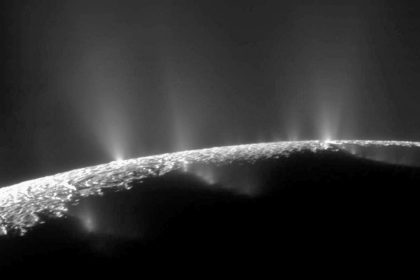
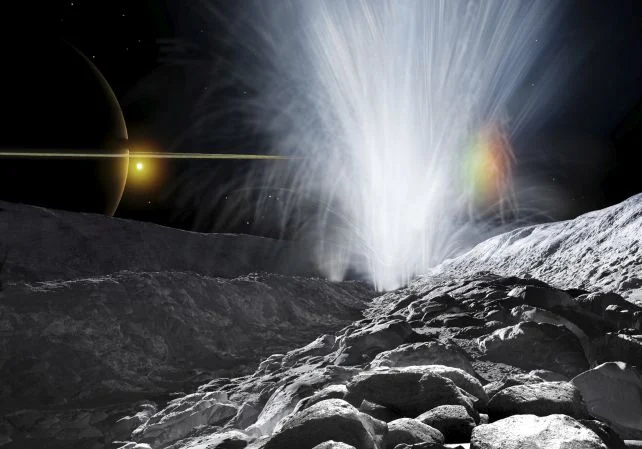
An alternative hypothesis is that, analogous to Pluto, 2002 XV93 exhibits active cryovolcanism, expelling viscous icy materials and volatile compounds from its interior, which would serve to replenish a continuously escaping atmosphere.
Regardless of the precise mechanism, this celestial body represents the inaugural detection of an atmosphere on a small trans-Neptunian object (TNO), excluding Pluto itself. These results imply that even minor bodies are capable of harboring atmospheres, and, more thrillingly, with a degree of fortunate timing, we can detect them even when they are virtually imperceptible.
“This discovery challenges the conventional notion that substantial global atmospheres are exclusively formed around larger planets, necessitating a revision of this paradigm,” the researchers state in their published work.
“Even a TNO measuring a few hundred kilometers can, at least transiently, sustain an atmosphere, posing a significant challenge to established hypotheses regarding volatile retention. Our findings indicate that a subset of distant icy minor planets may exhibit atmospheric envelopes, potentially maintained by ongoing cryovolcanic processes or generated by the recent impact of a small icy body.”