A novel species belonging to the multituberculate mammal lineage, Cimolodon, has been identified by palaeontologists, with its fossilized remains unearthed in Baja California, Mexico.
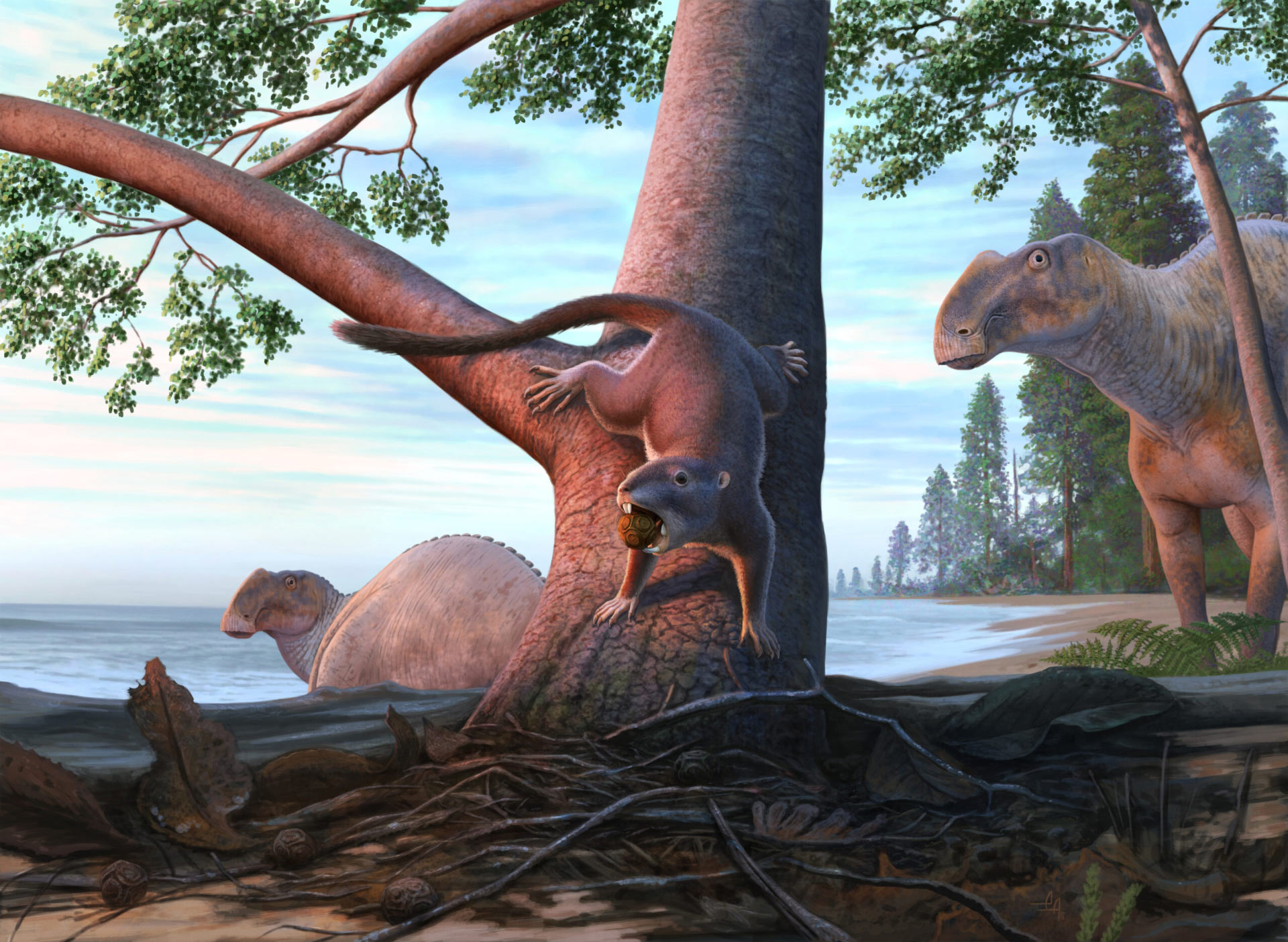
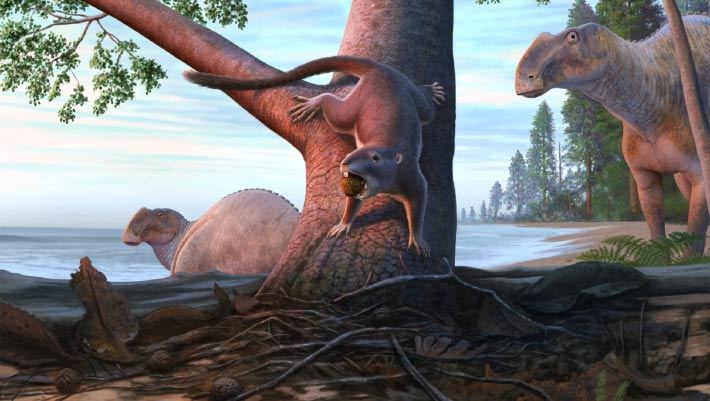
An artistic rendition depicts Cimolodon desosai perched on a branch, holding a piece of fruit. This image was created by Andrey Atuchin.
This ancient mammal inhabited the region now known as Mexico approximately 75 million years ago, during the Cretaceous period.
Designated as Cimolodon desosai, this extinct creature was comparable in size to a golden hamster, with an estimated body mass of 100 grams.
It is hypothesized that this animal navigated both terrestrial and arboreal environments, subsisting on a diet of fruits and insects.
“The genus Cimolodon was a prevalent mammal during the Late Cretaceous, the final epoch of the Age of Dinosaurs,” stated Professor Gregory Wilson Mantilla, a palaeontologist affiliated with the University of Washington and the curator of vertebrate palaeontology at the Burke Museum.
“Fossils attributed to Cimolodon have been discovered across western North America, extending from western Canada southward into Mexico.”
“This newly identified species, Cimolodon desosai, is considered ancestral to the lineage that managed to survive the mass extinction event.”
“Both this species and its descendants were relatively diminutive and omnivorous – characteristics that proved highly beneficial for their survival.”
The fossilized remnants of Cimolodon desosai, which include teeth, a skull, jaw fragments, and portions of the skeleton such as a femur and an ulna, were excavated in 2009 from the El Gallo Formation in Baja California.
This specimen constitutes the most complete mammal fossil recovered from the Mesozoic era in Mexico and ranks among the most thoroughly documented cimolodontan multituberculates found in North America.
“Locating fossils at this particular site presents considerably greater challenges compared to other excavation areas,” Professor Wilson Mantilla remarked.
The discovery of more than just dental elements for Cimolodon desosai allows researchers to gain a more comprehensive understanding of its physical dimensions, overall shape, and its likely locomotive patterns.
Furthermore, it contributes to a richer depiction of this genus and the ecological setting it inhabited, thereby enhancing our general comprehension of the multituberculate group.
“The mammalian fauna of the El Gallo locality is currently documented through 16 specimens belonging to three multituberculate species, one metatherian, and one eutherian,” the research team reported.
“While additional fossil recovery efforts are warranted, the present assemblage of mammalian fauna exhibits strong biogeographic correlations with the Terlingua local fauna identified in western Texas.”
The researchers’ findings have been formally disseminated this month in the Journal of Vertebrate Paleontology.
_____
Gregory P. Wilson Mantilla et al. Cranial and postcranial remains of a new species of Cimolodon (Mammalia, Multituberculata, Cimolodontidae) from the Upper Cretaceous (Campanian) El Gallo Formation of Baja California, México. Journal of Vertebrate Paleontology, published online April 22, 2026; doi: 10.1080/02724634.2026.2641109